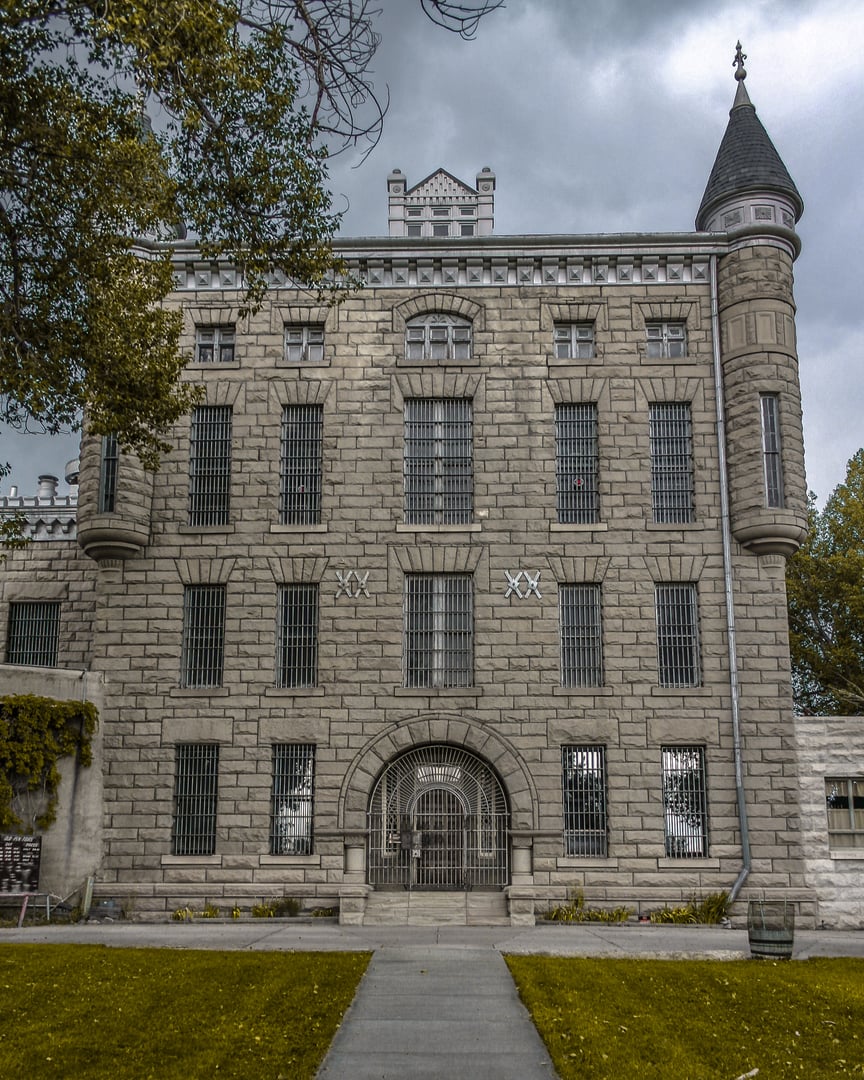
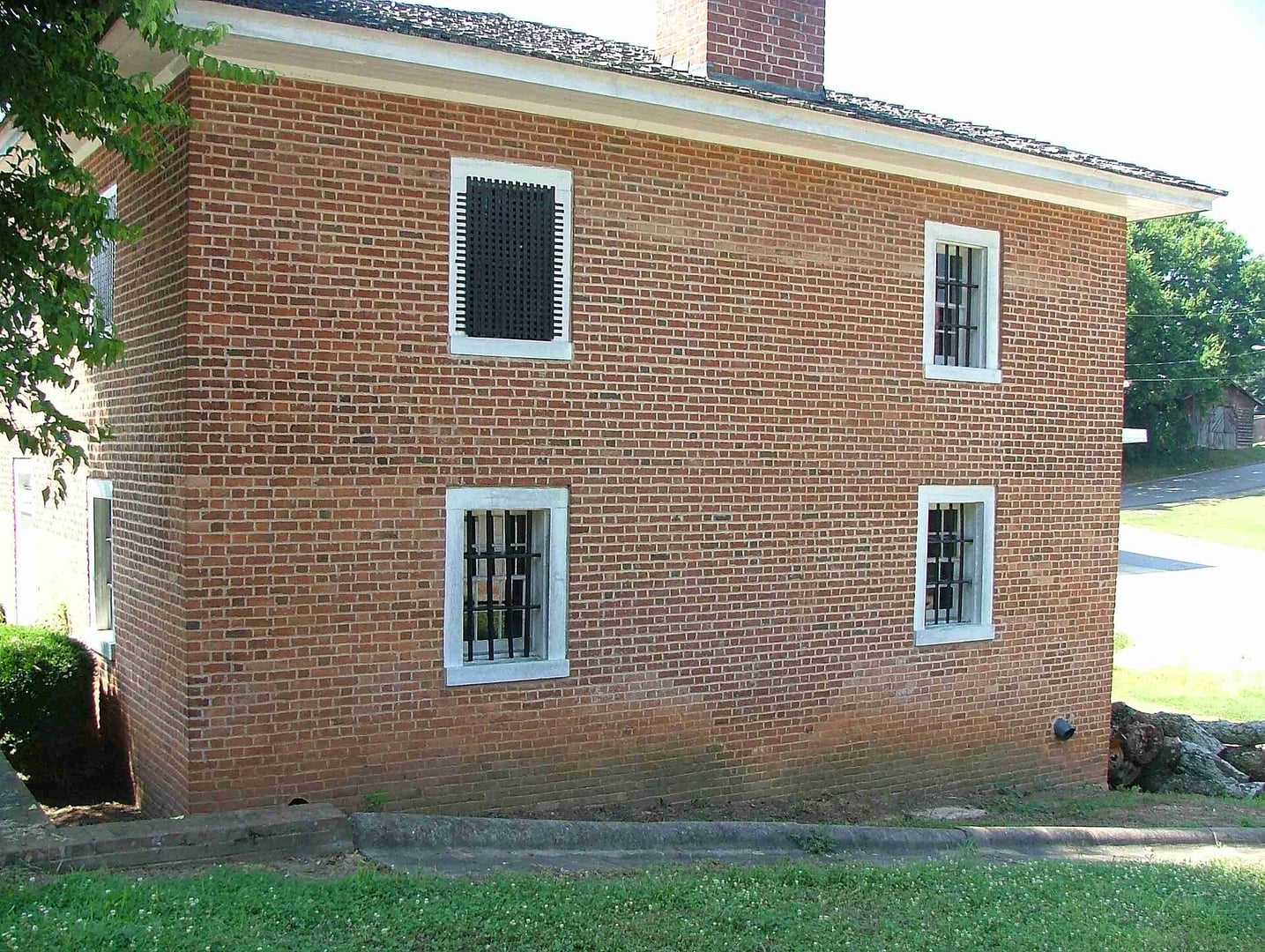
Est. 1888 · Only surviving Pauly rotary jail with intact sheriff's residence · Operated 1888–1975 as Daviess County's working jail · National Register of Historic Places, 1990 · Daviess County — site of Jesse James's 1869 Gallatin bank robbery · Documents county public execution history
The Daviess County Rotary Jail was constructed in 1888–1889 for Gallatin, Missouri, the county seat of Daviess County in north-central Missouri. The building is the work of the Pauly Jail Building and Manufacturing Company of St. Louis, a firm that promoted the rotary drum design as a secure and economical alternative to conventional cell blocks. In a rotary jail, a cylindrical iron drum containing multiple wedge-shaped cells is mounted on a central axle. The drum rotates to align individual cells with a single opening in the outer wall, so one jailer can control access to every inmate without walking through the cell block. Pauly built similar jails in Iowa, Indiana, and elsewhere; the Gallatin example is the only one known to survive with the sheriff's attached residential quarters still intact.
Daviess County in the 1880s and 1890s was closely associated with the James-Younger gang. Jesse James robbed the Daviess County Savings Association in Gallatin in December 1869, killing the bank's cashier John Sheets. The jail's subsequent tours acknowledge this local history through displays on Jesse James and his brother Frank, as well as on the county's record of public executions during the jail's 19th-century operation.
The jail operated as a working detention facility through 1975, when the county moved to a modern correctional center. The 1888–1889 structure was placed on the National Register of Historic Places in 1990. The Daviess County Sheriff's Department now manages the building as a museum, conducting tours that cover both the jail's architectural history and the darker chapters of Daviess County's outlaw era.
Seasonal Halloween events — including paranormal investigation nights and haunted jail programming — have been held at the site, and the building has attracted documentary interest from dark tourism researchers.
Sources
- https://en.wikipedia.org/wiki/Daviess_County_Rotary_Jail_and_Sheriff%27s_Residence
- https://www.visitmo.com/things-to-do/1889-squirrel-cage-jail
- https://www.atlasobscura.com/places/squirrel-cage-jail-gallatin
Temperature anomalies near cell drumAuditory phenomena during investigationsGeneral atmosphere of unease reported by visitors
The Daviess County Rotary Jail's paranormal reputation draws on two distinct threads: the county's documented public execution record during the jail's active years, and the broader atmosphere of Missouri outlaw violence concentrated in Daviess County during the Jesse James era.
The physical design of the rotary drum contributes to the building's atmosphere in a way that conventional cell blocks do not. The sensation of confined spaces rotating — the mechanical logic of controlled imprisonment made physical — is disorienting in a way that investigators and casual visitors alike have noted. Halloween haunted-jail events run by the county and by paranormal investigation groups have produced documented session reports; accounts from these events describe temperature anomalies and auditory phenomena concentrated near the central drum mechanism.
The Atlas Obscura profile documents the building as a dark tourism destination with an acknowledged history of violence, and the site's association with the Jesse James era adds a layer of documented regional lawlessness to its institutional history. No specific named entities have been consistently identified in paranormal reports, but the jail's 87-year operational span and execution history give investigators enough documented dark history to work with.
Where this legend is told