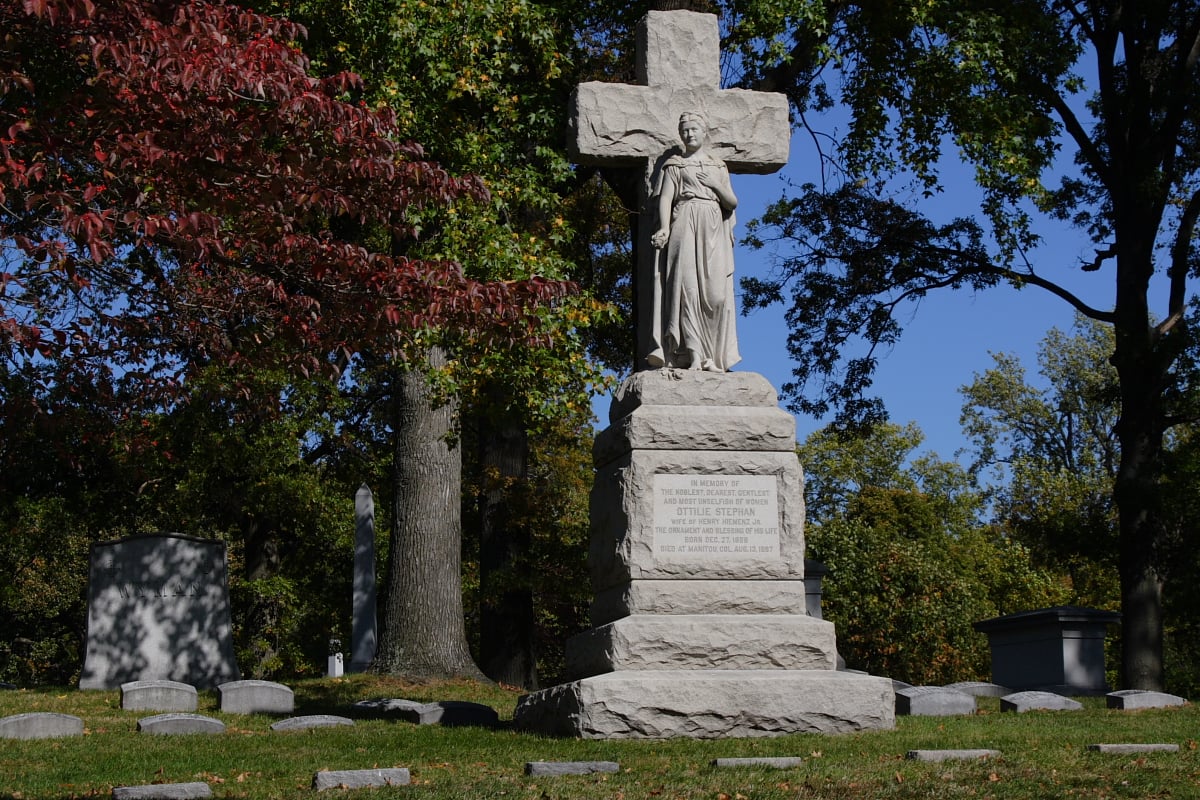
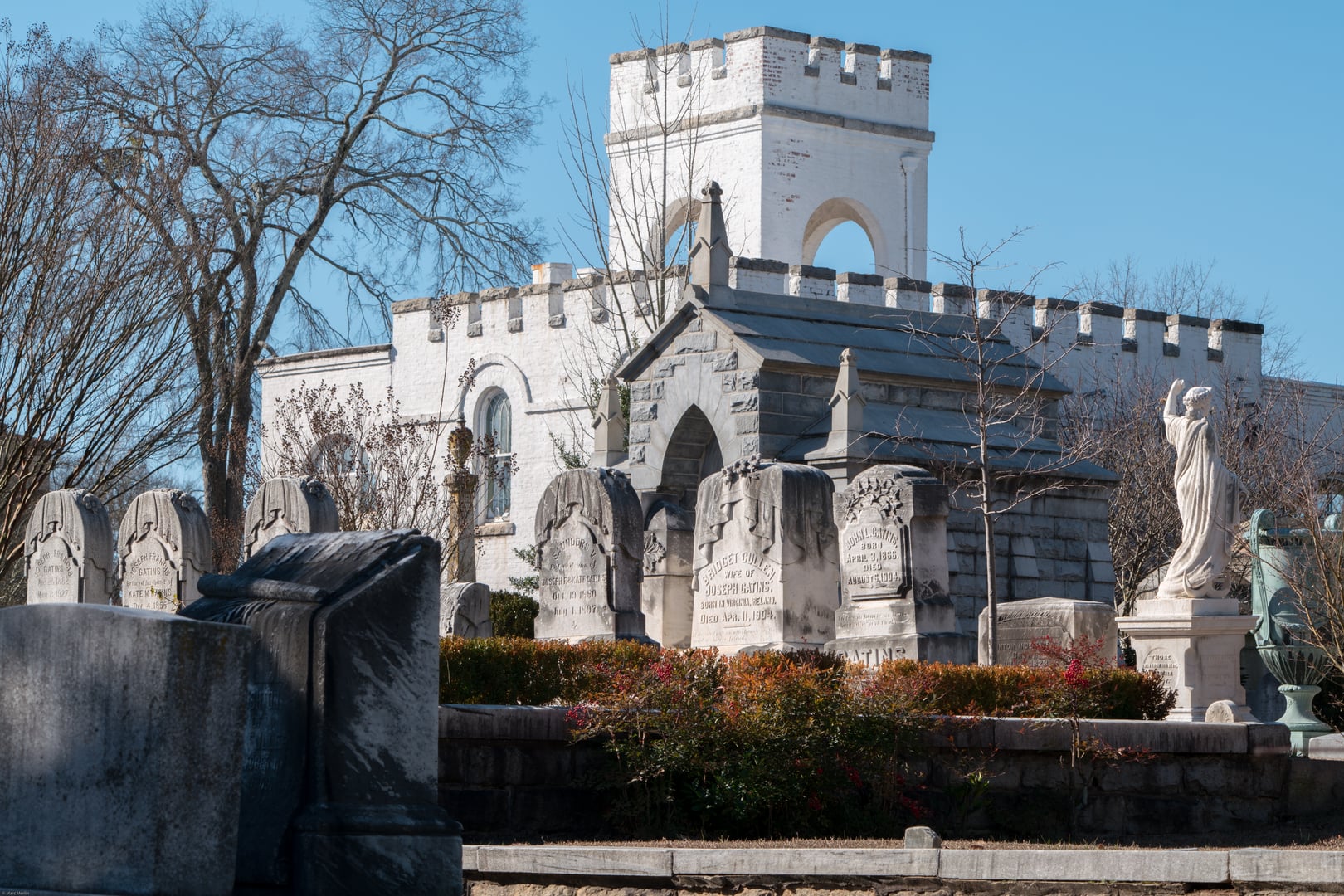
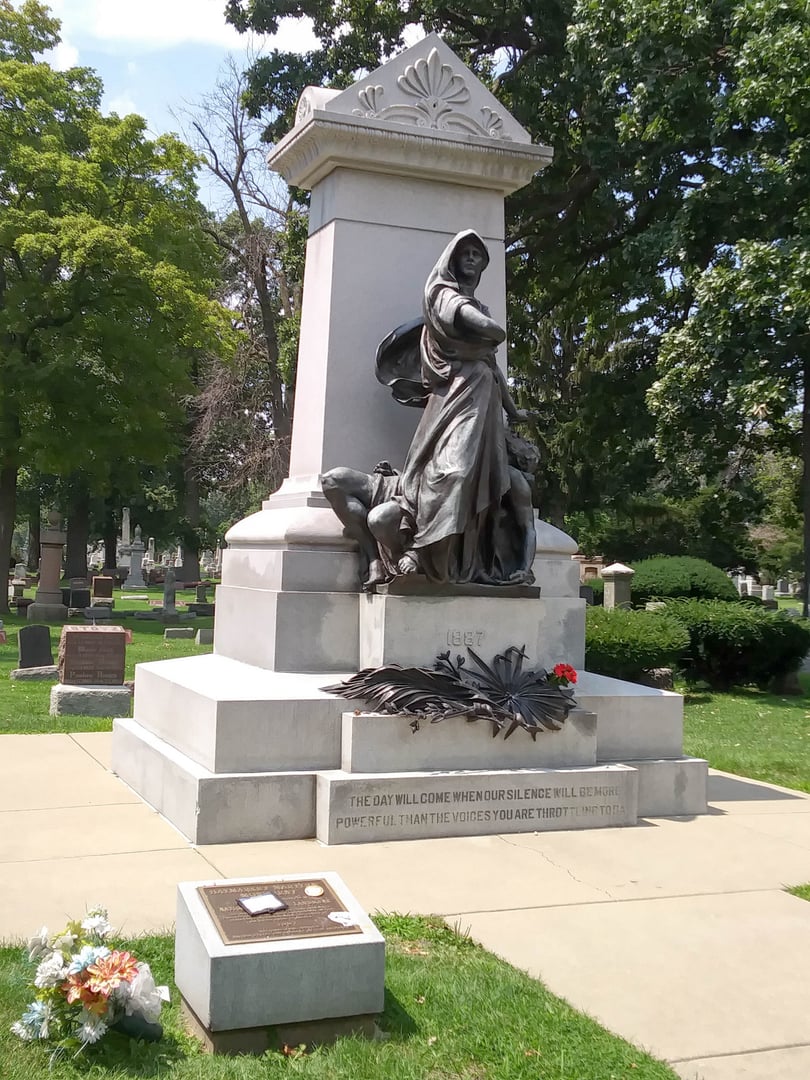
Est. 1854 · Dred Scott grave — Dred Scott v. Sandford (1857) · General William Tecumseh Sherman grave · Tennessee Williams and Kate Chopin graves · Largest cemetery operated by the Archdiocese of St. Louis
Calvary Cemetery was founded in 1854 by the Archdiocese of St. Louis on 470 acres immediately adjacent to the (non-Catholic) Bellefontaine Cemetery, a layout reflecting the era's denominational separation of burial grounds. It is the second-oldest cemetery operated by the Archdiocese, after Old Calvary, and is its largest. Today the grounds contain more than 300,000 interments.
The cemetery's most historically significant burial is that of Dred Scott (c. 1799–1858). Scott was an enslaved man who, with his wife Harriet, sued for his family's freedom in the Old Courthouse in downtown St. Louis on the grounds that they had been held as slaves in free states and territories. The case ultimately reached the U.S. Supreme Court in 1857 as Dred Scott v. Sandford, which ruled against the Scotts and held that Black Americans were not citizens — a decision widely understood as among the most consequential and damaging in the Court's history, and one that helped precipitate the Civil War. The Scotts were eventually manumitted, but Dred Scott died of tuberculosis in 1858 in St. Louis. His grave at Calvary is a frequent destination for visitors paying tribute to the family's role in U.S. civil rights history.
Also interred at Calvary are Civil War General William Tecumseh Sherman, playwright Tennessee Williams, author Kate Chopin (The Awakening), and other notable Missourians. The cemetery remains active and is operated by the Archdiocese of St. Louis.
Sources
- https://en.wikipedia.org/wiki/Calvary_Cemetery_(St._Louis)
- https://explorestlouis.com/partner/calvary-cemetery/
- https://www.thedredscottfoundation.org/dshf/index.php?option=com_content&view=article&id=109&Itemid=56
- https://stlghosts.com/the-most-haunted-st-louis-cemeteries/
Residual apparition ('Ghost on the Hill')Vanishing-hitchhiker ('Blue Velvet Ghost')
Two recurring legends appear in regional ghost literature about Calvary. The 'Ghost on the Hill,' described by stlghosts.com and 97.9 KICK FM, is said to appear in the southeast corner of the cemetery on a hill overlooking Calvary Avenue. The same sources name the spirit as Thomas Reynolds, who is interred with his wife Heloise (who predeceased him by five years) in a hillside mausoleum; the lore casts the figure as a residual loop of Reynolds's daily visits to her grave.
The 'Blue Velvet Ghost' follows the classic vanishing-hitchhiker template: a local driver picks up a woman in a blue velvet dress walking near the cemetery in the rain, drops her off at her home, and forgets his coat in her care. When he returns the next day, the woman who answers the door reports that the woman he described had died years earlier and was buried in that blue velvet dress.
We present these as folkloric narratives circulated by regional ghost-literature sites; they are not anchored to documented paranormal investigation. Critically, Calvary is also the resting place of Dred Scott, an enslaved man whose name is associated with one of the most consequential civil-rights cases in U.S. history. We do not attach paranormal narrative to the Scott grave or its surroundings: the site is treated as a historic civil-rights destination, with cemetery ghost lore confined to the unrelated Reynolds and Blue Velvet accounts.
Notable Entities
Thomas Reynolds (folkloric — said to revisit his wife Heloise's mausoleum)Blue Velvet Ghost (folkloric vanishing hitchhiker)
Media Appearances
- 97.9 KICK FM 'Haunting Legends of St. Louis' Calvary Cemetery'
- Ghost City Tours profile
- Missouri Ghosts archive