Est. 1866 · Minnesota's First State Institution for the Mentally Ill · Asylum for the Dangerous Insane (1907) · Prairie Fire Destroyed 521-574 Patient Grave Identifications (1895) · Remembering with Dignity Restoration Project
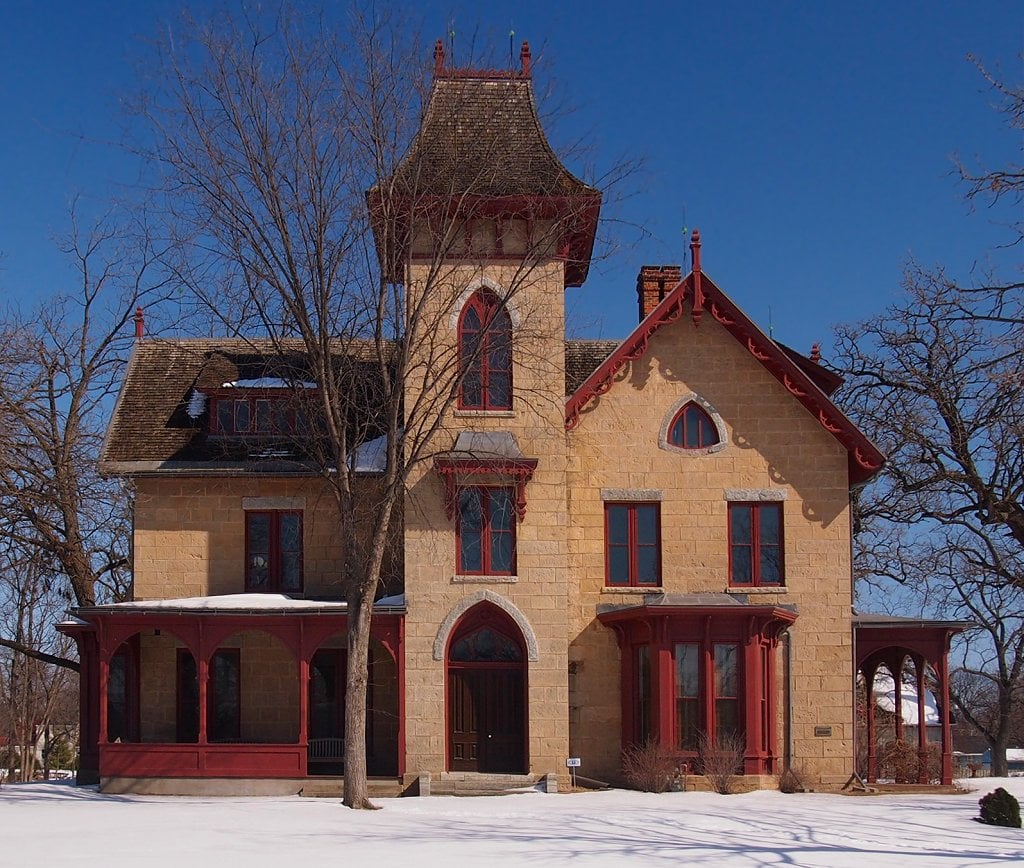
The Minnesota legislature authorized a state asylum for the insane in 1864, and St. Peter State Hospital opened its doors in 1866, becoming the state's first institution for the mentally ill. The facility was sited on the Minnesota River Valley in Nicollet County, built under the influence of the Kirkbride Plan principles that governed asylum design in the mid-nineteenth century — the oldest surviving structure from the original campus is preserved as the museum today.
The hospital's population grew steadily through the late nineteenth and early twentieth centuries. In 1907, the legislature created a separate Asylum for the Dangerous Insane on the same grounds, consolidating violent or criminally committed patients at St. Peter. The dual campus — treatment institution and security asylum — made St. Peter one of the more complex state psychiatric facilities of its era.
A prairie fire swept across the campus in 1895. Among the destruction: the identification markers for the patient cemetery, where between 521 and 574 patients were buried. The names corresponding to those burial plots were lost. From 1895 through 1913, subsequent burials were recorded by number only. The two cemeteries visible on the campus today reflect that history — a section of named graves and a section of long-anonymous ones.
The Remembering with Dignity project, organized by disability advocates and family members, undertook the work of matching burial records to names and replacing the numbered stakes with engraved headstones. Minnesota Public Radio News covered the project in 2013, documenting the research process and the ceremony marking the restoration of individual identities to patients who had been buried without them.
The museum occupies the oldest surviving building on the campus. The St. Peter Regional Treatment Center remains an active state facility; the museum and cemeteries are accessible by appointment.
Sources
- https://en.wikipedia.org/wiki/St._Peter_State_Hospital_Museum
- https://www.mprnews.org/story/2013/10/24/putting-names-on-unmarked-state-hospital-graves
- https://www.mnhs.org/mnopedia/search/index/place/st-peter-state-hospital
- https://www.mnrivervalley.com/destination/st-peter-regional-treatment-center-museum/
Cold spotsSensed presenceAtmospheric unease in cemetery sections
The haunting reputation of St. Peter State Hospital Museum is shaped primarily by documented history rather than by accumulated ghost-tour lore. The loss of identity for hundreds of patients in the 1895 prairie fire, and the decades during which those people were buried under numbers rather than names, gives the cemeteries a weight that visitors describe in terms of atmosphere and presence rather than specific encounters.
Staff and visitors at the oldest surviving building — the museum structure itself, dating to the founding-era campus — have reported cold spots and the sense of being watched in the building's upper floors and along its original corridors. No named apparitions are attached to the site in the regional ghost-literature; the accounts are diffuse and atmospheric.
The two cemeteries remain the site's most documented focal point. Following the Remembering with Dignity installation of named headstones, visitors who had previously described the numbered section as distressing report a different quality to the space — something observers have characterized as a shift from anonymity to acknowledgment. Whether that counts as a paranormal observation or simply an emotional response to a meaningful historical correction is a distinction the site itself does not push in either direction.
The Asylum for the Dangerous Insane section of the campus history contributes to the site's reputation; the original security wing no longer survives in accessible form, but its existence is documented in the museum's interpretive materials.
Where this legend is told