Drive-By
Courthouse square exterior viewing
View the 1794 brick courthouse and its square from the public sidewalk on North Washington Street. The old jail and former sheriff's residence stand nearby.
- Duration:
- 20 min
HauntBound archive · catalog record
Reported phenomena, as catalogued
Easton's 1794 courthouse and its adjacent old jail are stops on the town ghost walk, with a figure called 'The Colonel' and a blue-clad apparition by the jail elevator.
11 N Washington Street, Easton, MD 21601
Research updated September 2026
Age
All Ages
Cost
Free
Active county courthouse; exterior viewing from the public square is free. Guided Easton ghost walks that include the courthouse and old jail charge a separate ticket fee.
Access
Wheelchair OK
Paved courthouse square and downtown sidewalks in central Easton.
Equipment
Photos OK
Est. 1794 · Current courthouse completed in 1794 on the site of the 1711-12 original · Site of the May 24, 1774 'Talbot Resolves' adopted under Matthew Tilghman · Contributing building in the Easton Historic District (National Register, 1980) · Anchors downtown Easton's historic core alongside the old county jail
Easton grew up around its courthouse. The first Talbot County courthouse was built on this square in 1711-12, and the village that formed around it was called Talbot Court House before a 1788 act of the legislature renamed it Easton. The current brick courthouse, a Georgian-style building at 11 North Washington Street, was completed in 1794 and remains the seat of Talbot County government; two wings were added in 1958.
On May 24, 1774, the courthouse hosted a meeting of leading county citizens led by Matthew Tilghman. The group adopted the 'Talbot Resolves,' pledging to act as friends to liberty in response to Britain's closure of the Port of Boston. The Resolves are cited as among the earliest such solidarity statements in Maryland, two years before the Declaration of Independence; they were not themselves a declaration of independence but a protest aligning the county with Boston.
The courthouse is a contributing building within the Easton Historic District, which was added to the National Register of Historic Places in 1980. Next to the courthouse stands the old county jail with its former sheriff's residence, the second focus of the site's modern ghost-walk lore.
Today the courthouse and old jail are regular stops on guided Easton ghost walks, which narrate the buildings' long history alongside the apparition accounts that staff and tour participants have reported.
Sources
Easton's ghost-walk lore centers on two recurring figures. The first, called 'The Colonel,' is described by tour operators as a presence that moves through the courthouse after hours, said to check on employees working late, unlock doors, and look in on people. The travelhag.com account of Easton's ghosts and Chesapeake Ghost Walks both place 'The Colonel' at the courthouse.
The second figure is an apparition associated with the elevator in the old jail. The travelhag.com account describes a lady in blue who was seen standing by the elevator and then vanished; Chesapeake Ghost Walks describes the figure as a man in a blue suit who rides the elevator in the old jail. The two accounts differ on whether the figure is a man or a woman, but both independently place a blue-clad apparition at the old jail elevator.
These accounts come from guided ghost walks rather than sustained paranormal investigation, and the courthouse remains an active government building. The lore functions as the narrative backbone for the Easton evening walks, which use the courthouse and old jail as anchor stops.
Notable Entities
View the 1794 brick courthouse and its square from the public sidewalk on North Washington Street. The old jail and former sheriff's residence stand nearby.
The courthouse and old jail are stops on guided Easton ghost walks operated by Chesapeake Ghost Walks and US Ghost Adventures, who narrate the building's history and its reported apparitions.
Some links on this page may earn HauntBound a small commission when you book, at no extra cost to you. Our editorial picks are independent. Full disclosure
Every HauntBound history is researched from documented sources. We clearly separate verified historical fact from paranormal folklore.
Free Guide
9 verified stops, rated for families, mapped in order. Free.
One email to confirm, then the guide link. Unsubscribe anytime.
Frederick, MD
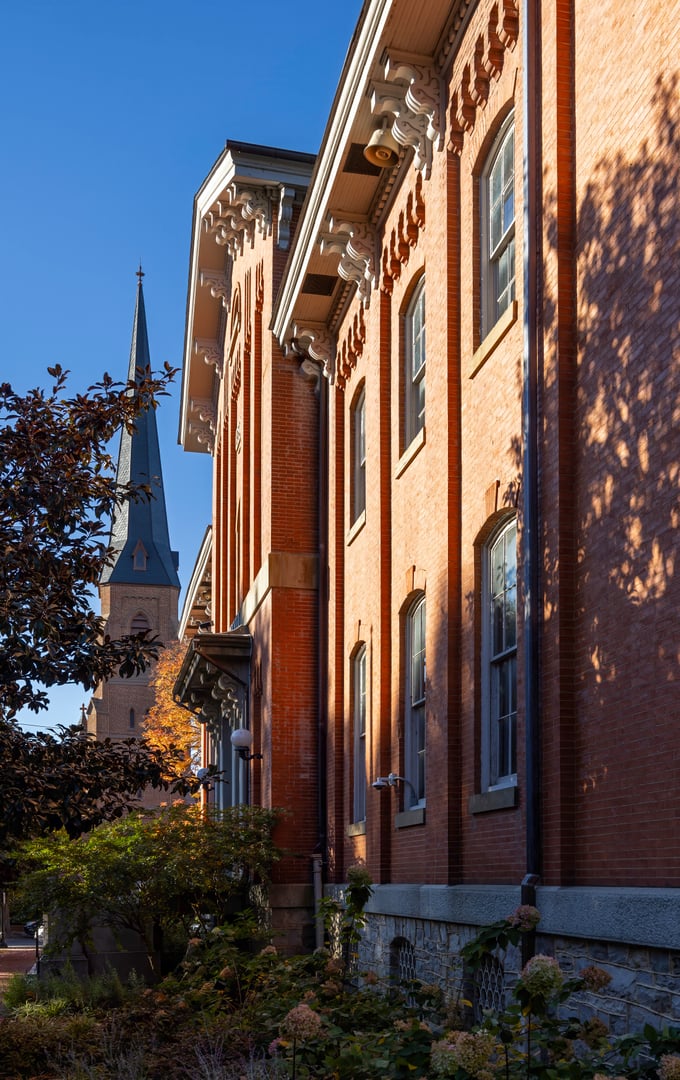
Frederick's Court Square has been the town's courthouse ground since the colonial era. In June 1781, a Loyalist conspiracy known as the Tory Plot was uncovered, and seven men were convicted of high treason; four were pardoned and three — Caspar Fritchie, Peter Sueman, and Yost Plecker — were executed. The 1862-64 building on the square, now Frederick City Hall, served as the county courthouse for over a century; today a small marker notes the Revolutionary-era executions.
Lewisburg, WV
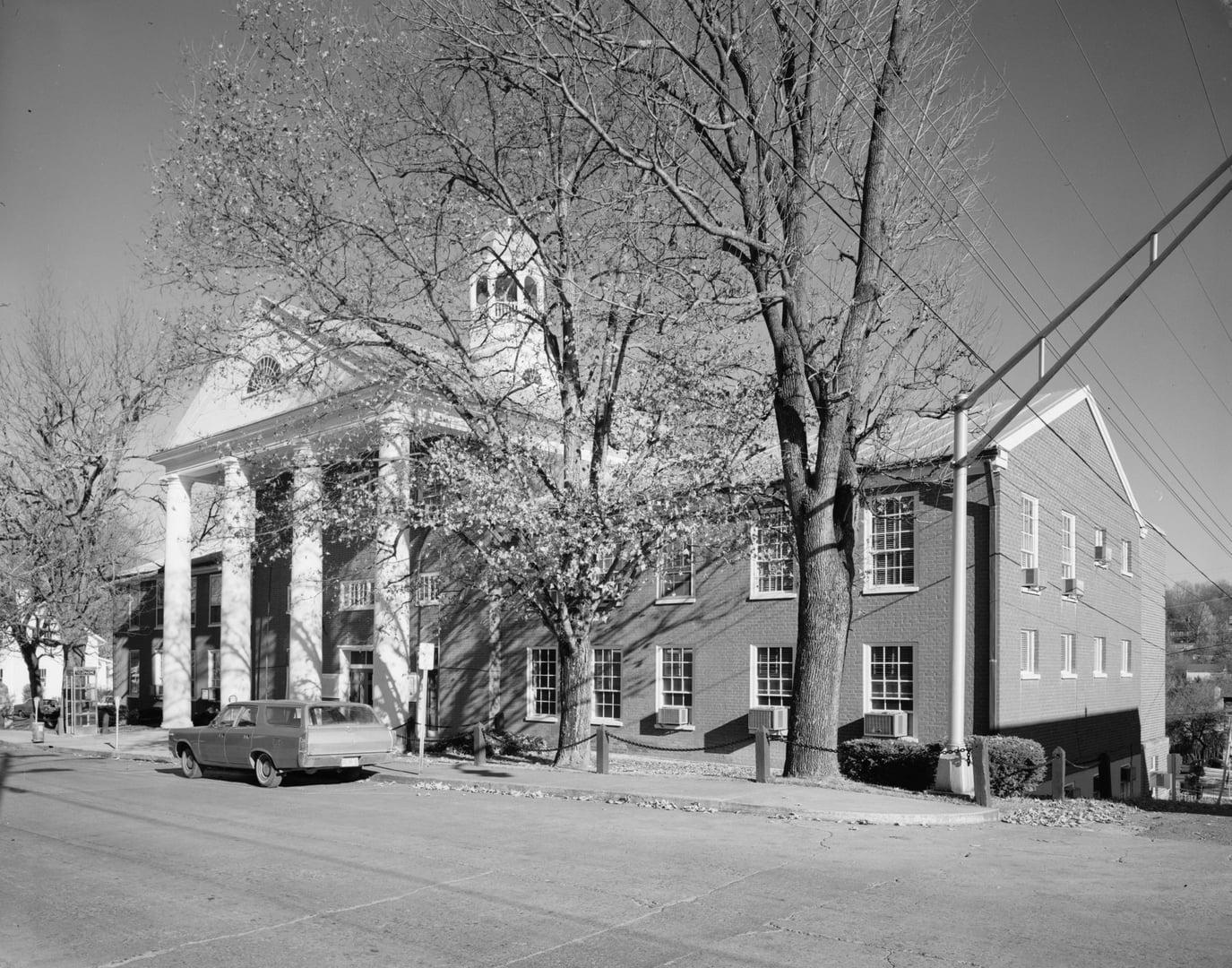
The Greenbrier County Courthouse in Lewisburg was built in 1837 and is the oldest courthouse in continuous use in West Virginia. Listed on the National Register of Historic Places in 1973, it is best known as the venue of the 1897 trial of Edward Stribbling Trout Shue for the murder of his wife, Elva Zona Heaster Shue — the case popularly remembered as the Greenbrier Ghost.
Elfrida, AZ
The property operated as the Cochise Guest Lodge and Ranch, a dude ranch in Arizona's remote Sulphur Springs Valley. On December 3, 1977, ranch hand James Dean Clark killed four people — ranch owners Charles and Mildred Thumm and two fellow wranglers, Gerald McFerron and George Martin — in a spree that ended with his arrest in El Paso. Clark was convicted of four counts of first-degree murder in 1978 and executed by the State of Arizona on April 14, 1993. The property was subsequently acquired by VisionQuest National, a youth rehabilitation organization founded in 1973, which operates it as a residential program to this day.