Drive-By
Court Square exterior viewing
Walk the public square around Frederick City Hall, the historic courthouse ground tied to the 1781 Tory Plot executions.
- Duration:
- 20 min
HauntBound archive · catalog record
Reported phenomena, as catalogued
Frederick's historic Court Square, the colonial courthouse ground where three men convicted in the 1781 Tory Plot were hanged for treason; a ghost-tour stop today.
101 N Court Street, Frederick, MD 21701
Research updated August 2026
Age
All Ages
Cost
Free
Public square around Frederick City Hall; free to visit. Guided Frederick ghost tours that include Court Square charge a separate ticket fee.
Access
Wheelchair OK
Paved downtown square and sidewalks around Frederick City Hall, between Court, Church, Record, and Council streets.
Equipment
Photos OK
Est. 1862 · Frederick's courthouse ground since the colonial era · Site tied to the June 1781 Tory Plot treason trials · Caspar Fritchie, Peter Sueman, and Yost Plecker executed for high treason in 1781 · 1862-64 former county courthouse, now Frederick City Hall · Marked today by a bronze plaque noting the executions
Court Square has been Frederick's seat of justice since the colonial period, when a wooden courthouse stood on the ground now occupied by Frederick City Hall. In June 1781, during the Revolution, authorities uncovered the so-called Tory Plot, a Loyalist conspiracy to free British prisoners of war held in Frederick and reinforce Cornwallis.
Seven men were convicted of high treason and sentenced on June 17, 1781. Four were pardoned. The remaining three — Caspar Fritchie, Peter Sueman, and Yost Plecker — were executed. The Baltimore Advertiser of the day reported that they 'suffered Death' for high treason. The sentence pronounced was the full traitor's penalty of hanging, drawing, and quartering, but historians have not confirmed that the drawing and quartering were actually carried out; the contemporary newspaper records only that the men were put to death, and the harsher details rest on later local tradition.
The square's later courthouse, the brick building completed in 1862-64, served as the Frederick County courthouse for more than a century before becoming Frederick City Hall; the modern county courts moved to a separate building in 1982. Today a simple bronze plaque and small sign near the square mark the Revolutionary-era executions. Guided ghost tours of Frederick use Court Square as the stop where this history is told.
Sources
On the ghost-tour circuit, Court Square is presented as the place where condemned British sympathizers were put to death, with a curse said to linger over the ground. US Ghost Adventures' Frederick Ghost Tour describes the square as the execution site and reports accounts of ghostly chained men walking the City Hall grounds as if toward sentencing.
The documented history beneath the legend is real: three men were executed for treason here in 1781 after the Tory Plot trials. The paranormal layer, however, rests largely on a single tour operator's account. A second downtown-Frederick haunted-tour writeup lists Court Square among its stops, but it could not be independently confirmed to corroborate the specific curse-and-apparition claim. For that reason the haunting is best treated as tour folklore.
Visitors encounter the square as a public space year-round, with the ghost narrative delivered on the guided evening tour rather than through any sustained investigation. The strength of the site is its documented Revolutionary-era history; the apparition lore is the embellishment layered on top of it.
Notable Entities
Walk the public square around Frederick City Hall, the historic courthouse ground tied to the 1781 Tory Plot executions.
Some links on this page may earn HauntBound a small commission when you book, at no extra cost to you. Our editorial picks are independent. Full disclosure
This Frederick tour includes Court Square (Frederick City Hall) on its route.
Every HauntBound history is researched from documented sources. We clearly separate verified historical fact from paranormal folklore.
Free Guide
9 verified stops, rated for families, mapped in order. Free.
One email to confirm, then the guide link. Unsubscribe anytime.
Easton, MD
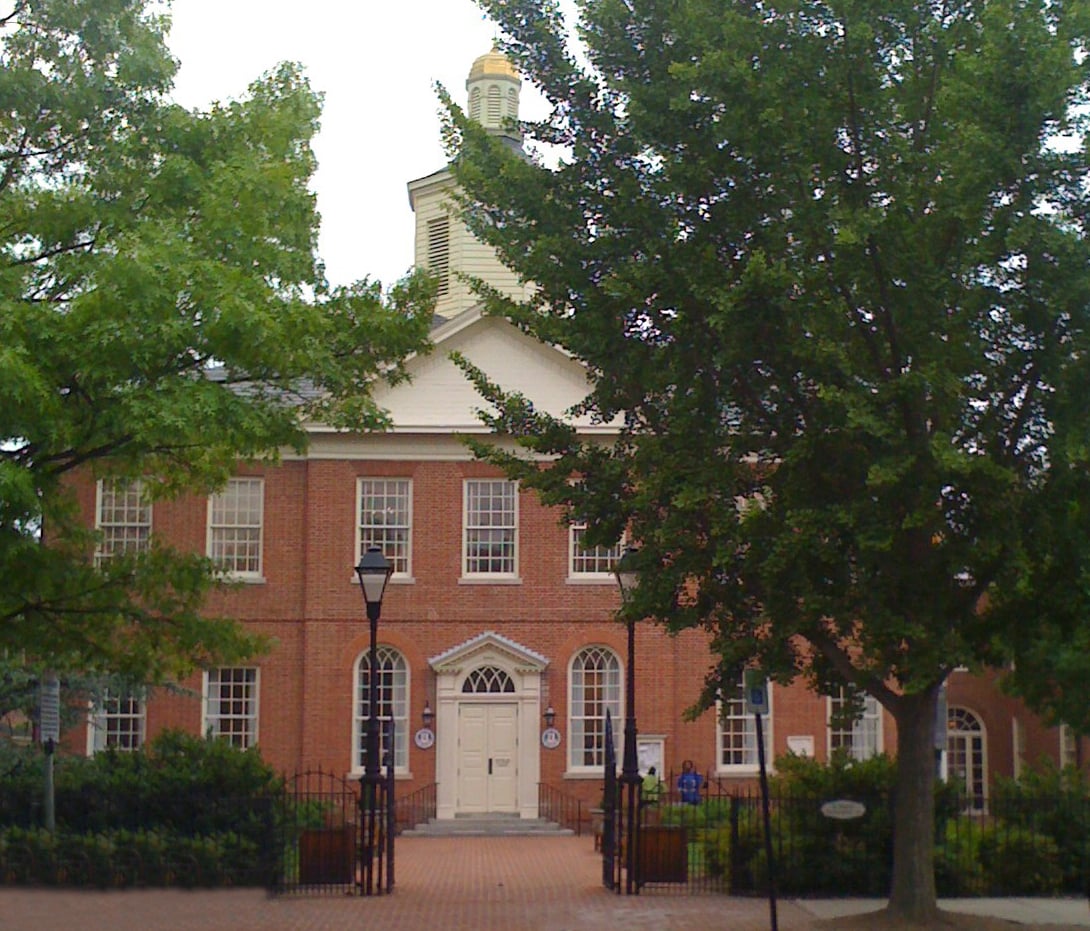
The current Talbot County Courthouse at 11 North Washington Street was completed in 1794, replacing an earlier 1711-12 courthouse, and was later enlarged with wings in 1958. On May 24, 1774, leading Talbot County citizens led by Matthew Tilghman met at the courthouse and adopted the 'Talbot Resolves,' an early Maryland statement of solidarity with Boston against British coercion. The courthouse and its adjacent old jail anchor downtown Easton's historic core.
Elfrida, AZ
The property operated as the Cochise Guest Lodge and Ranch, a dude ranch in Arizona's remote Sulphur Springs Valley. On December 3, 1977, ranch hand James Dean Clark killed four people — ranch owners Charles and Mildred Thumm and two fellow wranglers, Gerald McFerron and George Martin — in a spree that ended with his arrest in El Paso. Clark was convicted of four counts of first-degree murder in 1978 and executed by the State of Arizona on April 14, 1993. The property was subsequently acquired by VisionQuest National, a youth rehabilitation organization founded in 1973, which operates it as a residential program to this day.
Fort Myers, FL
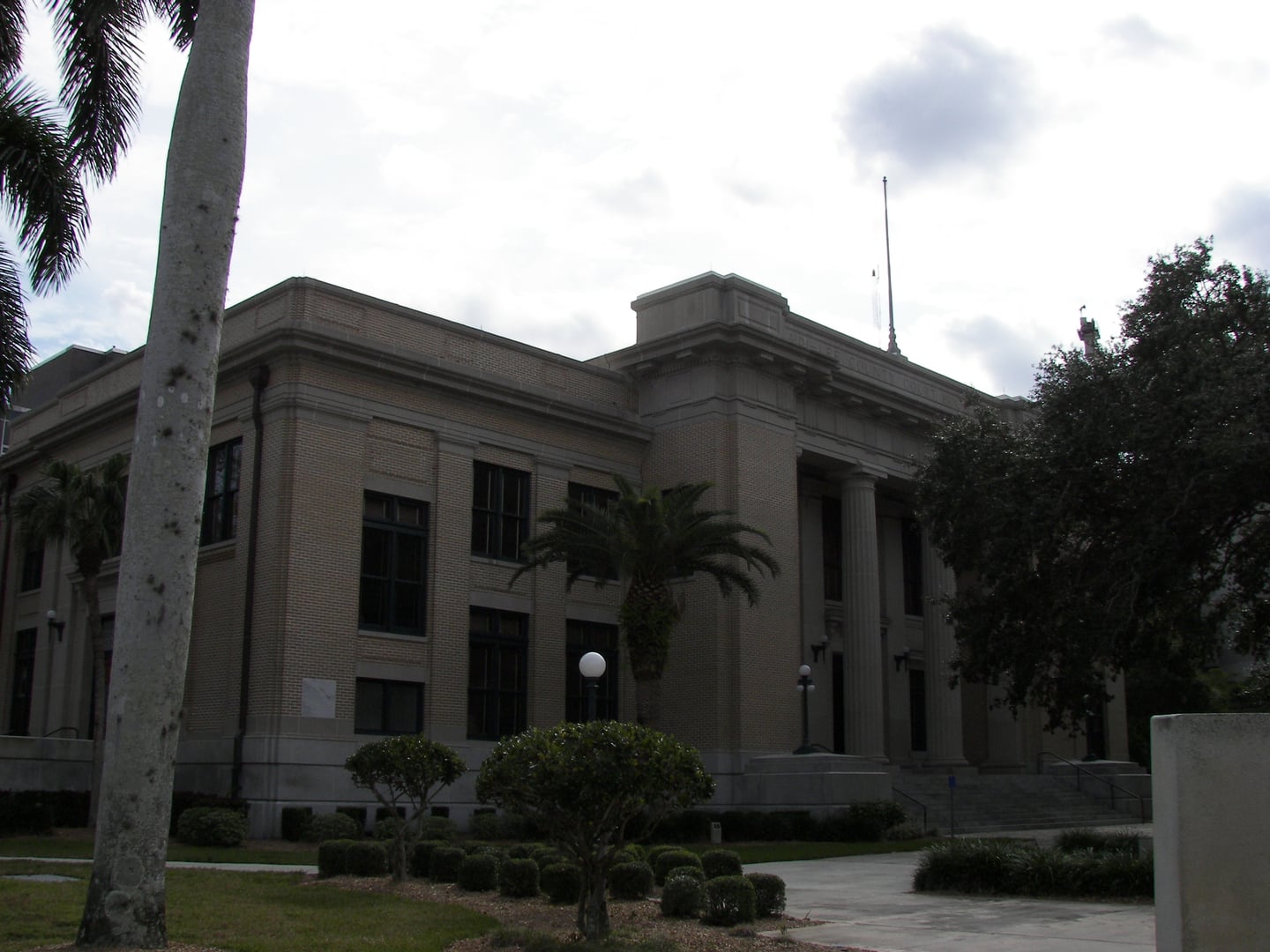
Architect Francis J. Kennard designed the Lee County Courthouse, and its cornerstone was laid on April 13, 1915. The Classical Revival building served as the county seat from its completion until 1984. Among the trials held here were the first death-penalty proceedings in Lee County history. It was added to the National Register of Historic Places on March 16, 1989, and today houses county offices including the Lee County Board of Commissioners.