Est. 1837 · Oldest courthouse in continuous use in West Virginia · National Register of Historic Places (1973) · Site of the 1897 Greenbrier Ghost murder trial
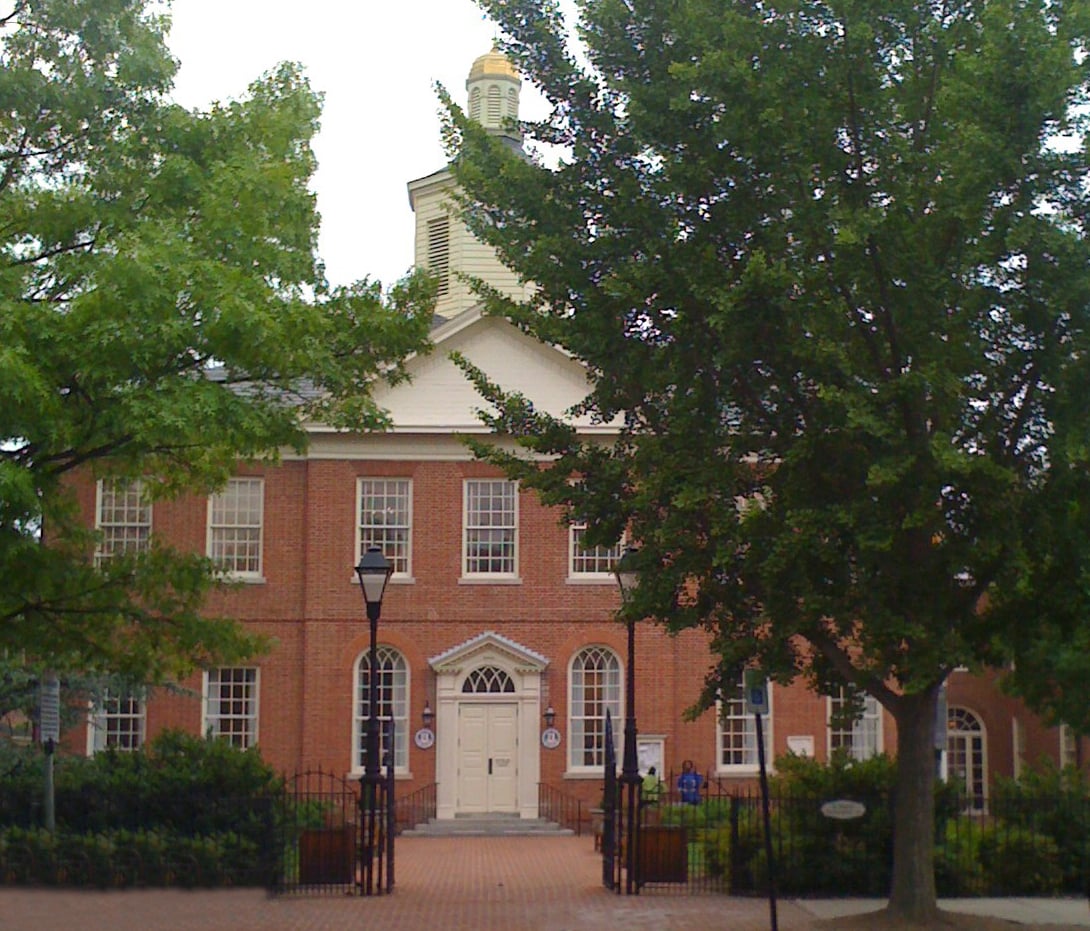
The Greenbrier County Courthouse stands at the center of downtown Lewisburg, the county seat of Greenbrier County in southeastern West Virginia. The present brick courthouse was completed in 1837 and is recognized as the oldest courthouse in continuous use in the state. It is a two-to-three-story, T-shaped brick building distinguished by four large plastered-brick columns across its front facade and a cupola belfry. In 1973 the courthouse and the adjacent Lewis Spring spring house were added to the National Register of Historic Places.
The courthouse and its associated county jail are tied together in local memory by the 1897 prosecution of Edward Stribbling Trout Shue, a blacksmith who had married Elva Zona Heaster, known as Zona, in October 1896. On January 23, 1897, Zona Shue was found dead in the couple's home near Livesay's Mill. A coroner's jury initially recorded the cause of death as natural — variously remembered as heart disease or 'an everlasting faint.'
Zona's mother, Mary Jane Heaster, never accepted the verdict and reported that her daughter's spirit appeared to her over several nights, describing how Edward had broken her neck. Heaster pressed the local prosecutor, John Alfred Preston, to reopen the matter. An exhumation and autopsy of Zona's body determined that her neck had in fact been broken and her windpipe crushed, consistent with strangulation rather than natural death.
The trial opened in the Greenbrier County Courthouse on June 22, 1897, with Edward Shue held in the Lewisburg jail. The jury found Shue guilty of murder and, on the jury's recommendation of mercy, he was sentenced to life imprisonment rather than execution. He was sent to the state penitentiary at Moundsville, where he died on March 13, 1900. A West Virginia state historical marker commemorates the case as 'the only known case in which testimony from a ghost helped convict a murderer.'
Sources
- https://en.wikipedia.org/wiki/Greenbrier_Ghost
- https://www.wvencyclopedia.org/entries/2107
- https://en.wikipedia.org/wiki/Greenbrier_County_Courthouse
- https://www.atlasobscura.com/places/greenbrier-county-courthouse-west-virginia
Reported apparition of Zona Heaster Shue (historical account)Folklore associated with the courthouse and trial
The Greenbrier Ghost is one of the most famous ghost stories in American legal folklore, and the Lewisburg courthouse is its anchor point. According to the tradition documented by the West Virginia Encyclopedia (e-WV) and numerous regional histories, after Zona Heaster Shue's sudden death in January 1897, her mother Mary Jane Heaster reported that Zona's apparition visited her on four successive nights. In these accounts the ghost named Edward Shue as her killer and described how he had broken her neck during a fit of rage over a domestic matter.
Mary Jane Heaster's persistence prompted prosecutor John Alfred Preston to order Zona's body exhumed. The autopsy confirmed a broken neck and crushed windpipe. At trial, Heaster did testify about the apparition under cross-examination, though historians note the prosecution's actual case rested on the physical evidence from the autopsy rather than on the ghost's account. The result, however, cemented the popular memory of a ghost helping to secure a murder conviction — a distinction recorded on the official state historical marker associated with the case.
Visitors to downtown Lewisburg encounter the legend through the historic courthouse, the local walking-tour tradition, and the state marker near Zona Shue's grave. Hauntbound presents the Greenbrier Ghost as a documented piece of regional folklore and legal history rather than as evidence of paranormal activity; the enduring power of the story lies in how a grieving mother's conviction intersected with a genuine homicide investigation.
Notable Entities
Elva Zona Heaster Shue (the Greenbrier Ghost)