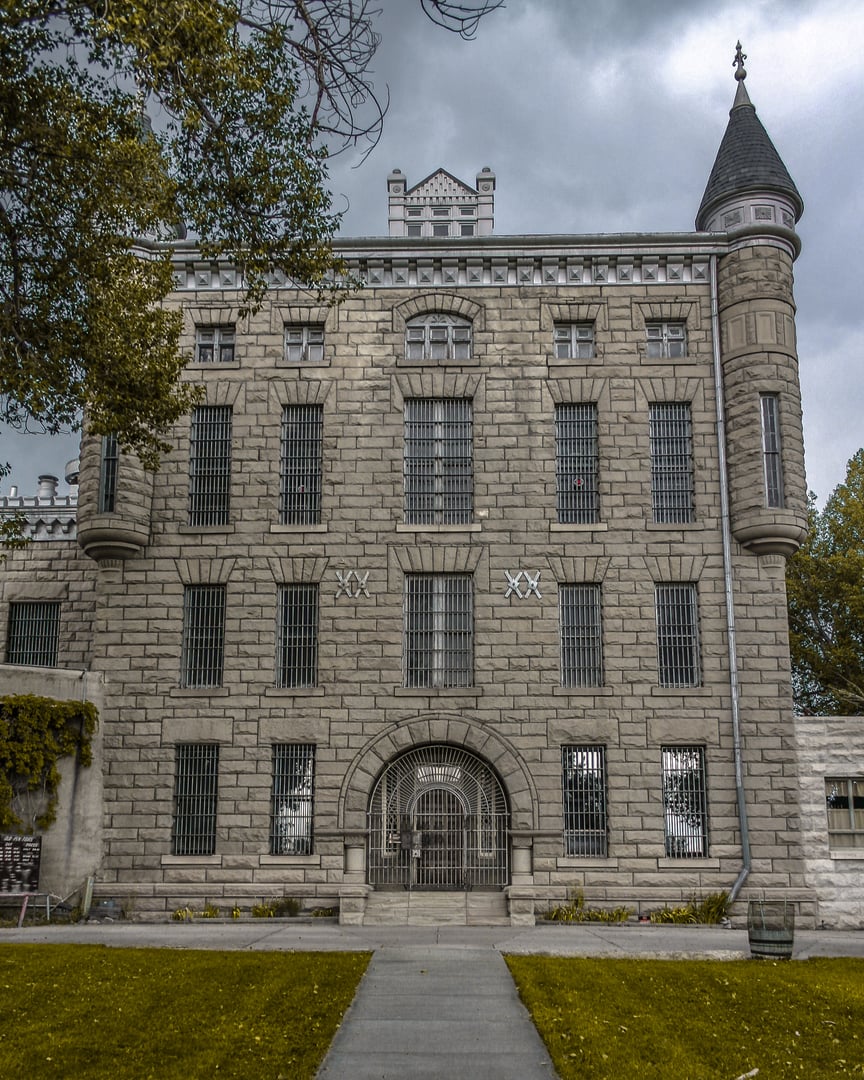
Est. 1935 · National Register of Historic Places (2003) · Site of eleven executions by electric chair (1956–1961) · Built as punitive solitary-confinement block; red-painted straw hats as punishment marker · Angola originated as a slave plantation (pre-Civil War); prison farm established post-1865 · Electric chair ('Gruesome Gertie') on display at Angola Prison Museum
Louisiana State Penitentiary, known as Angola, sits on 18,000 acres in West Feliciana Parish at a bend in the Mississippi River — land that was operating as a slave plantation when the state acquired it for a prison farm after the Civil War. The Red Hat Cell Block was constructed in 1935 as a dedicated punishment unit within Angola's already severe disciplinary system. Inmates assigned to Red Hat were placed in punitive isolation for extended periods and required to wear red-painted straw hats to mark them as the most dangerous prisoners in the system — a public-shaming mechanism that gave the block its name.
In 1956, the state moved its execution apparatus to Red Hat. Louisiana used electrocution as its method of execution, and a portable electric chair — nicknamed 'Gruesome Gertie' — was deployed to carry out death sentences at the facility. Between 1956 and 1961, eleven men were executed by electrocution in the Red Hat Cell Block. The chair was subsequently moved to the Angola Prison Museum, where it remains on display.
The block fell out of use as a punitive isolation unit over subsequent decades as prison conditions were subject to federal court oversight. The Red Hat Cell Block was listed on the National Register of Historic Places in 2003, recognized as a significant example of mid-twentieth-century penal architecture and for its role in the history of capital punishment in Louisiana.
Angola remains an active maximum-security prison. The Angola Prison Museum, located near the entrance of the facility, opened to the public and began offering bus tours that include the Red Hat Cell Block, the former death row, and other historic structures. The tours draw approximately 1,000 visitors per month. The museum also addresses Angola's origins as a slave plantation — a history the site has increasingly incorporated into its interpretive programming.
Sources
- https://en.wikipedia.org/wiki/Red_Hat_Cell_Block
- https://www.angolamuseum.org/history-of-angola
- https://npgallery.nps.gov/NRHP/GetAsset/05fff62b-1f08-4ac1-8b0e-d903e5d88282
Persistent emotional heaviness reported by visitors in cell blocksUnexplained sounds near execution chamberCold spots reported during private investigationsAudio anomalies in audio recordings (private investigative accounts)
The Red Hat Cell Block's dark reputation is grounded primarily in documented history rather than a formalized ghost-hunting tradition. The combination of extreme punitive isolation — men held for months in individual concrete cells, denied normal prison privileges — and eleven executions by electric chair between 1956 and 1961 has produced a site with substantial psychological weight that visitors consistently report feeling.
Angola's bus-tour guides describe encounters with visitors who become emotionally overwhelmed inside the Red Hat structure, a reaction the museum interprets as a response to the authenticated history of the space rather than any specific paranormal claim. The cramped cell dimensions, the location of the execution chamber, and the intact original fixtures make the experience visceral in ways that conventional historical presentation does not.
The block has been visited by paranormal investigators through private arrangements with the museum, and reports from those visits describe the standard range of investigative phenomena: cold spots, audio anomalies, and equipment responses in the area of the execution chamber. None of these reports have been published in sources the museum has formally endorsed.
Angola's interpretive approach treats the Red Hat history — including the plantation origins of the land, the forced-labor era, and the execution era — as part of a continuous account of institutional violence rather than as ghost-tour content. The dark-tourism draw of the site rests on its authenticated history and physical integrity rather than on supernatural framing.
Notable Entities
Eleven men executed by electric chair, 1956–1961
Where this legend is told