Self-Guided Visit
Self-Guided Battlefield Tour
Walk or drive the 1.5-mile tour road past the American rampart, monument, and the Malus-Beauregard House overlooking the Mississippi River.
- Duration:
- 1.5 hr
HauntBound archive · catalog record
Reported phenomena, as catalogued
+ 1 further entry on record
The National Park Service site of the 1815 Battle of New Orleans, where visitors report phantom cannon fire, soldier apparitions, and footsteps in the historic Malus-Beauregard House.
8606 West St. Bernard Highway, Chalmette, LA 70043
Research updated June 2026
Age
All Ages
Cost
Free
Free admission as a National Park Service site; grounds open during park hours.
Access
Wheelchair OK
Flat, mowed battlefield with a paved tour road and visitor center walkways.
Equipment
Photos OK
Est. 1815 · Site of the January 8, 1815 Battle of New Orleans, the last major battle of the War of 1812 · Unit of Jean Lafitte National Historical Park and Preserve (National Park Service) · Includes the 1832-1833 Malus-Beauregard House and the adjacent Chalmette National Cemetery
The Battle of New Orleans, fought on January 8, 1815, was the climactic land engagement of the War of 1812. American forces under Major General Andrew Jackson — a mix of regular army troops, Tennessee and Kentucky militia, free men of color, Choctaw warriors, and Baratarian privateers led by Jean Lafitte — repelled a much larger British assault commanded by Major General Sir Edward Pakenham, who was killed in the fighting. The lopsided American victory, won behind an earthen rampart on the Chalmette plain, became a defining moment of national pride, even though the Treaty of Ghent ending the war had technically been signed weeks earlier.
The Malus-Beauregard House on the battlefield is frequently misidentified as a wartime structure, but it was built in 1832-1833 by Alexandre Baron — nearly two decades after the battle — in the French Creole style, and was remodeled in the 1850s into its current Greek Revival form. It later belonged to Rene Toutant Beauregard, eldest son of Confederate General P.G.T. Beauregard, which gave the house its popular name. It never served as a battlefield hospital, contrary to local legend.
The National Park Service acquired the Malus-Beauregard House in 1949 and restored it in 1965, using it for years as the Chalmette Battlefield visitor center until Hurricane Katrina damaged it severely in 2005. Today the battlefield is preserved as one of six sites within Jean Lafitte National Historical Park and Preserve, located on the east bank of the Mississippi River about six miles downriver from the French Quarter.
Adjacent to the battlefield, Chalmette National Cemetery was established in 1864 and holds the remains of more than 15,000 soldiers, primarily Union dead from the Civil War, along with veterans of later conflicts. The combined site is one of the most-visited historic landscapes in the New Orleans region.
Sources
Chalmette's reputation as a haunted battlefield rests on the kind of residual lore that clings to major military sites. According to the regional folklore researcher behind Southern Spirit Guide — drawing on Jeff Dwyer's 'Ghost Hunter's Guide to New Orleans' (2007) and reports from the Southern Area Paranormal Society — visitors have described apparitions and disembodied voices on the open battlefield, along with cold spots and a sensation of heaviness near the rampart line. Some accounts include strange balls of light moving over the field at dusk.
The Malus-Beauregard House carries its own quieter reputation. Investigators and visitors have reported the sound of footsteps in empty rooms and brief glimpses of shadow figures, phenomena documented by Southern Spirit Guide and echoed by other paranormal-travel sites such as Haunted Nation.
Older anonymous accounts add embellishments that do not appear in the better-documented sources: phantom soldiers seen as if encamped, the boom of guns and cannon carried on the night air, and a 'headless' figure said to walk the river levee. These claims circulate on user-submitted folklore indexes and should be treated as uncorroborated local color rather than documented activity. The popular tale that the Beauregard House served as a wartime hospital is demonstrably false, since the house postdates the 1815 battle by nearly two decades.
Notable Entities
Walk or drive the 1.5-mile tour road past the American rampart, monument, and the Malus-Beauregard House overlooking the Mississippi River.
Seasonal ranger talks interpret the January 8, 1815 battle and the site's later history.
Some links on this page may earn HauntBound a small commission when you book, at no extra cost to you. Our editorial picks are independent. Full disclosure
Every HauntBound history is researched from documented sources. We clearly separate verified historical fact from paranormal folklore.
Free Guide
11 verified stops, rated for families, mapped in order. Free.
One email to confirm, then the guide link. Unsubscribe anytime.
Fort Scott, KS
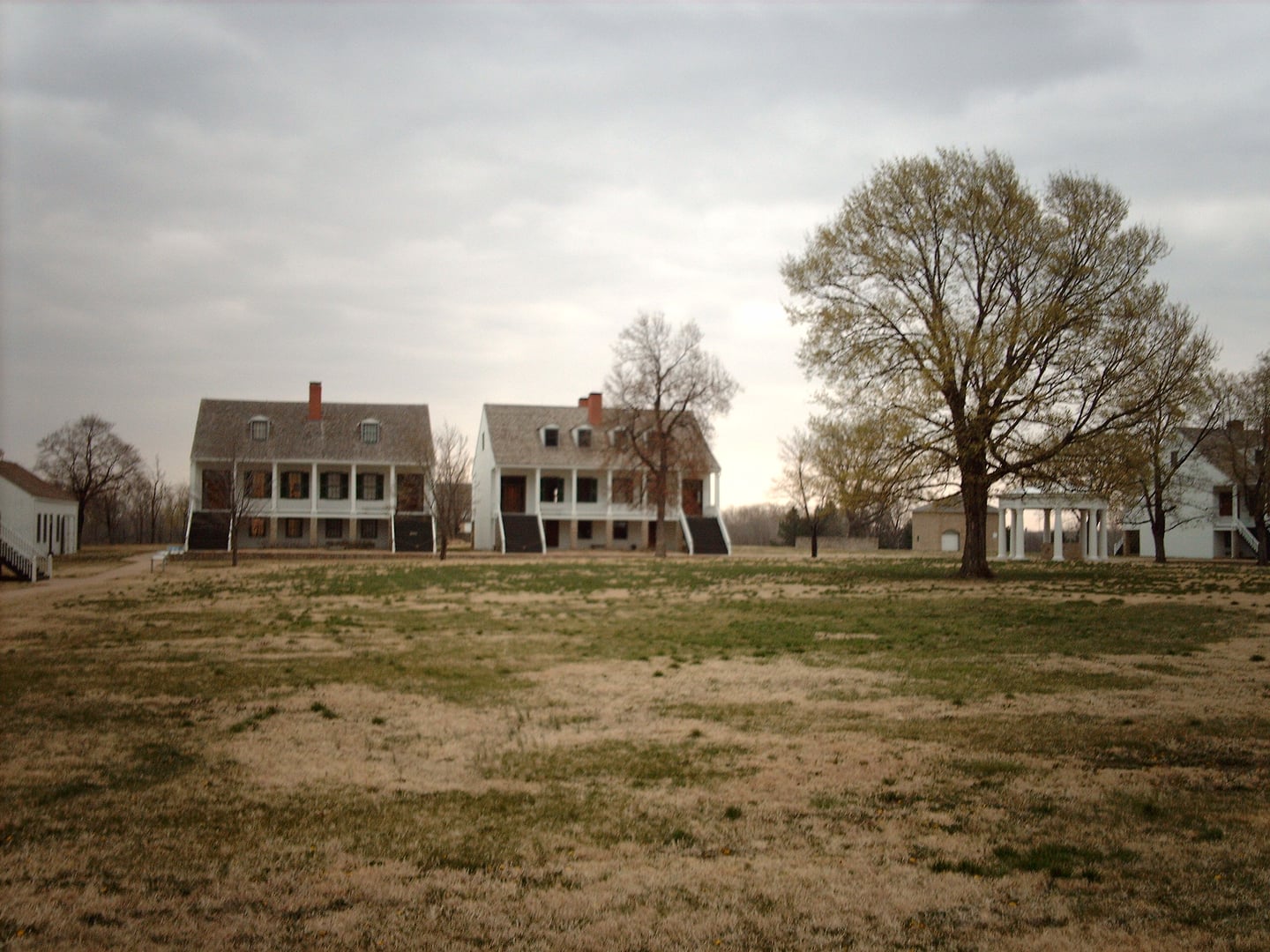
Fort Scott National Historic Site preserves a restored 1840s U.S. Army frontier post that served sequentially as a peacekeeping outpost on the Permanent Indian Frontier, a Bleeding Kansas border garrison, a Civil War supply depot, and a federal court venue. The site was designated a National Historic Site in 1965 and is operated by the National Park Service.
Atlantic Beach, NC
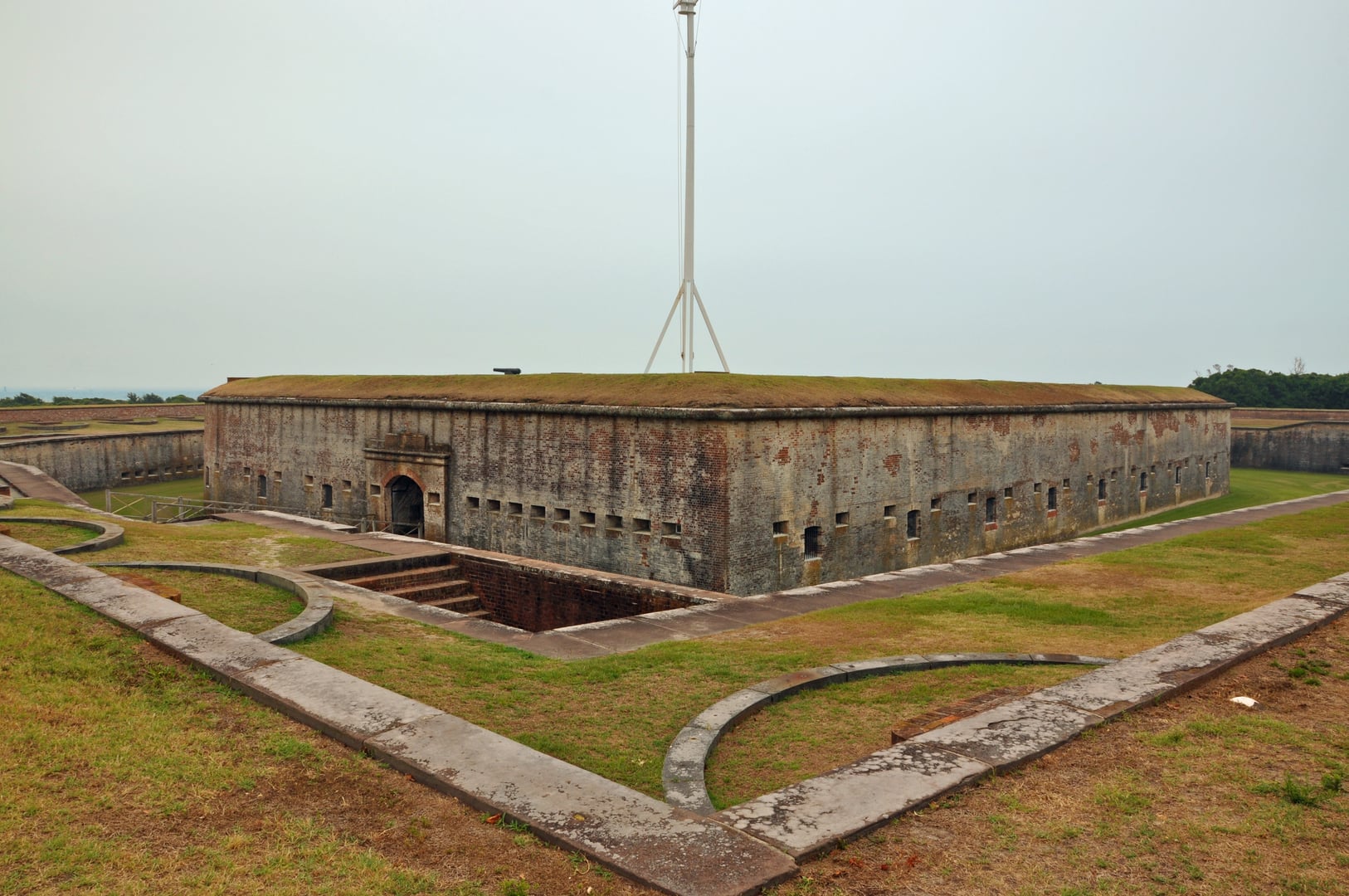
Fort Macon is a Third System brick coastal fort built between 1826 and 1834 to guard Beaufort Inlet on the North Carolina coast, named for U.S. Senator Nathaniel Macon. North Carolina militia seized the fort for the Confederacy in April 1861, and Union forces under Major General Ambrose E. Burnside recaptured it in 1862. It is now the centerpiece of Fort Macon State Park.
 Aerial survey · USDA NAIP
Mansfield, LA
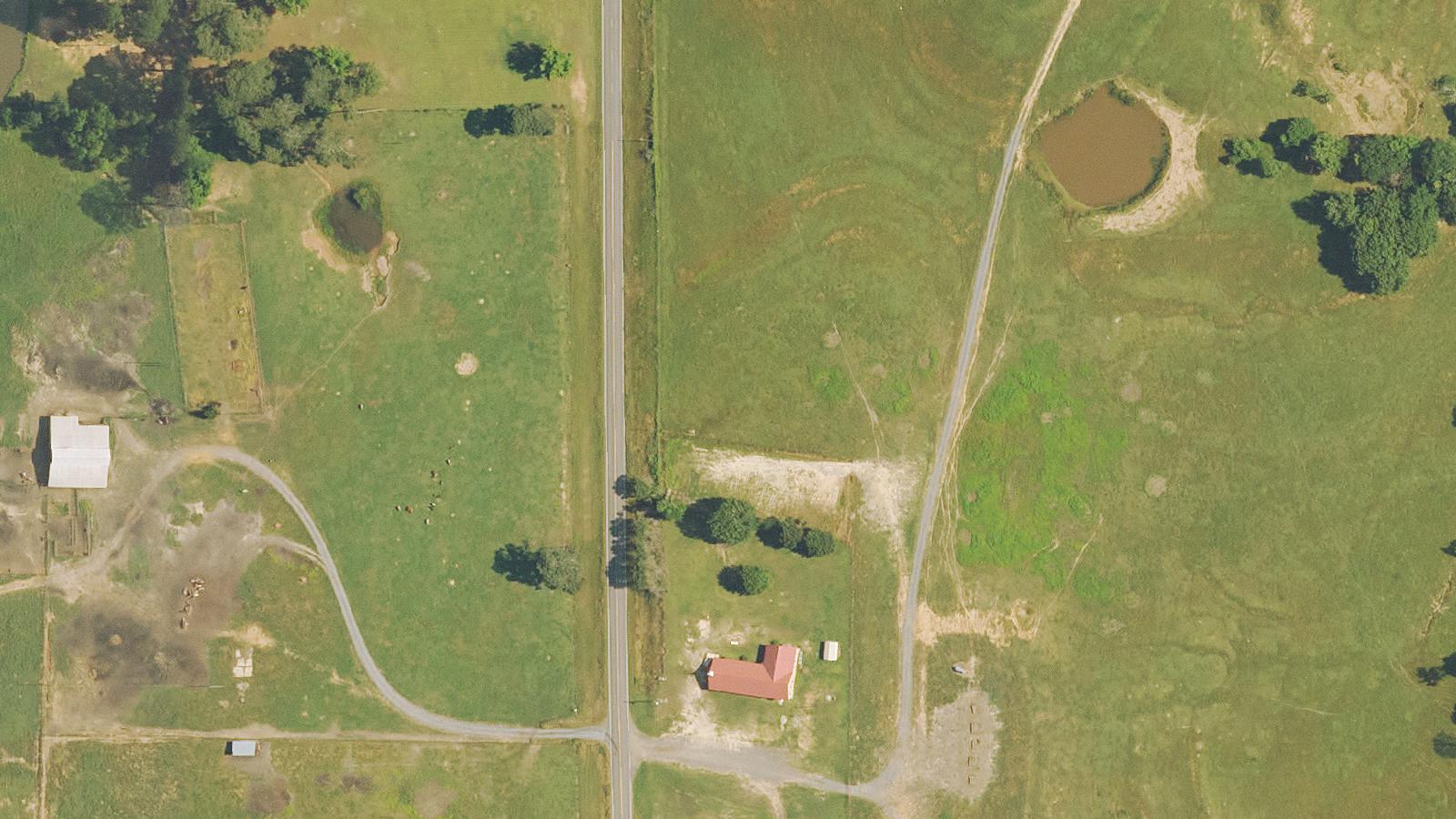
The Battle of Mansfield on April 8, 1864 was the decisive engagement of the Union's Red River Campaign and the last major Confederate victory of the Civil War. Confederate General Richard Taylor's 9,000-man force routed a 13,000-man Union army under General Nathaniel Banks in the afternoon fighting, inflicting over 2,200 Union casualties and capturing 20 artillery pieces and several hundred supply wagons. The defeat ended the Union's strategic threat to Confederate Texas and its cotton supply.