Self-Guided Visit
Fort Adams Self-Guided Tour
Explore the Third System fortification at your own pace, including the exterior ramparts, sally ports, and overlooks. Tunnel access is available on select days with ranger presence.
- Duration:
- 1.5 hr
HauntBound archive · catalog record
Reported phenomena, as catalogued
+ 2 further entries on record
North America's largest surviving coastal fort — 250,000 tons of granite, three known violent deaths, and a tunnel network that draws investigators year-round.
90 Fort Adams Dr, Newport, RI 02840
Research updated September 2026
Age
All Ages
Cost
$
State park day-use fee applies seasonally. Fortress of Nightmares haunted event ticketed separately; see fortadams.org for current pricing.
Access
Limited Access
Earthworks, stone ramparts, and underground tunnel passages with low clearance and uneven footing
Equipment
Photos OK
Est. 1824 · Third System Coastal Fortification · National Historic Landmark · Civil War Naval Academy Relocation · Largest Surviving Coastal Fort in the US
Construction of the current Fort Adams began in 1824 under the direction of Simon Bernard, a French military engineer who had served under Napoleon, and continued for 33 years. The Third System design — a style of masonry coastal fortification developed for the young American republic — required an estimated 250,000 tons of granite and created one of the most technically sophisticated defensive works in the Western Hemisphere. The fort's position at the mouth of Narragansett Bay was intended to control access to Newport Harbor and Narragansett Bay.
At the outbreak of the Civil War in 1861, the Secretary of the Navy ordered the U.S. Naval Academy to evacuate Annapolis, Maryland, which was surrounded by secessionist sentiment. The Academy relocated to Fort Adams, where midshipmen trained and graduated for three years before returning to Annapolis in 1865. The fort housed Confederate prisoners during this period and continued as an active Army post through the early twentieth century.
Two documented violent incidents mark the fort's history. In the 1800s, a soldier was beaten to death by a fellow enlisted man inside the fortification — an event preserved in the fort's internal records. In the 1920s, a jealous soldier shot his wife on the grounds after discovering her with another man; she survived the wound, but the assailant died by suicide at the scene. Fort Adams was decommissioned in 1950 and transferred to the state of Rhode Island, which operates it today as a state park managed through the Fort Adams Trust.
The fort was designated a National Historic Landmark in 1978. Restoration of the casemates and tunnels has been ongoing since the 1990s, and the structure today is considered one of the best-preserved examples of Third System fortification architecture in the country.
Sources
Fort Adams draws a consistent stream of paranormal investigators, anchored in part by a 2010 episode of SyFy's Ghost Hunters that documented the team's night-long investigation of the tunnel system. The crew reported EVP captures and EMF spikes in the underground casemates, and the episode brought the fort to a national paranormal audience. Local investigators have returned repeatedly since.
The fort's underground tunnels — stretching roughly 300 feet beneath the earthworks — are the focal point for most reported phenomena. Investigators describe disembodied footsteps echoing in sections where no one is present, sudden temperature drops without drafts, and photographs showing anomalous light phenomena. The tunnel construction creates acoustic anomalies that skeptics cite as a partial explanation, though documented EVP recordings predate the Ghost Hunters visit.
The two documented deaths are the most frequently referenced anchors for the reported activity. The 1800s beating death is described in fort records as a lethal assault between enlisted men, and investigators report that areas near the former barracks corridors produce the most consistent anomalies. The 1920s domestic shooting and suicide is cited in connection with the outer terreplein, where a woman reported hearing a man calling her name during a night investigation in 2015.
The fort's annual Fortress of Nightmares event, operated by the Fort Adams Trust, uses the tunnel network as its primary venue. While staged as theatrical entertainment, the Trust's own promotional materials acknowledge the site's documented paranormal investigation history.
Media Appearances
Explore the Third System fortification at your own pace, including the exterior ramparts, sally ports, and overlooks. Tunnel access is available on select days with ranger presence.
Guided tours led by Fort Adams Trust docents cover the fort's construction history, Civil War use as a Naval Academy temporary campus, and the documented incidents of violence that occurred on the grounds.
Annual ticketed haunted attraction running through the fort's underground tunnel network each October. The Fort Adams Trust operates this event directly inside the historic casemates and tunnels.
Some links on this page may earn HauntBound a small commission when you book, at no extra cost to you. Our editorial picks are independent. Full disclosure
Every HauntBound history is researched from documented sources. We clearly separate verified historical fact from paranormal folklore.
Free Guide
10 verified stops, rated for families, mapped in order. Free.
One email to confirm, then the guide link. Unsubscribe anytime.
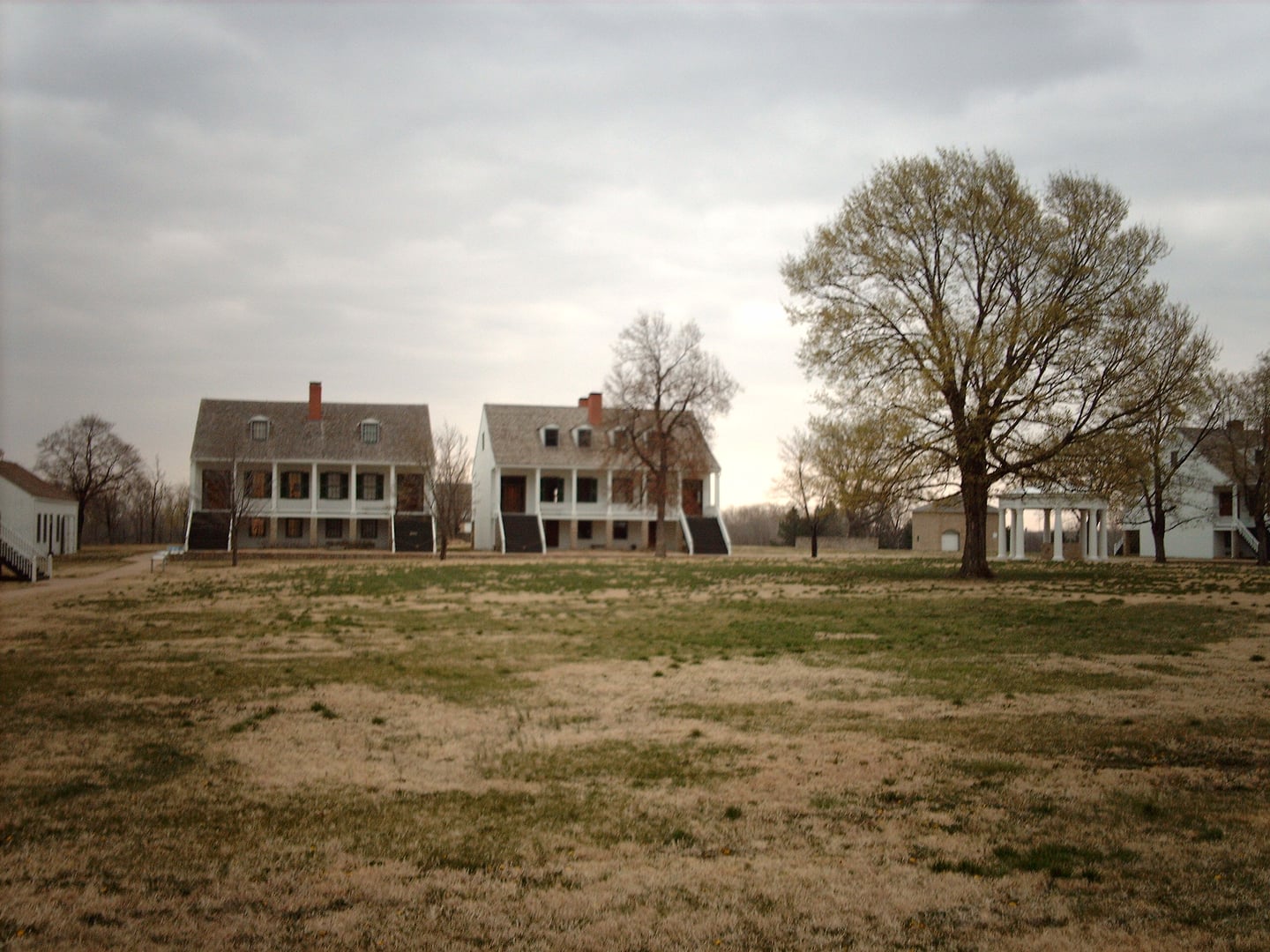
Fort Scott, KS
Fort Scott National Historic Site preserves a restored 1840s U.S. Army frontier post that served sequentially as a peacekeeping outpost on the Permanent Indian Frontier, a Bleeding Kansas border garrison, a Civil War supply depot, and a federal court venue. The site was designated a National Historic Site in 1965 and is operated by the National Park Service.
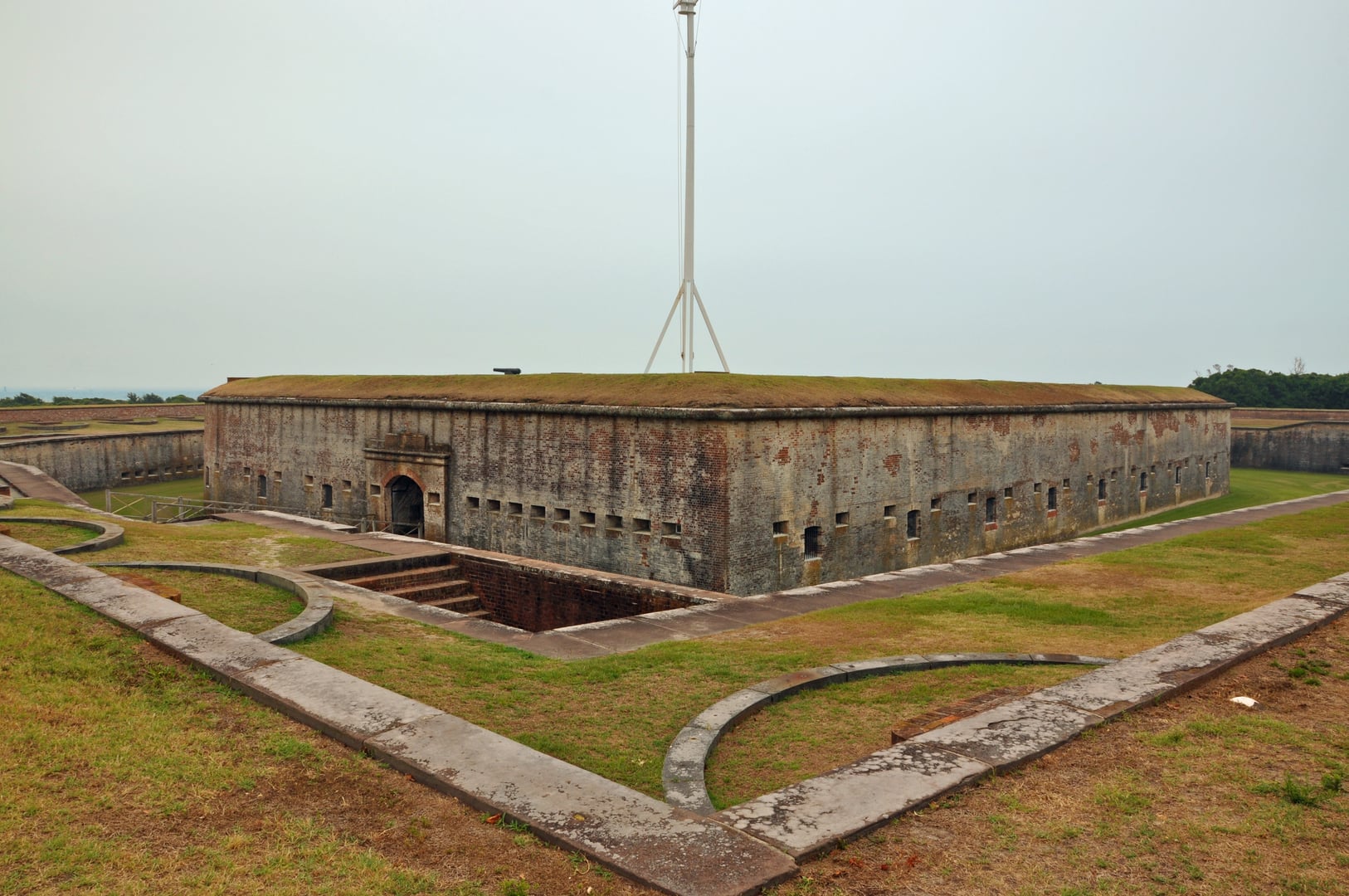
Atlantic Beach, NC
Fort Macon is a Third System brick coastal fort built between 1826 and 1834 to guard Beaufort Inlet on the North Carolina coast, named for U.S. Senator Nathaniel Macon. North Carolina militia seized the fort for the Confederacy in April 1861, and Union forces under Major General Ambrose E. Burnside recaptured it in 1862. It is now the centerpiece of Fort Macon State Park.
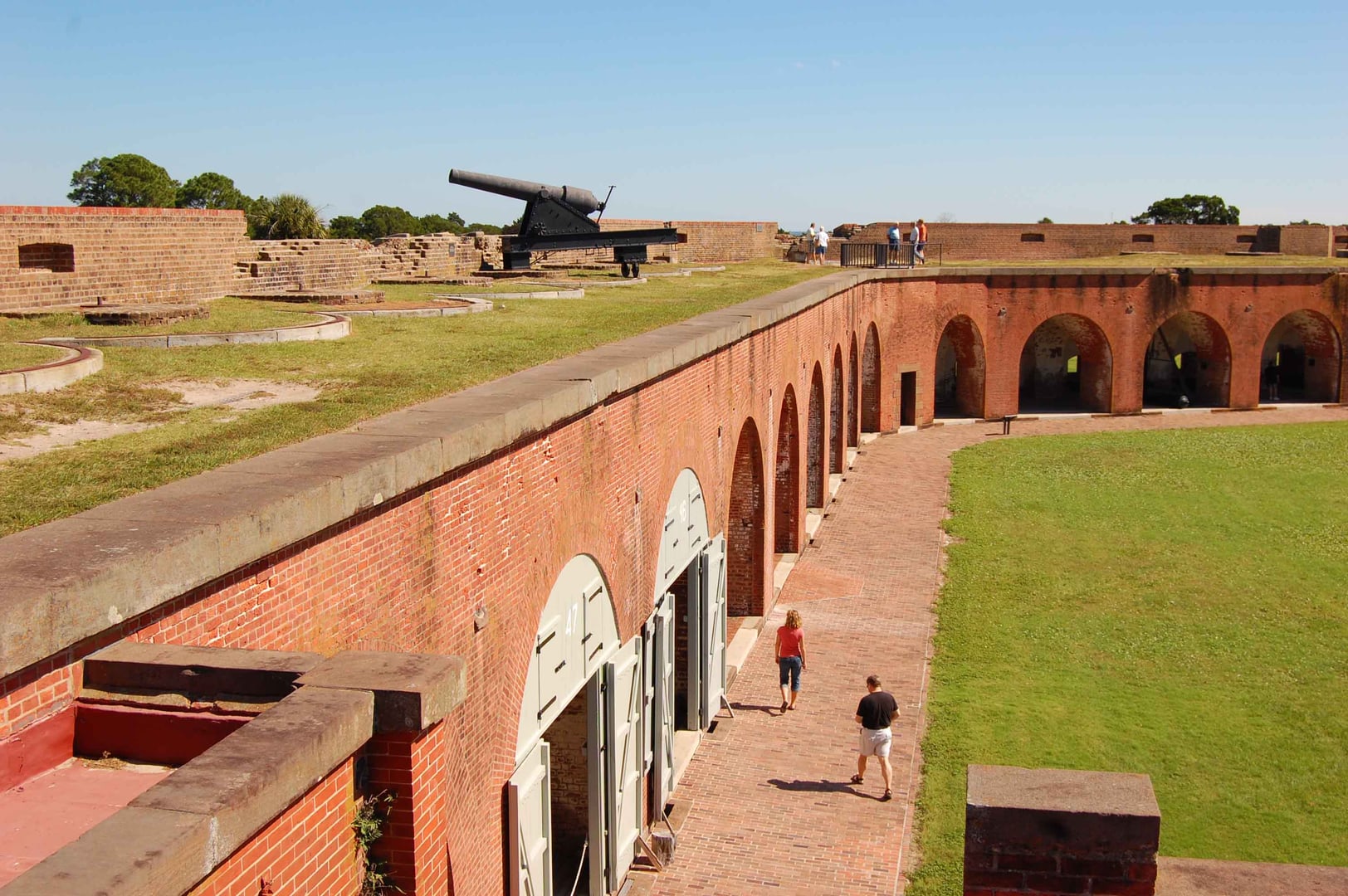
Savannah, GA
Fort Pulaski is a brick coastal fort on Cockspur Island at the mouth of the Savannah River, constructed between 1829 and 1847. The April 1862 Union bombardment with new rifled cannon breached the fort's masonry walls in 30 hours, demonstrating that masonry forts had become obsolete. In late 1864 the fort held the Immortal Six Hundred, Confederate officers held in retaliation; thirteen died on the island.