Self-Guided Visit
Self-guided cemetery walk
Walk the 1832 grounds, the 1867 stone chapel by architect John McMurtry, and the cholera mass-grave area associated with William 'King' Solomon.
- Duration:
- 45 min
HauntBound archive · catalog record
Reported phenomena, as catalogued
Lexington's oldest surviving cemetery, where William 'King' Solomon buried scores of cholera dead in 1833 mass graves when no one else would touch the bodies.
251 East Third Street, Lexington, KY 40508
Research updated September 2026
Age
All Ages
Cost
Free
Free public cemetery; respectful daytime visits.
Access
Limited Access
Grass paths with uneven historic gravestones; not ADA throughout.
Equipment
Photos OK
Est. 1832 · Lexington's oldest surviving cemetery · Site of mass cholera burials (1833 and 1849 epidemics) · 1867 stone chapel by architect John McMurtry · National Register of Historic Places listing (1976) · Associated with William 'King' Solomon, town hero of the 1833 cholera epidemic
The Old Episcopal Burying Ground at 251 East Third Street was acquired by Christ Church (today Christ Church Cathedral) in 1832 to serve as the parish's burial ground. The decision proved prescient: in 1833 Lexington suffered a devastating cholera epidemic that killed nearly one-third of Christ Church's members.
The cemetery is most closely associated with William 'King' Solomon, a town indigent and reputed drunkard who, when nearly everyone else had fled or refused to handle the dead, dug graves and buried the cholera victims of 1833. The death toll overwhelmed normal interment practices, and Solomon was responsible for laying many of the unmarked mass-grave burials at the Episcopal cemetery. After the epidemic he was treated as a folk hero, and James Lane Allen later memorialized him in a short story that helped enshrine his name in Bluegrass lore. Solomon's heroism has been documented in Christ Church Cathedral records and in Kentucky Historical Society materials.
A second major cholera outbreak struck Lexington in 1849, adding more burials. The cemetery also holds veterans of the Revolutionary War, the War of 1812, and the Civil War. In 1867 architect John McMurtry designed and built a small stone chapel on the grounds. Active burials concluded around 1879; total interments approach 600.
The Old Episcopal Burying Ground and Chapel were listed on the National Register of Historic Places in 1976. The grounds are still maintained by Christ Church Cathedral, with public access during daylight hours and tour partnerships including BGT deTours and the Tour the Historic Bluegrass network.
Sources
Compared with newer or more sensational sites, the Old Episcopal Burying Ground's paranormal reputation rests on atmosphere and history rather than on specific named apparitions. The cemetery is included on BGT deTours' Halloween 'Legends and Lore' itinerary and on US Ghost Adventures' Lexington Ghost Tour. Both tours lean on the cholera mass-grave context — particularly the unmarked burials laid down by William 'King' Solomon in 1833 — as the primary emotional and historical anchor.
Visitors and tour guides report standard cemetery phenomena: localized cold spots, brief feelings of being watched, and occasional reports of a figure glimpsed among the older stones. Published witnessed-apparition accounts are thin compared with other Lexington haunts; the cemetery's value as a 'haunted' site comes more from the documented density of cholera dead and the unmarked-burial geography than from specific recurring sightings.
In keeping with the sensitivity of mass-grave history, the cemetery is treated by both Christ Church Cathedral and reputable tour operators as a place of remembrance for epidemic-era victims and for veterans, not as a thrill-seeking destination. Visitors should keep voices low, photograph respectfully, and remain on paths.
Notable Entities
Media Appearances
Walk the 1832 grounds, the 1867 stone chapel by architect John McMurtry, and the cholera mass-grave area associated with William 'King' Solomon.
Multiple Lexington walking tours — including BGT deTours' Halloween 'Legends and Lore' — feature the cemetery as a stop.
Some links on this page may earn HauntBound a small commission when you book, at no extra cost to you. Our editorial picks are independent. Full disclosure
Every HauntBound history is researched from documented sources. We clearly separate verified historical fact from paranormal folklore.
Free Guide
11 verified stops, rated for families, mapped in order. Free.
One email to confirm, then the guide link. Unsubscribe anytime.
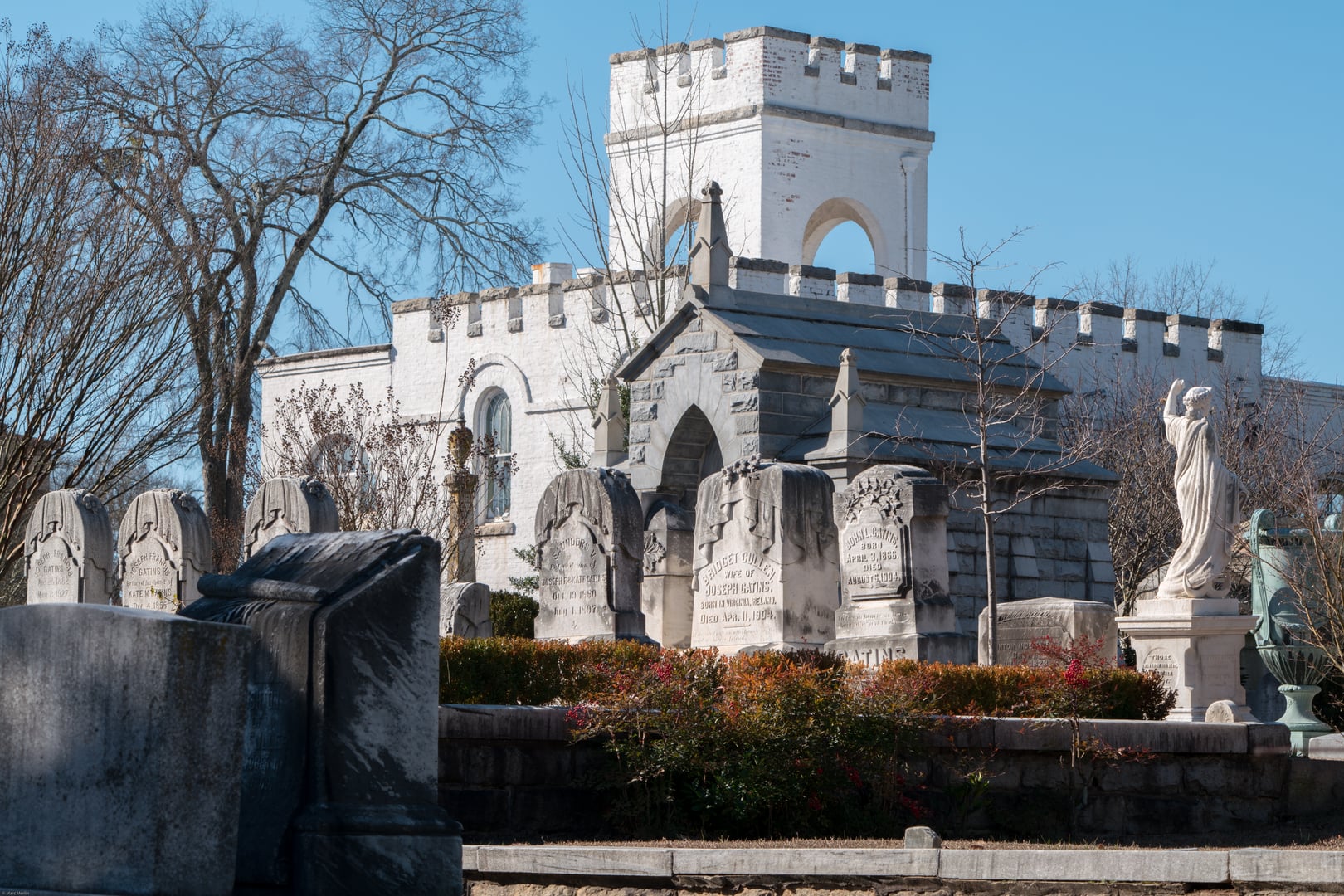
Atlanta, GA
Historic Oakland Cemetery was chartered in 1850 as the six-acre 'Atlanta Cemetery,' renamed Oakland in 1872, and expanded to 48 acres. Approximately 70,000 people are interred, including roughly 6,900 Confederate soldiers (3,000 unidentified), four Confederate generals, six Georgia governors, 27 Atlanta mayors, Margaret Mitchell, golfer Bobby Jones, and Maynard Jackson, Atlanta's first African American mayor. The cemetery was listed on the National Register of Historic Places on April 28, 1976.
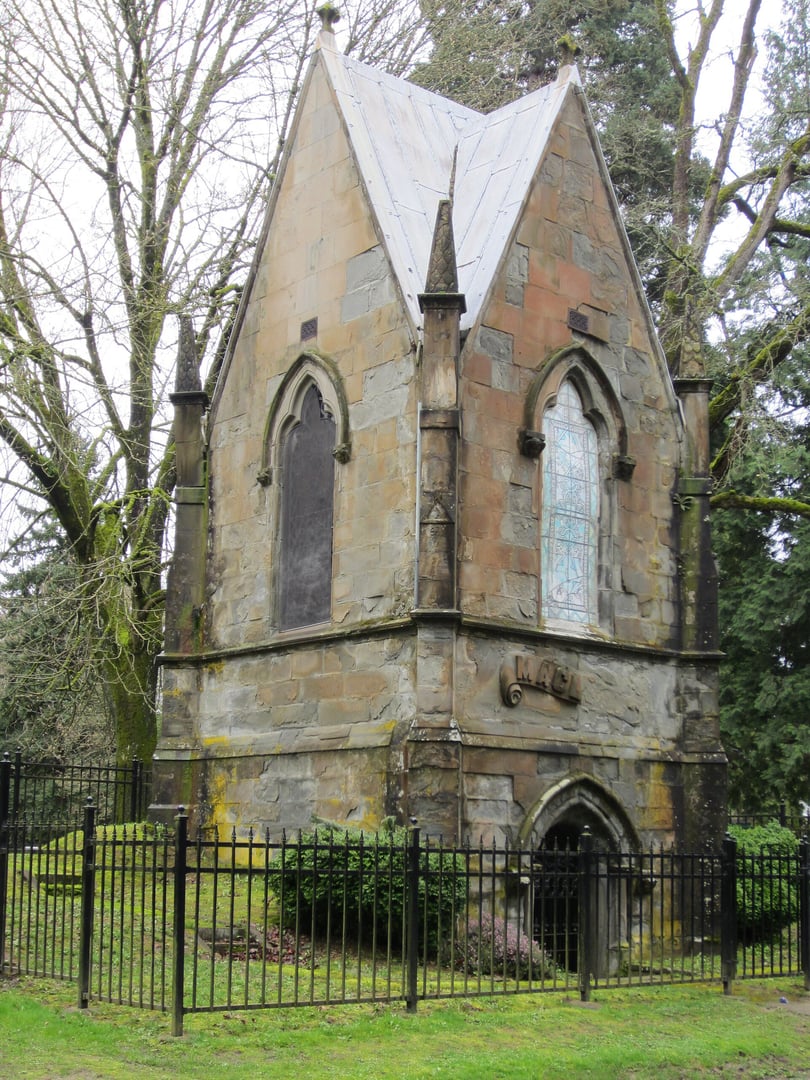
Portland, OR
The cemetery began with the 1846 burial of pioneer Emmor Stephens on a family farm in what is now southeast Portland. In 1854 Colburn Barrell bought the land and dedicated 10 acres as 'Mount Crawford,' named after his business partner Crawford Dobbins, who died with 23 others when the steamboat Gazelle exploded at Canemah that April. Later renamed Lone Fir, the 30-acre site holds about 25,000 burials including six Portland mayors and was listed on the National Register of Historic Places in 2007. It is now operated by Metro.
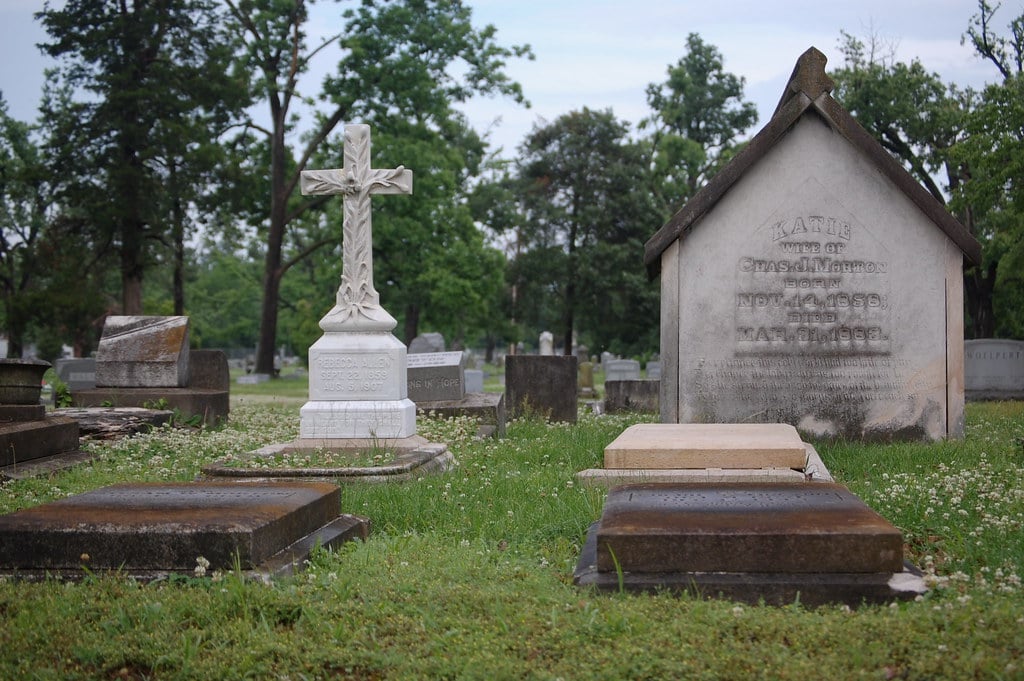
Paducah, KY
Oak Grove Cemetery, established in 1847, is Paducah's historic municipal cemetery in McCracken County, with more than 33,000 burials. Its most famous resident is Della Robinson Barnes (1874–1897), youngest daughter of city councilman George F. Barnes, who died at age 22 of accidental morphine poisoning. Her father commissioned a life-size Italian-carved memorial statue that has since been heavily vandalized.