Self-Guided Visit
Della Barnes Grave Visit
Walk Paducah's historic Oak Grove Cemetery to find the Della Barnes plot, centerpiece of the city's most enduring ghost story, and the surrounding 19th-century monuments.
- Duration:
- 45 min
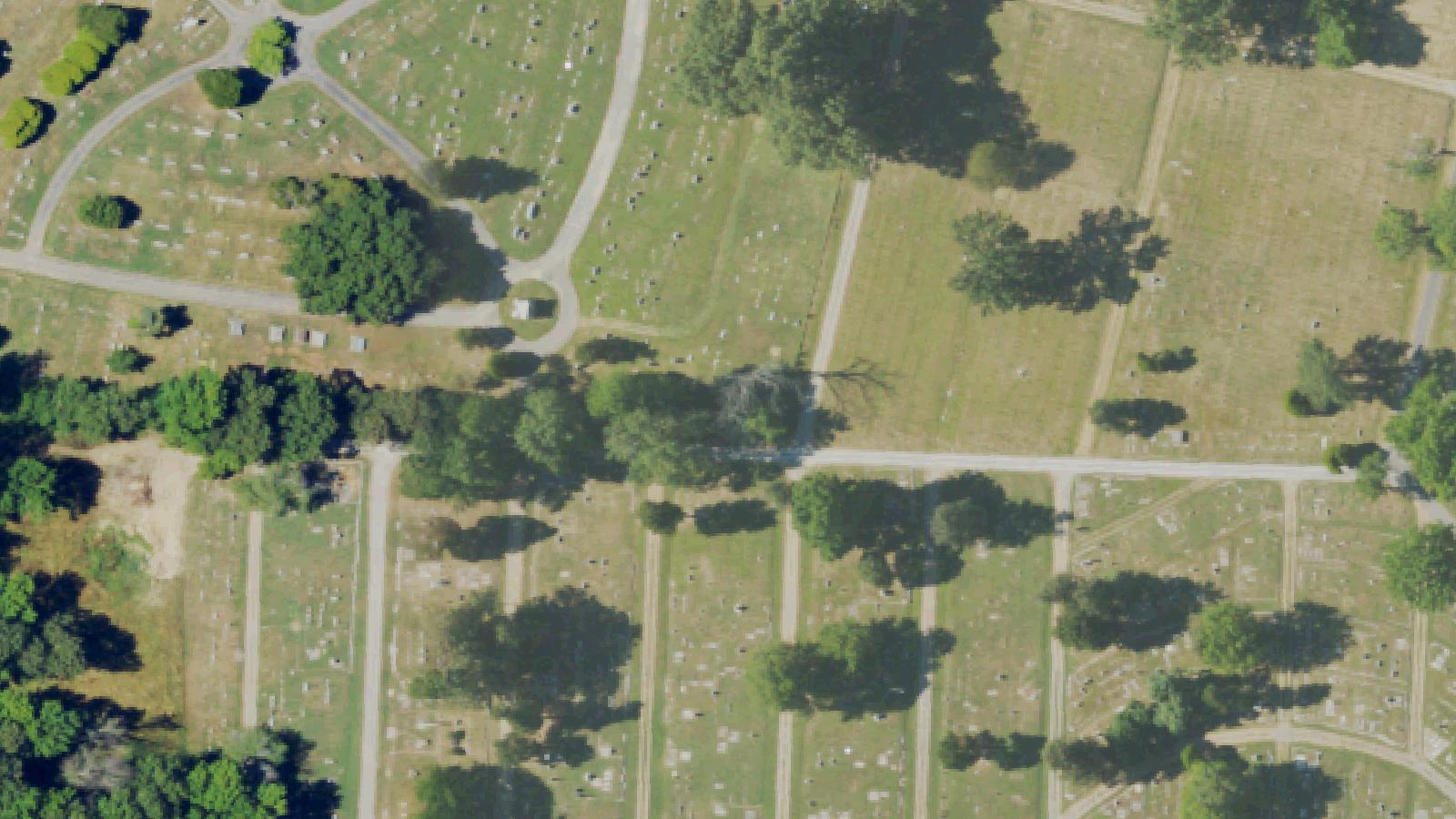 Aerial survey · USDA NAIP · public domain
Paducah's historic 1847 city cemetery, famous for the grave of Della Barnes — a 22-year-old who died of accidental morphine poisoning in 1897 and whose now-ruined memorial statue anchors one of western Kentucky's best-known ghost stories.
1613 Park Avenue, Paducah, KY 42001
Research updated June 2026
Age
All Ages
Cost
Free
No admission fee. A municipal cemetery managed by Paducah Parks & Recreation; annual lantern tours may charge a fee.
Access
Wheelchair OK
Established city cemetery with paved drives and grass sections; generally level.
Equipment
Photos OK
Est. 1847 · Historic Paducah municipal cemetery established 1847 with 33,000+ burials · Resting place of Della Robinson Barnes (1874–1897), subject of a famous local legend · Site of the City of Paducah's annual Oak Grove Cemetery lantern history tours
Oak Grove Cemetery was established in April 1847 and is operated today by the City of Paducah's Parks & Recreation Department. Covering tens of thousands of platted lots with more than 33,000 burials, it is the principal historic cemetery of Paducah and McCracken County, and the resting place of many of the city's prominent 19th- and early-20th-century families.
Its best-known grave belongs to Della Robinson Barnes, born in 1874, the youngest daughter of Paducah councilman George F. Barnes. According to her 1897 newspaper obituary and later research, Della felt unwell one summer night and intended to take a dose of calomel, then a common mercury remedy. By accident she took morphine instead; physicians named in the contemporary account, Drs. Murrell and Elliott, were summoned but could not save her, and she died at the family home on West Jefferson Street on June 27, 1897, at age 22.
Grief-stricken, her father commissioned an Italian sculptor to carve a life-size statue of Della holding a rose over her heart, which was placed over her grave. Over the decades the statue became a Paducah landmark — and a target. It has been repeatedly vandalized, with successive thefts and damage leaving, by the 2010s, little more than the pedestal; local efforts have called for its restoration.
The Barnes grave has since become a fixture of Paducah's public history programming, featured in the City of Paducah's Oak Grove Cemetery lantern tours, which present the documented stories of the cemetery's residents.
Sources
Della Barnes is the heart of Paducah's most famous ghost story. The documented record is clear and sad: she died of accidental morphine poisoning in 1897 at age 22, as reported in her contemporary obituary and confirmed by later research. Local folklore, however, has spun several darker alternatives around that fact. The version recorded in the original Shadowlands submission claims she was a young woman whose jealous fiancé murdered her in a rage and went so far as to cut off her left ring finger to retrieve an expensive engagement ring. Other circulating versions cast her as torn between an older wealthy suitor and a poorer young love. Regional sources that document this lore — including newspaper coverage and Paducah history writers — are explicit that these murder-and-mutilation versions are legend, not history; the verified cause of death is the accidental overdose, and HauntBound presents the murder story only as folklore.
The second motif centers on the memorial statue her father commissioned: a life-size figure of Della holding a rose. The Shadowlands account, like other local tellings, claims the angelic statue turns and faces a different direction on certain nights, and some versions say it weeps. These claims attached to the statue while it still stood; the figure has since been repeatedly vandalized down to its pedestal.
The third strand is the apparition itself. Local lore holds that Della's spirit walks a familiar path through Oak Grove on moonlit nights, and visitors have long reported sightings of a young woman among the older monuments. This tradition is well enough established that the City of Paducah's lantern tours include Della's documented story, and her legend has even lent its name to a local craft beer — markers of how deeply the tale is woven into Paducah's identity.
With its documented historical core and widely published folklore, the Della Barnes story is among the best-corroborated legends in western Kentucky, even as its most lurid claims remain unverified folklore.
Notable Entities
Walk Paducah's historic Oak Grove Cemetery to find the Della Barnes plot, centerpiece of the city's most enduring ghost story, and the surrounding 19th-century monuments.
Seasonal lantern-lit history tour run by the City of Paducah and local volunteers, presenting documented stories of cemetery residents including Della Barnes.
Some links on this page may earn HauntBound a small commission when you book, at no extra cost to you. Our editorial picks are independent. Full disclosure
This Paducah tour includes Oak Grove Cemetery on its route.
Every HauntBound history is researched from documented sources. We clearly separate verified historical fact from paranormal folklore.
Free Guide
11 verified stops, rated for families, mapped in order. Free.
One email to confirm, then the guide link. Unsubscribe anytime.
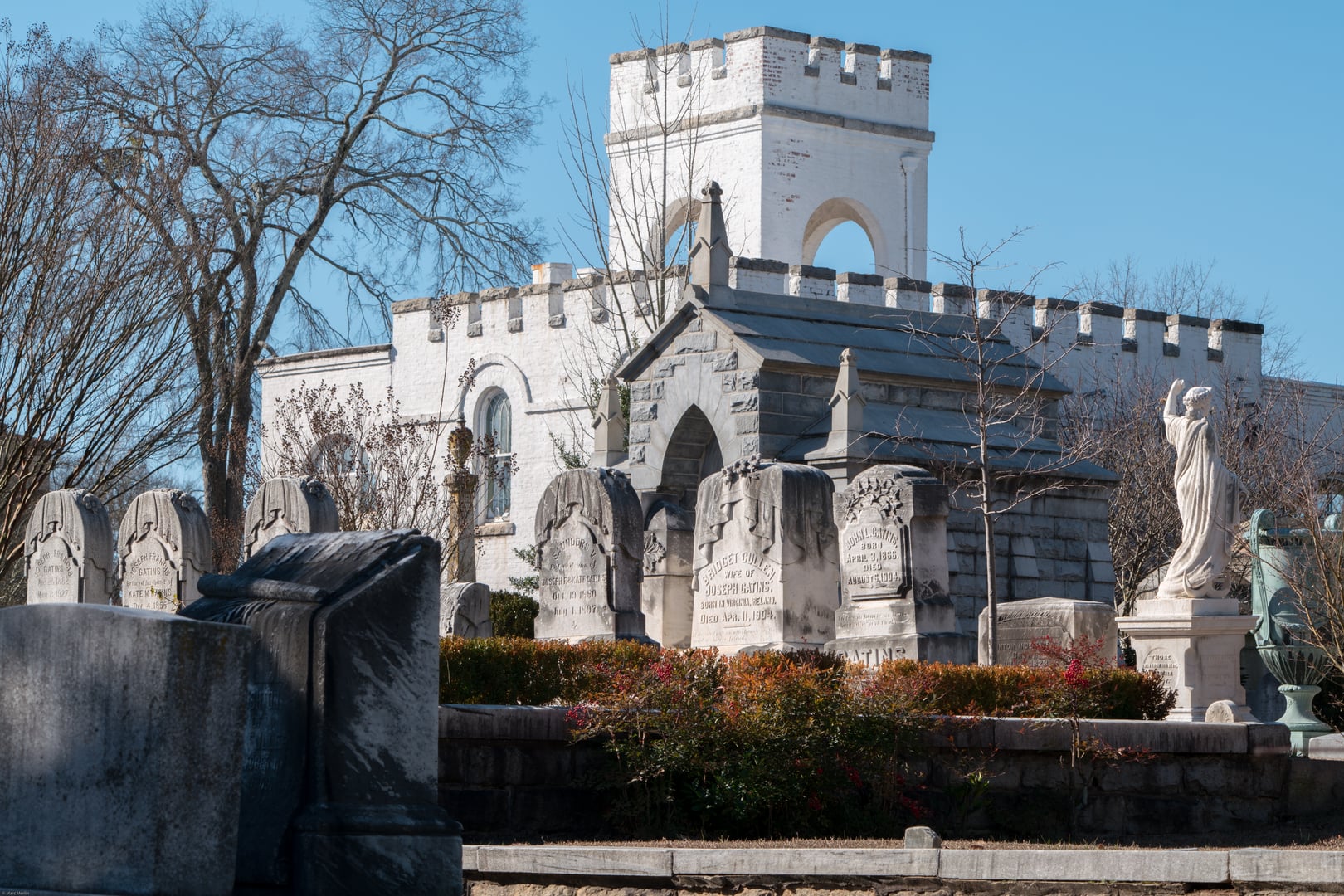
Atlanta, GA
Historic Oakland Cemetery was chartered in 1850 as the six-acre 'Atlanta Cemetery,' renamed Oakland in 1872, and expanded to 48 acres. Approximately 70,000 people are interred, including roughly 6,900 Confederate soldiers (3,000 unidentified), four Confederate generals, six Georgia governors, 27 Atlanta mayors, Margaret Mitchell, golfer Bobby Jones, and Maynard Jackson, Atlanta's first African American mayor. The cemetery was listed on the National Register of Historic Places on April 28, 1976.
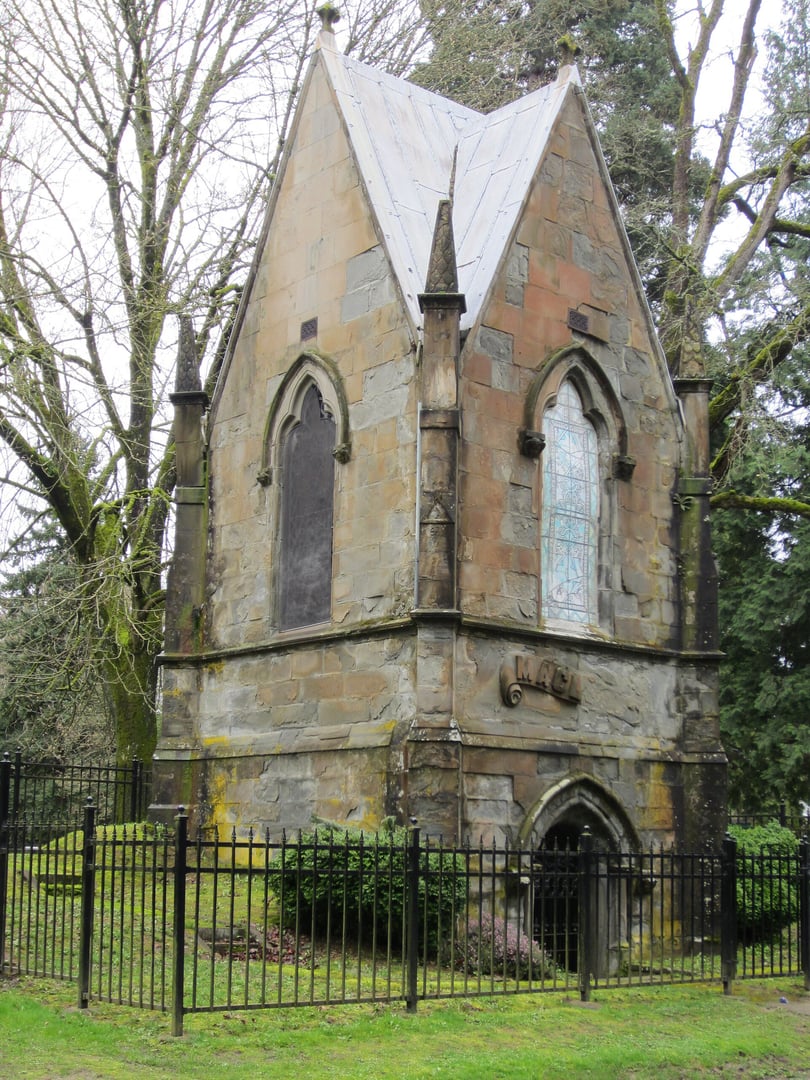
Portland, OR
The cemetery began with the 1846 burial of pioneer Emmor Stephens on a family farm in what is now southeast Portland. In 1854 Colburn Barrell bought the land and dedicated 10 acres as 'Mount Crawford,' named after his business partner Crawford Dobbins, who died with 23 others when the steamboat Gazelle exploded at Canemah that April. Later renamed Lone Fir, the 30-acre site holds about 25,000 burials including six Portland mayors and was listed on the National Register of Historic Places in 2007. It is now operated by Metro.
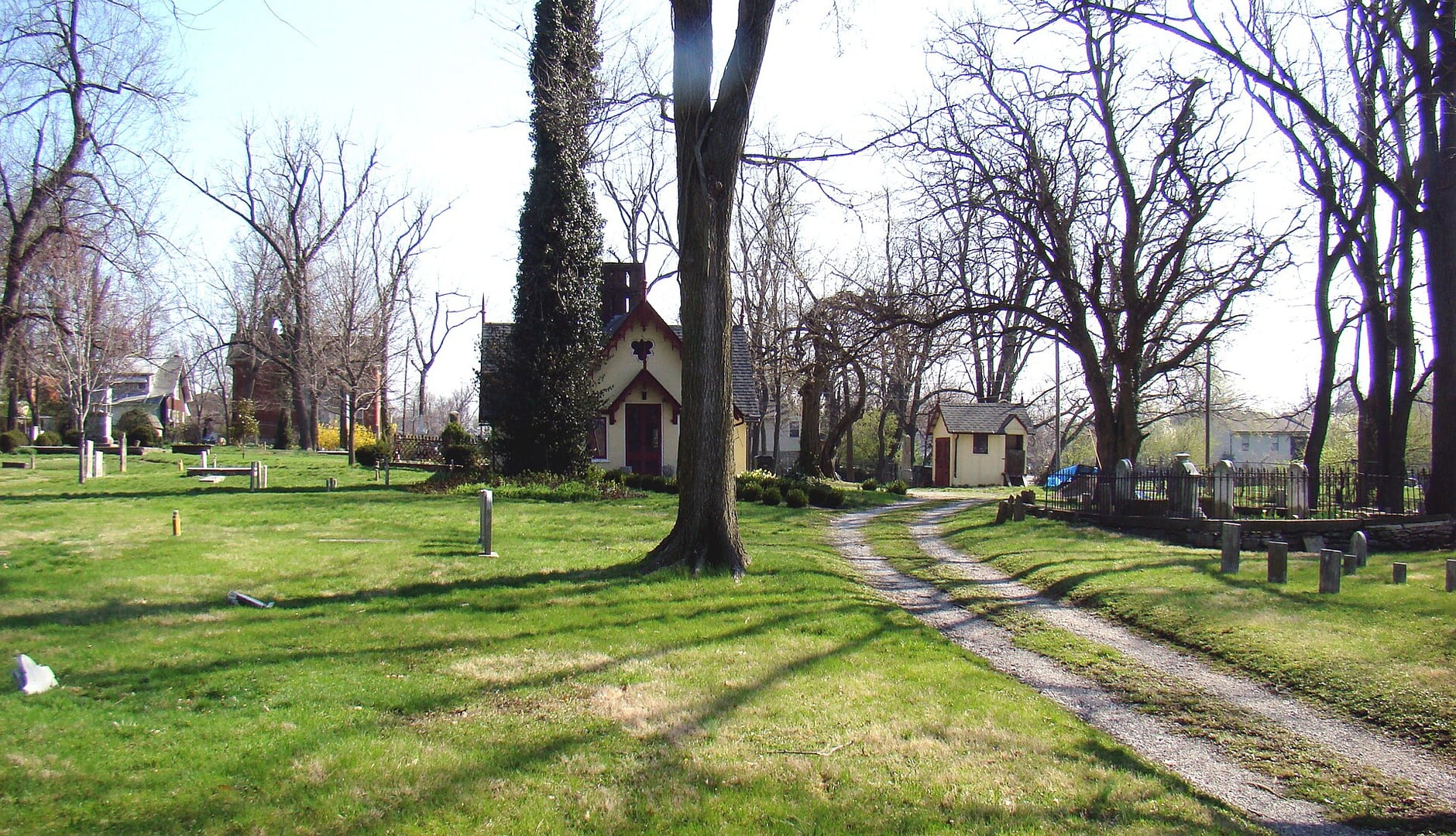
Lexington, KY
Christ Church purchased this land in 1832 for use as a burial ground; the cemetery saw heavy use during the 1833 and 1849 cholera epidemics and again during the Civil War. A John McMurtry-designed stone chapel was added in 1867. Approximately 600 burials took place between 1833 and 1879. Added to the National Register of Historic Places in 1976, it is now Lexington's oldest surviving cemetery.