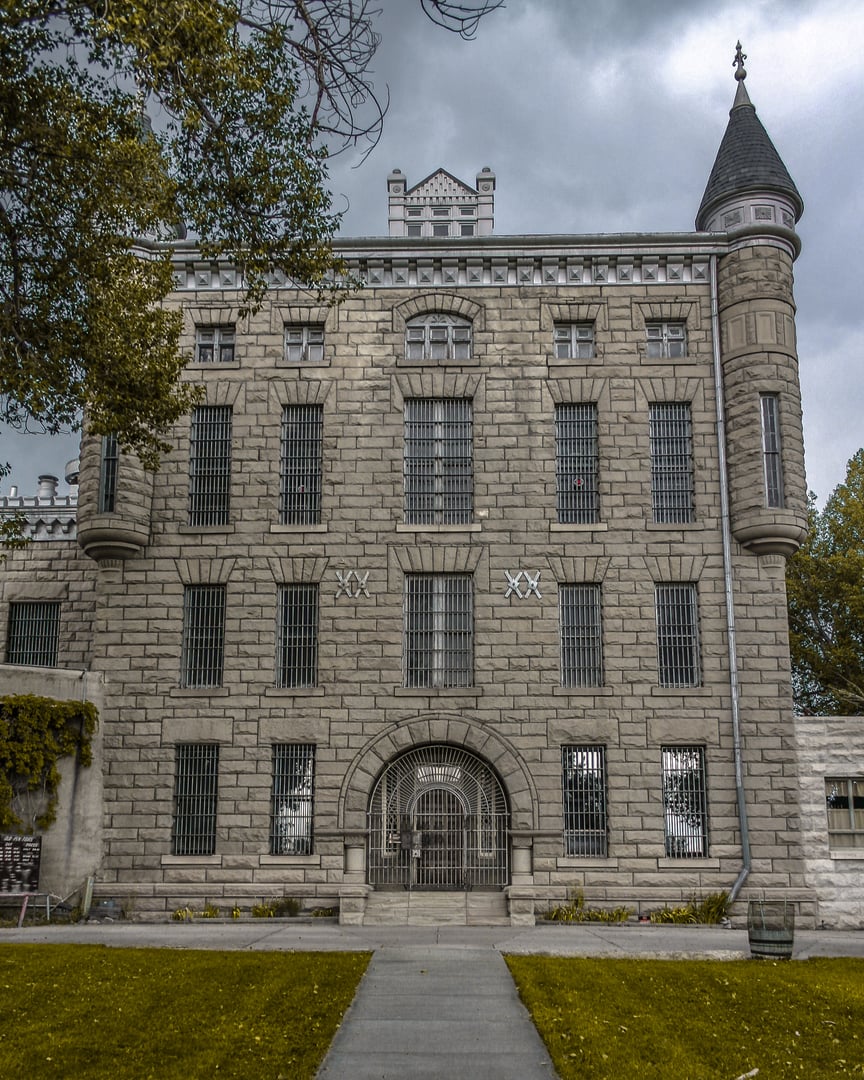
Est. 1854 · California's Oldest Prison — Established 1852, Opened 1854 · Sole California Execution Site Since 1937 · 194 Executions by Gas Chamber and Lethal Injection · Charles Manson Death-Row Incarceration · Inside-the-Gates Museum with Execution Noose Collection
San Quentin State Prison — now officially designated the San Quentin Rehabilitation Center — sits on a narrow peninsula jutting into San Francisco Bay in Marin County, established in 1852 and receiving its first prisoners in 1854. The site was chosen in part for its geographic isolation; the bay on three sides made escape difficult. The prison was built through the first years under the labor of the prisoners themselves.
For decades, San Quentin shared execution duties with Folsom State Prison. In 1937, the state transferred all executions to San Quentin, which built a dedicated gas chamber that entered service in 1938. The chamber remained in use through 1967, when California suspended executions following evolving legal challenges to capital punishment. During that period, 194 prisoners were executed — making San Quentin one of the most active execution sites in American correctional history for the mid-twentieth century.
The death penalty was reinstated by California voters in 1978. Lethal injection was adopted, and San Quentin carried out executions through 2006, when Governor Arnold Schwarzenegger declined to approve a revised lethal injection protocol, effectively ending executions pending further litigation. California's death penalty moratorium was formalized by executive action in 2019.
Among San Quentin's most notorious death-row residents was Charles Manson, who was convicted in 1971 and held on death row until his sentence was automatically commuted to life imprisonment when the California Supreme Court voided all death sentences in 1972. Manson remained incarcerated at various California facilities until his death in November 2017 at Corcoran State Prison.
A museum inside the prison gates, curated by retired Associate Warden Vernell Crittendon, is open to visitors on Tuesdays and Thursdays and houses artifacts from 1852 through the mid-twentieth century, including a collection of nooses from the pre-gas-chamber hanging era, each with handwritten notations identifying the date and the prisoner executed.
Sources
- https://en.wikipedia.org/wiki/San_Quentin_Rehabilitation_Center
- https://www.cbsnews.com/sanfrancisco/news/little-known-museum-inside-san-quentin-documents-prisons-unsettling-history/
Cold spots near execution chamberApparitionsSense of presence
San Quentin's paranormal accounts come from an unusual source: correctional officers, not tourists. A documented account from Officer Cain, published by MindField Bulletin, describes specific encounters in the execution wing of the prison — cold spots in the gas chamber area, the sense of unseen presence, and visual anomalies that the officer attributed to the cumulative weight of executions carried out in the space.
Accounts from corrections staff carry a different weight than visitor reports from commercial ghost tours. Officers have professional incentives to underreport unusual experiences and no financial stake in attracting paranormal tourism. The fact that encounters at San Quentin have been documented through staff rather than through a tour program gives the accounts a different texture than the institutional ghost-hunt economy.
The execution chamber itself — the gas chamber used in 194 deaths from 1938 through 1967 — is the site most consistently referenced in the accounts. The chamber remains on the prison grounds, intact and no longer in use, visible to the small number of visitors who gain access to the museum program on Tuesdays and Thursdays.
The museum's collection of execution nooses, each annotated with the name and execution date of the person who died in it, provides a material anchor for the site's history that is unusual even among former execution facilities. The combination of artifact preservation and officer accounts makes San Quentin one of the more substantive dark-history sites accessible — however limitedly — to the public in Northern California.
Notable Entities
Charles Manson
Where this legend is told