Est. 1895 · Last surviving Queen Anne Victorian on the original Block 14 of the Phoenix townsite · Home of Phoenix's seventh mayor, Dr. Roland Lee Rosson · Centerpiece of Heritage Square restoration · Listed on the National Register of Historic Places
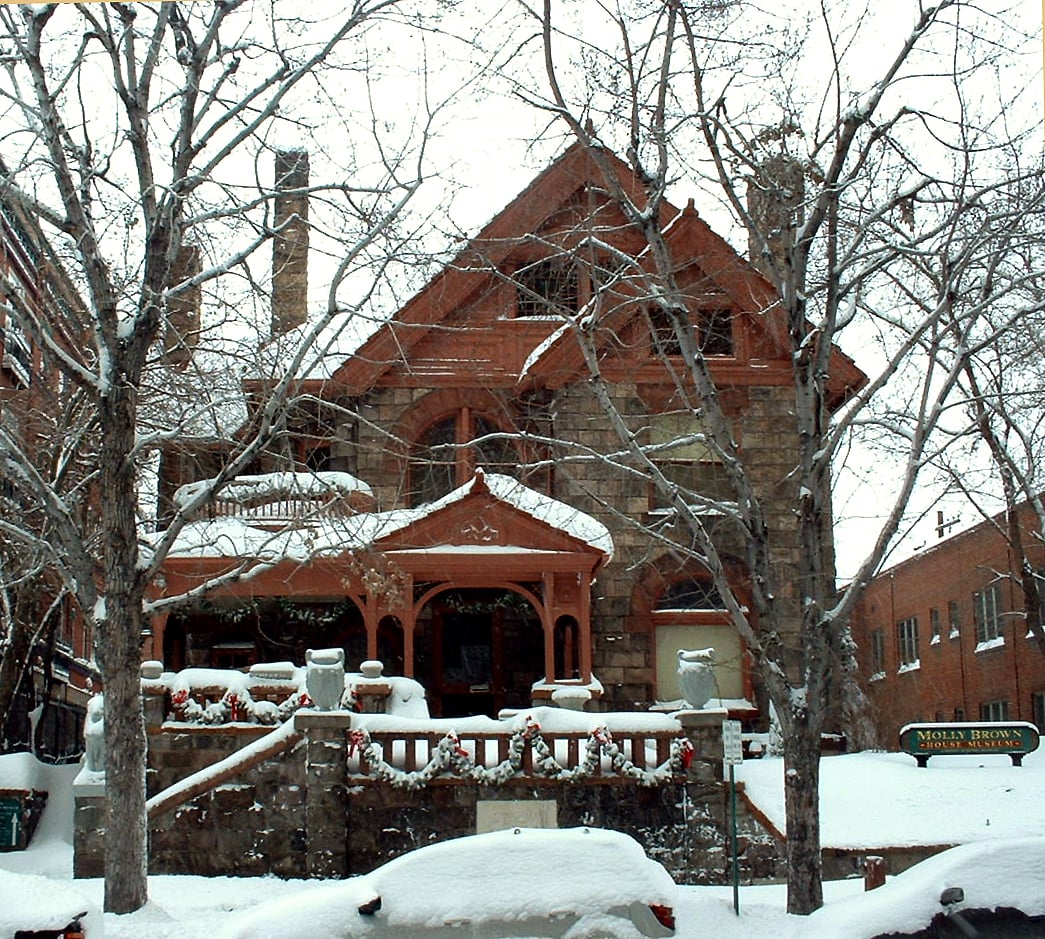
The Rosson House was designed by San Francisco architect Alexander P. Petit, his last completed project before his death, and constructed in 1894-1895 at the corner of 6th and Monroe Streets in Phoenix. Built for Dr. Roland Lee Rosson and his wife Flora Murray Rosson, it stood as a showpiece of territorial-era Phoenix wealth: a ten-room Queen Anne Victorian executed with Stick-Eastlake detailing, a steeply pitched roof, an octagonal turret, and amenities almost unheard of in the territory at the time — including indoor plumbing, electric lighting, and a telephone.
Dr. Rosson had arrived in Phoenix in 1879 and built a practice as a general physician and surgeon. On May 7, 1895, he was elected Mayor of Phoenix, a Democrat working with four Republican councilmen. The arrangement did not last; after persistent disputes with the council he resigned on April 6, 1896, before his term was complete. During the winters of 1895-1896 and 1896-1897, the Rossons rented the home to Whitelaw Reid, editor of the New York Tribune and a national Republican figure who wintered in Phoenix for his health.
In June 1897 the Rossons sold the house and the north half of Block 14, and by late July had relocated to Los Angeles. The house cycled through subsequent owners and eventually became a boarding house. By the 1970s it was one of the last remaining 19th-century structures in central Phoenix, surrounded by the threat of demolition for redevelopment. A grassroots preservation campaign and city action saved the block, and the house was restored and opened to the public in 1980 as the centerpiece of Heritage Square.
Today the Rosson House Museum is operated by the Heritage Square Foundation in partnership with the City of Phoenix. It interprets territorial-era domestic life and the broader story of early Phoenix through guided tours of the restored interior.
Sources
- https://en.wikipedia.org/wiki/Rosson_House
- https://saltriverstories.org/items/show/191
- https://sah-archipedia.org/buildings/AZ-01-013-0065-01
- https://heritagesquarephx.org/
Unexplained footsteps on the main staircaseDoors locking or unlocking on their ownPhantom heat or warmth near unlit fireplacesSmell of cigar smoke in empty roomsWoman's laughter heard with no source
The strongest paranormal narrative attached to the Rosson House centers on Kai 'Speedy' Skounberg, a comedian, entertainer, and on-site caretaker who lived in a trailer on Heritage Square during the long restoration period of the 1970s and early 1980s. According to Phoenix ghost tour operators including Phoenix Ghosts and US Ghost Adventures, Speedy was shot to death in his trailer in 1981 in a case Phoenix police never solved. He has since been credited with apparition sightings near the main staircase, doors that lock and unlock on their own, and unexplained activity in the front parlor (Phoenix Ghosts).
US Ghost Adventures and Haunted US also describe phantom fireplace heat in rooms whose fireplaces have been sealed for decades, and the impression of a presence following visitors through the second-floor bedrooms (US Ghost Adventures; Haunted US). Some accounts add a woman's laughter and the lingering smell of cigar smoke, which guides attribute to Dr. Rosson and Flora Rosson — though no documented family deaths occurred at the property and these claims appear primarily in ghost-tour materials rather than historical record.
The Heritage Square Foundation, which operates the museum, does not market the house as haunted; the paranormal reputation is sustained almost entirely by third-party tour operators and regional press features such as Phoenix New Times and Visit Phoenix's seasonal haunted-places coverage.
Notable Entities
Kai 'Speedy' Skounberg (caretaker, murdered 1981)Dr. Roland Lee Rosson (original owner; attribution by tour operators only)