Est. 1864 · Indiana Landmarks' first preservation project (1963 purchase) · Designed by German-born architect Diedrich A. Bohlen · Built on land originally owned by Ovid Butler (founder of Butler University) · Saved from demolition during Interstate 70 construction
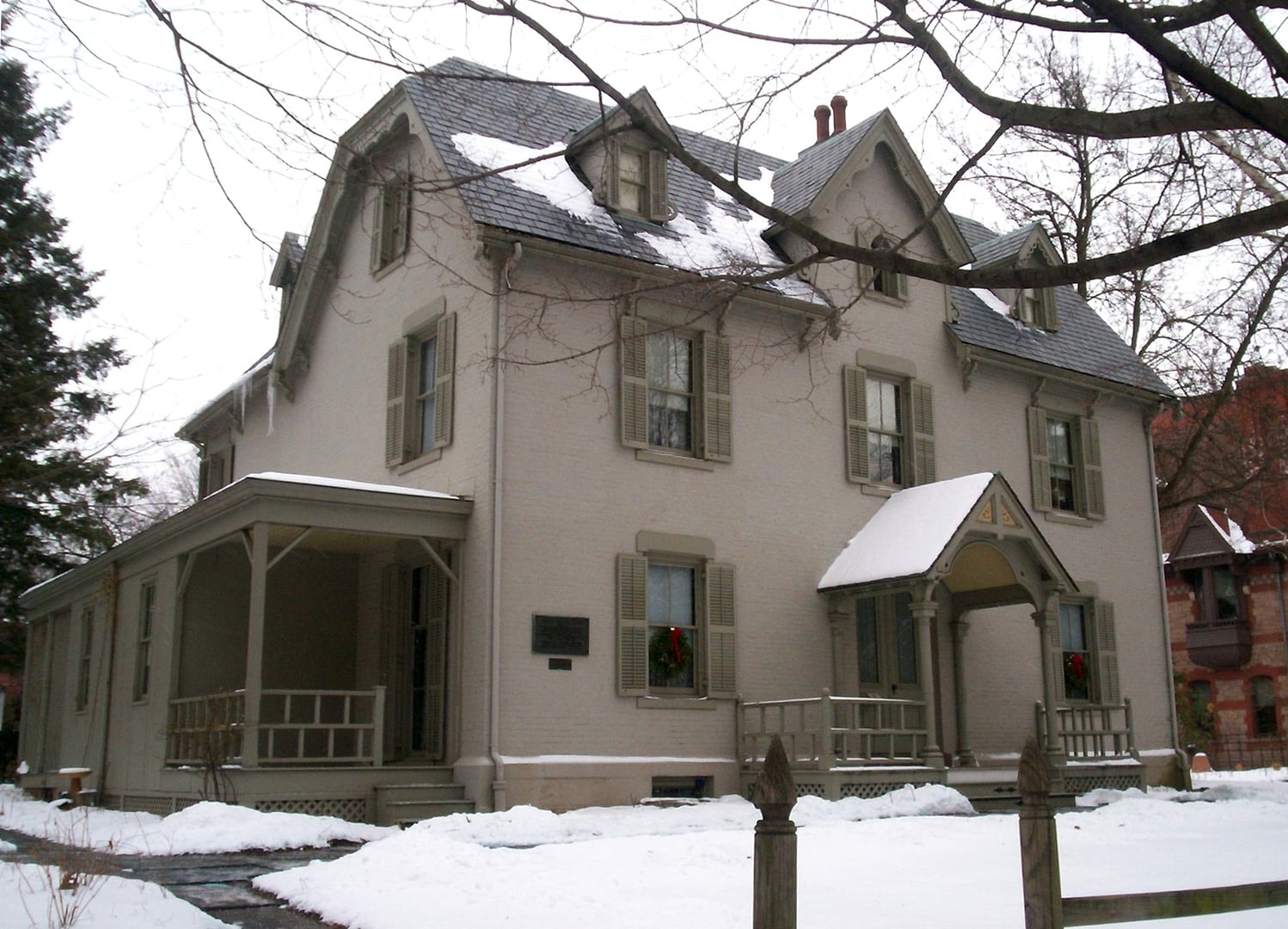
The Morris-Butler House at 1204 North Park Avenue is one of the most important early surviving Second Empire mansions in Indianapolis. John D. Morris commissioned the house in 1864 on a lot purchased from Ovid Butler, the founder of what is now Butler University. Designed by German-born Indianapolis architect Diedrich A. Bohlen, the home was completed in 1865 with the distinctive mansard roof, polychrome detailing, and ornate interior plasterwork characteristic of the style.
An economic depression in the 1870s drove Morris into bankruptcy, and in 1878 he sold the property to his attorney, Noble Chase Butler. Butler moved his family in around 1881 and lived in the house until his death in 1933. His daughter Florence ("Flo") Butler - an accomplished pianist who never married and worked as a clerk in the Federal Building - was the last family resident. By the end of her life, the house had fallen into disrepair and Florence had become reclusive and a hoarder; one oral history records that she lowered a basket from an upper window to receive grocery deliveries rather than admit anyone into the home. She died in 1957.
The Park Avenue Gallery operated in the house from 1957 to 1964. In 1963 the home was threatened by construction of Interstate 70, and Historic Landmarks Foundation of Indiana (now Indiana Landmarks), funded by Eli Lilly, bought the property as the new organization's first major preservation project. Restoration ran from 1964 to 1969.
After a 2013 refurbishment, regular daily museum tours were discontinued. The Morris-Butler House is now operated as an event venue and Indiana Landmarks programming space, and is a featured stop on the Old Northside ghost walk.
Sources
- https://en.wikipedia.org/wiki/Morris%E2%80%93Butler_House
- https://indyencyclopedia.org/morris-butler-house/
- https://historicindianapolis.com/revisited-indianapolis-then-and-now-morris-butler-house-1204-park-avenue/
- https://www.indianalandmarks.org/our-historic-sites/indiana-landmarks-center-campus/rent-a-venue/morris-butler-house/
- https://www.unseenpress.com/morris-butler-house
- https://www.unseenpress.com/parainvest
Shadow figures glimpsed in upper-floor doorwaysUnplaceable footstepsObjects relocating between checksVisitors being touched in bedroom closetsGirl-in-the-mirror dining-room encounter
The most detailed paranormal documentation of Morris-Butler House comes from the Unseen Press investigation team, whose case writeup catalogues shadow people glimpsed in upper-floor doorways, footsteps that cannot be placed when only one person is in the building, objects that move position between checks, and visitors who report being touched while alone in bedroom closets. Indiana Landmarks' own seasonal Old Northside ghost walk treats the house as one of its featured stops.
The legend's most widely repeated story is of a young visiting girl who told her parents she was speaking with another girl she could see in the dining-room mirror. No second child was present. Indiana ghost-story sources describe several variations of this mirror encounter.
The activity is colloquially attributed to 'Flo's ghost' - Florence Butler, who lived in the home until her death in 1957. Florence's documented life (a never-married pianist who became reclusive and hoarded in her later years, per Historic Indianapolis) makes her a natural folkloric anchor, though attributing specific phenomena to her relies on tradition rather than evidence. Sources also note that Noble Chase Butler died in the home in 1933, providing an earlier potential anchor.
Because the Morris-Butler House is open only during programmed events and tours, paranormal reports come predominantly from event guests, Indiana Landmarks staff, ghost-walk participants, and investigator visits rather than continuous-occupant accounts.
Notable Entities
Florence 'Flo' Butler (d. 1957, in the home)Noble Chase Butler (d. 1933, in the home)
Media Appearances
- Unseen Press investigation report
- Indiana Landmarks Old Northside ghost walk
- Visit Indy 'Spine-Chilling Indy Ghost Tours' feature