Est. 1882 · First private home in the world lit by central hydroelectric power (1882) · Edison hydroelectric demonstration site · National Register of Historic Places · Appleton electrification history
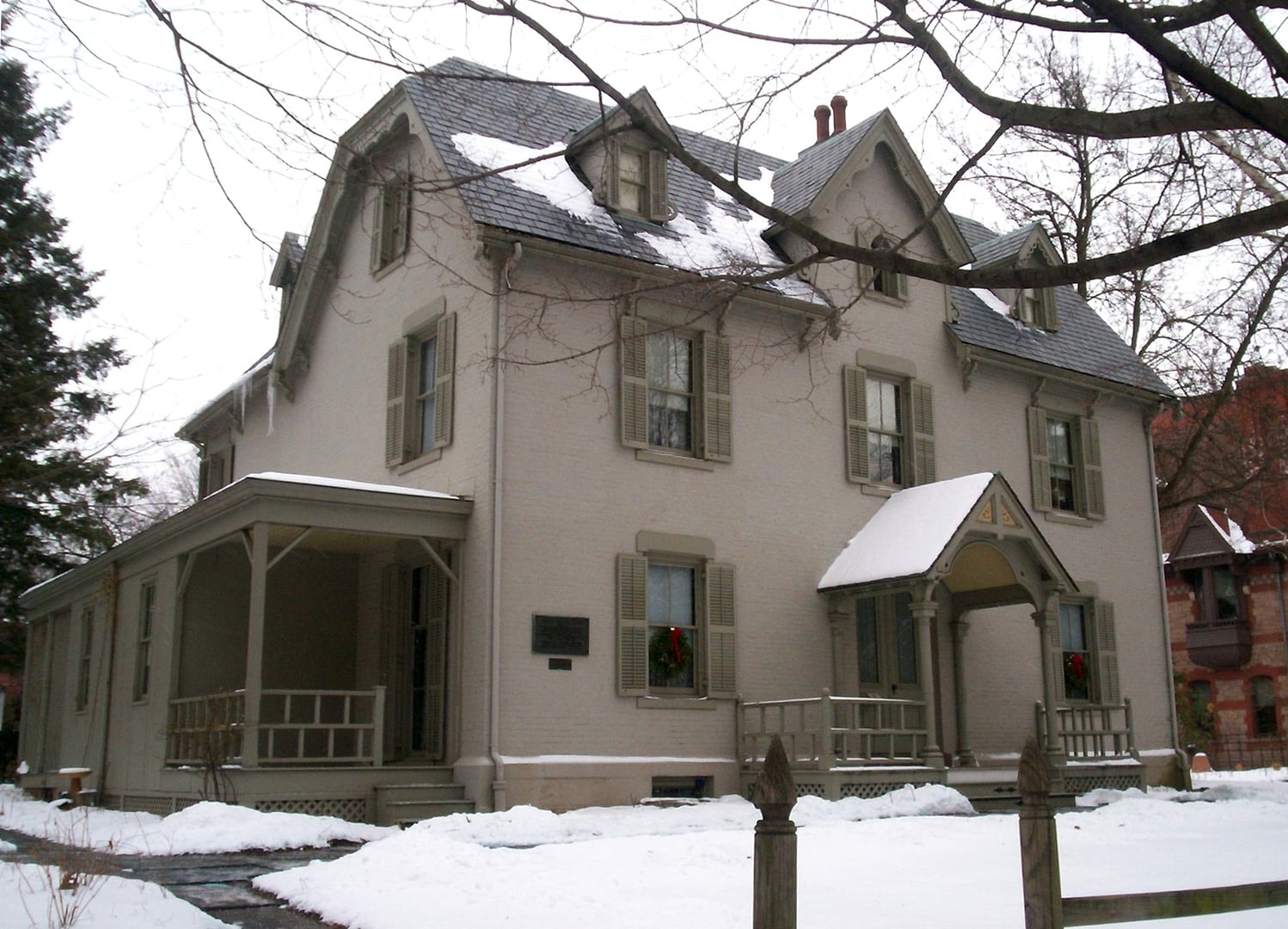
The Hearthstone was constructed in 1882 for Henry James Rogers, a prosperous Appleton paper mill owner. On September 30, 1882, the house made history when it became the first private home in the world powered by a central hydroelectric station — the Vulcan Street Plant, built specifically to demonstrate Edison's electrical system for the Fox River valley's industrial community. The event drew national attention and positioned Appleton as a pioneer of American electrification.
Ownership of the property passed through several hands before A.W. Priest and his family took possession in the early twentieth century. Priest lived in the home until his death in 1930. The mansion survived the mid-century wave of demolitions that eliminated much of Appleton's Victorian-era housing stock, and it eventually came under the stewardship of the Appleton Historical Society as a museum property.
The Hearthstone is listed on the National Register of Historic Places. Museum staff maintain the original Edison electrical fixtures alongside period furniture and family artifacts. Each autumn, the museum has hosted a theatrical event built around documented Victorian criminal history, drawing on the era's sensational criminal trials rather than invented ghost lore.
Sources
- https://en.wikipedia.org/wiki/Hearthstone_Historic_House_Museum
- https://www.hearthstonemuseum.org
Unexplained sneezing soundsSensation of being watchedUnexplained presence in staff areas
The paranormal accounts at Hearthstone center on A.W. Priest, who owned and occupied the mansion until his death in 1930. Staff and visitors have reported unexplained sneezing sounds occurring when no one else is present — an unusual and specific phenomenon that, according to accounts, has been noted repeatedly in the same areas of the house. A general sensation of being observed has been described by multiple staff members working in the building after hours.
The reports are localized rather than dramatic — no claims of full-figure apparitions or violent activity. The Hearthstone does not market itself primarily as a haunted attraction; its ghost reputation has grown through word-of-mouth among staff and through listings on Wisconsin paranormal directories. The annual theatrical event explores Victorian criminal history but is presented as historical theater rather than a paranormal investigation.
Notable Entities
A.W. Priest