Est. 1847 · Civil War Union Headquarters · Red River Campaign 1864 · National Register of Historic Places 1971 · Antebellum Stagecoach History
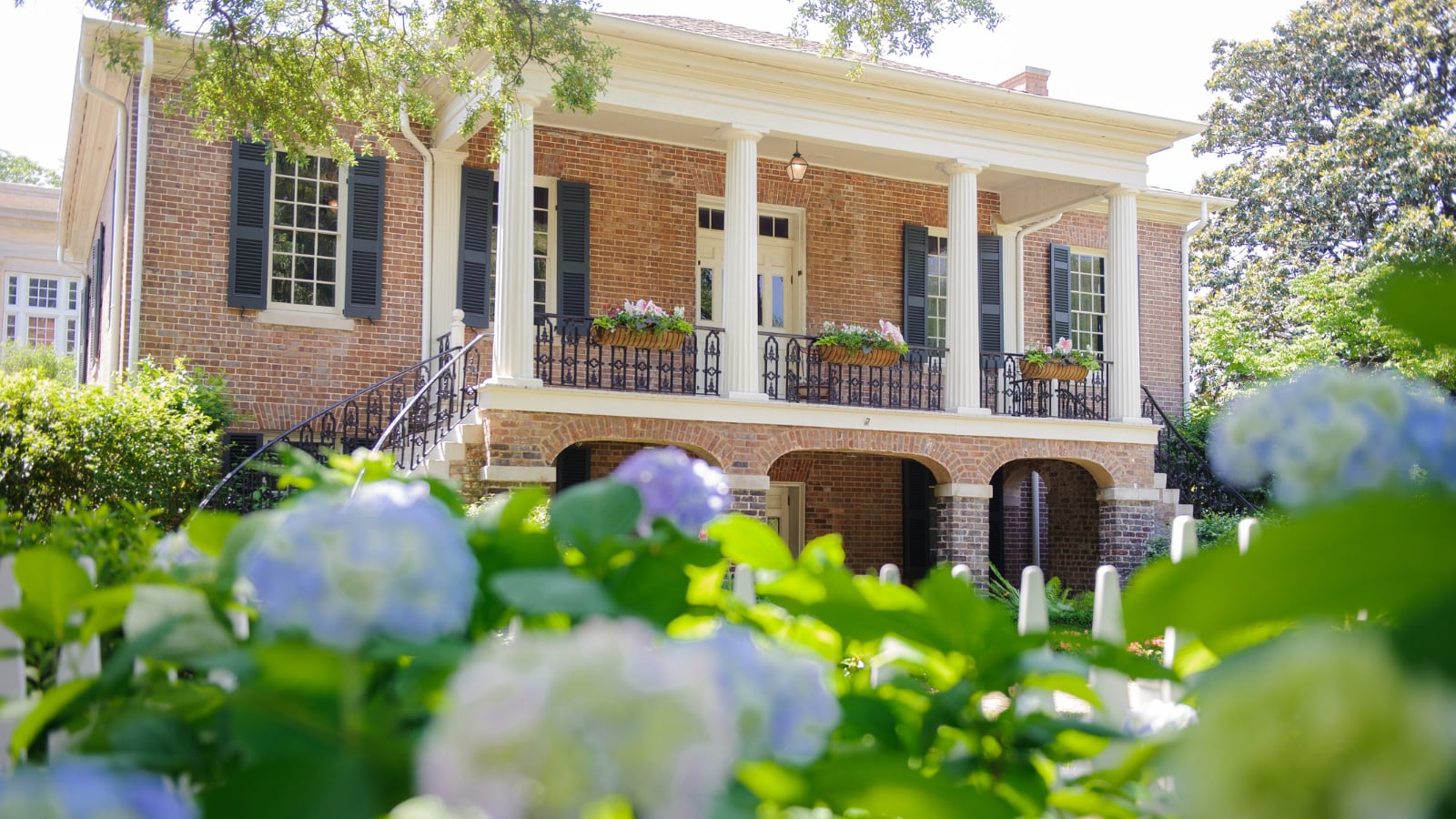
Peter McCollum, a North Carolinian who settled in Camden, built this house in 1847 using planed lumber shipped up from New Orleans — the first such construction technique in the region. The Greek Revival structure stood out against the rougher buildings of antebellum Camden and quickly became one of the town's more prominent residences.
John T. Chidester bought the property in 1858 for $10,000 in gold. A stagecoach entrepreneur, Chidester built a mail and transport network that eventually threaded across Arkansas and extended to Arizona Territory. When the Civil War arrived, his loyalties were contested. He was accused of Confederate sympathies — allegedly passing intercepted Union mail to Confederate forces — and was forced to flee to Texas until the war's conclusion.
In April 1864, General Frederick Steele led Union forces into Camden during the Red River Campaign. He commandeered the Chidester home and operated from the parlor and east bedroom for five days. His occupation left physical evidence: bullet holes remain in an upstairs wall where Union soldiers fired while searching for Chidester, who had hidden in a small closet nearby.
The Ouachita County Historical Society acquired the property in 1963 and converted it into a museum. The house retains original Chidester family furnishings, china, and linens. It was listed on the National Register of Historic Places on June 24, 1971, as a contributing property within the Washington Street Historic District. Museum manager Danny Harrell has led tours of the site for years, maintaining both its historical record and its documented paranormal accounts.
Sources
- https://encyclopediaofarkansas.net/entries/mccollum-chidester-house-museum-4094/
- https://en.wikipedia.org/wiki/McCollum-Chidester_House
- https://armoneyandpolitics.com/ghosts-of-the-past-camdens-mccollum-chidester-house-a-living-history/
- https://onlyinark.com/places-and-travel/mccollum-chidester-museum-in-camden/
- https://www.onlyinyourstate.com/state-pride/arkansas/unique-historic-tale-ar
ApparitionsPhotographic anomaliesOrbsSLS camera readings
The paranormal reputation of the McCollum-Chidester House centers on one room and one piece of furniture: the east bedroom, where Union General Frederick Steele slept in 1864, and the cathedral dresser mirror that stands against its wall.
In the late 1980s — before digital editing made photographic manipulation easy — a photographer named Elmer Lee came to document the house. When he developed his film, the mirror held an image he could not explain: a figure dressed in military clothing, wearing tall boots with pants tucked into them and appearing to carry a sword or sabre. Lee had been wearing tennis shoes and work coveralls that day. A museum manager was present during the shoot and confirmed nothing in the room matched the reflection.
The photograph has since become the house's signature paranormal artifact. Museum manager Danny Harrell has presented it during tours for years.
In November 2020, Natural State Paranormal conducted a formal three-hour investigation in the east bedroom. Their video equipment captured orbs and anomalies moving through the room for approximately three minutes — concentrated near the dresser where Civil War swords are displayed. An SLS (structured light sensor) camera produced readings suggesting a figure at the foot of the bed, appearing to grip the bedpost.
The historical specificity of the room adds weight to the accounts. This was the bedroom Steele's officers occupied. The bullet holes in the upstairs wall are real. Whatever visitors and investigators have seen or measured in the east bedroom, they are measuring it in a space where documented violence and occupation occurred.
Notable Entities
Figure in military dress (mirror apparition)