The Most Haunted Places in North Dakota
20 documented locations, ranked by depth of evidence. Updated September 2026.
What makes this ranking different
- Evidence-ranked. Ranked by independent sources, documentation depth, and how far back reports go, not by legend. See methodology.
- Family-rated. The only haunted-places index with a family-suitability rating on every site.
- Logistics-verified. Every entry checked for what you can actually visit, book, or stay in.
North Dakota has 20 documented haunted locations in the HauntBound index.
- Total documented
- 20
- Museum / Historical Site
- 6
- Haunted Dining / Bar
- 4
- Theater / Performance Venue
- 3
- Family-friendly
- 18
- Bookable
- 4
- Oldest documented site
- Fort Abercrombie State Historic Site (1857)
- Most-reported phenomenon
- disembodied voices
- This October
- 6 experiences running this October
The upset
North Dakota's most famous haunted site, Fort Abraham Lincoln State Park, does not make the evidence top ten; the winner is Bonanzaville, USA in West Fargo. Fort Abraham Lincoln State Park · Bonanzaville, USA
Ranked
-
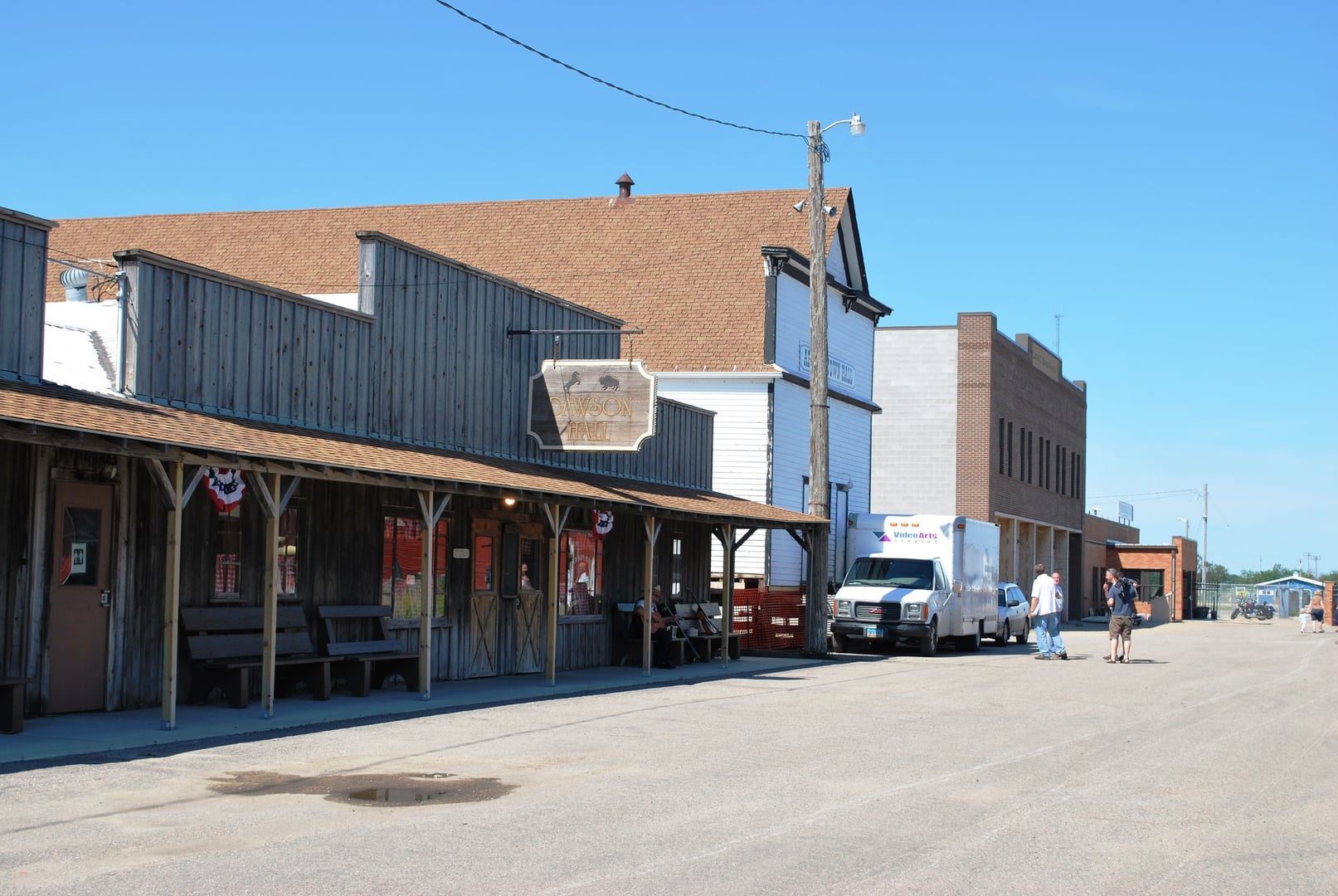
Bonanzaville, USA in West Fargo assembles 34 historic buildings on 12 acres, including the Houston House, once home to inventor David Henderson Houston, who patented the first roll film for cameras in 1881. The most repeated ghost story describes children's laughter heard inside the Houston House in winter, when no children are present. The Brass Rail Saloon is named as a site of reported activity, and the museum runs paranormal investigations each October.
6 original accounts · documented across 2 decades, 2013-2025 · retold in 6 later publications
-
HauntBound identified three distinct published accounts at this museum site, across five kinds of published source. Two later publications retell those accounts. Reported phenomena include cold spots and electrical anomalies.
3 original accounts · documented across 2 decades, 1931-2022 · retold in 2 later publications
-
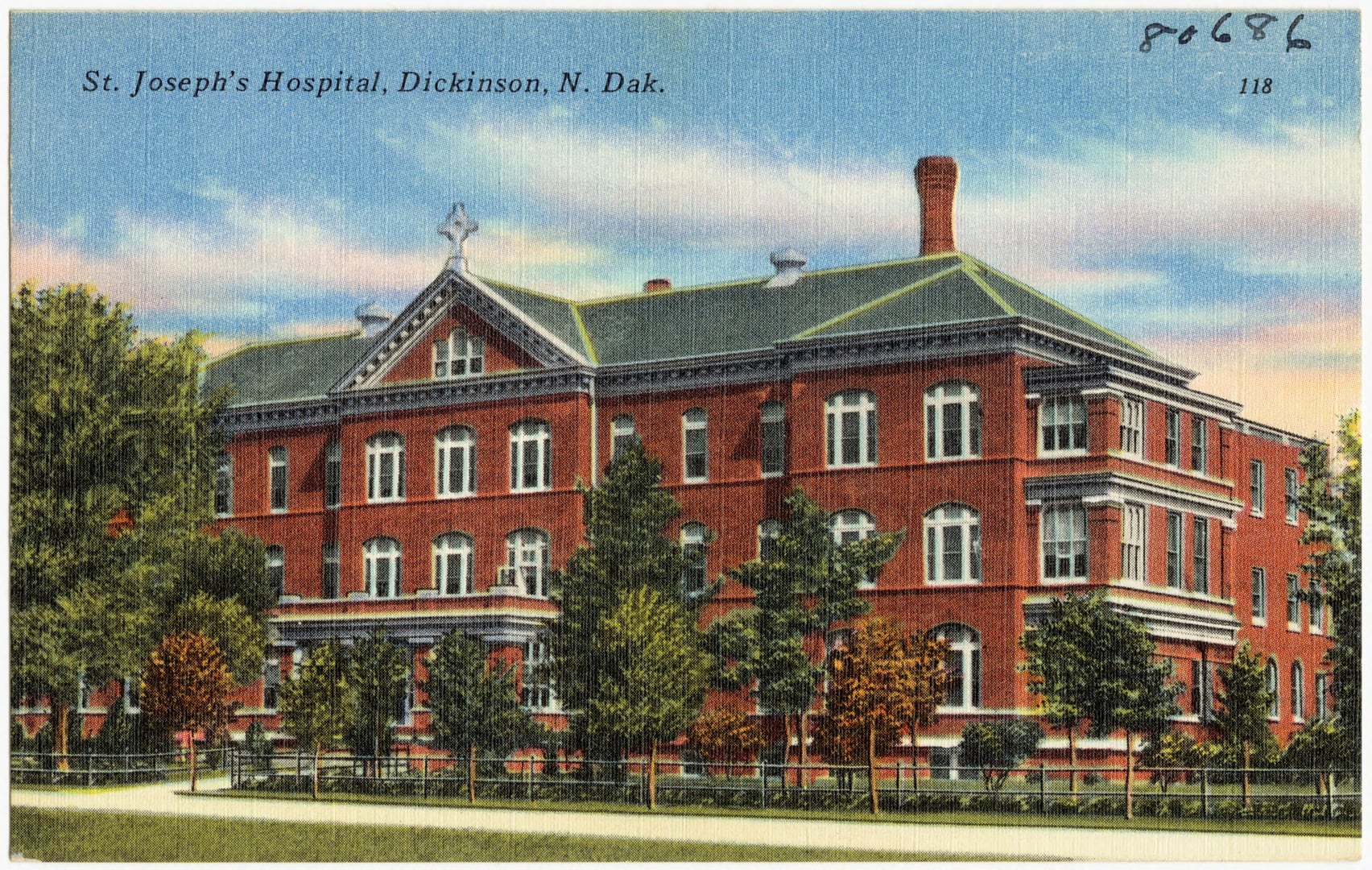
Six Swiss nuns of the Sisters of Mercy opened St. Joseph's Hospital in Dickinson in 1912 and ran it for seventy-five years. In 1926 five hospital workers died in succession, an episode attributed to encephalitis but remembered as the mystery of the dying nuns. After it moved to a building in 2014, the structure became St. Joe's Plaza; staff reported the morgue elevator running unattended, moaning near the cafeteria, and children's laughter in the basement.
3 original accounts · documented across 3 decades, 1926-2023 · retold in 3 later publications
-
HauntBound identified three distinct published accounts at this burial ground. Two later publications retell those accounts. Reported phenomena include a sensed presence and orbs.
3 original accounts · documented across 3 decades, 1920-2017 · retold in 2 later publications
-
Cass County established a hospital and poor farm in 1895 for residents without family or means; when it closed in 1973, its three cemeteries held 1,000 unmarked graves, 300 of which were relocated in 1985. The grounds became Trollwood Park and hosted a performing arts school. During performances, witnesses described a woman in a dark 19th-century dress dancing beneath a willow near the Cemetery #2 marker, mistaken for part of the show before she vanished.
3 original accounts · documented across 3 decades, 1960-2022 · retold in 5 later publications
Superlatives
Methodology
For purposes of the HauntBound Index, "most haunted" means the location with the strongest documented record of reported haunting phenomena. We evaluate the quantity, independence, persistence, and documentary quality of published reports. We do not attempt to determine whether paranormal phenomena are real, and we never count a source that only establishes a building's history as evidence of haunting claims. Repetitive coverage is subject to diminishing returns, so a story retold many times does not outrank a story independently documented. Rankings never consider commercial relationships.
The 2026 Index reflects sources identified and classified as of September 15, 2026.
This is a documentation ranking, not a visitation guide; sites not open to visitors are marked on their entries.