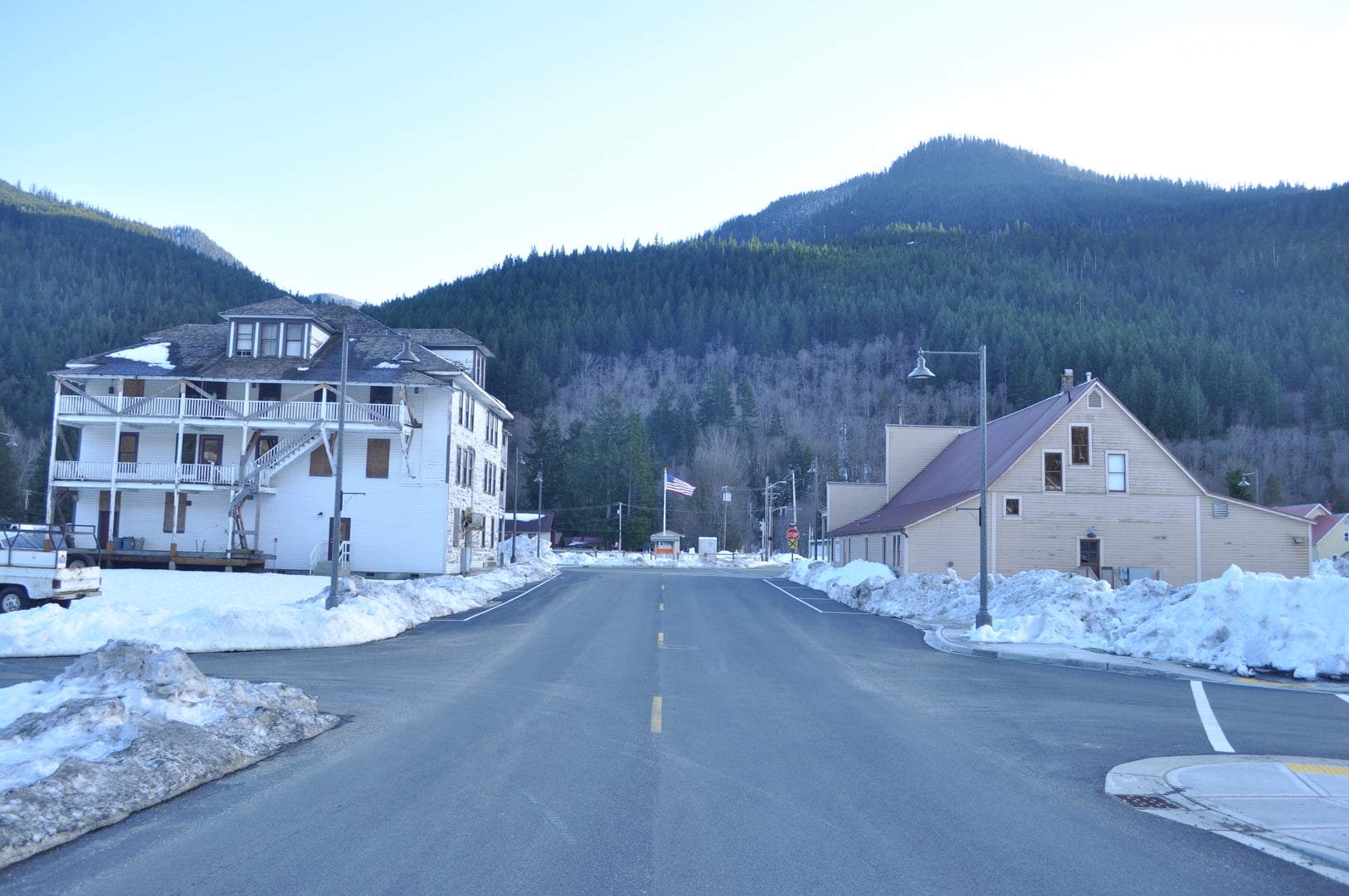
Est. 1893 · Deadliest avalanche in United States history (96 dead, March 1, 1910) · Site of the abandoned Great Northern Railway town of Wellington, later renamed Tye · Preserved today along the Iron Goat Trail, part of the Stevens Pass Historic District
Wellington was a Great Northern Railway depot and small settlement high in the Cascades near Stevens Pass, built to service trains crossing the range. In late February 1910, a nine-day blizzard buried the area, at one point dropping a foot of snow an hour. A westbound passenger train and an eastbound mail train were held at the Wellington depot waiting for the line to be cleared, both crews and passengers stranded for days within earshot of a saloon in nearby Scenic they could not safely reach.
Just after 1 a.m. on March 1, a lightning strike during a thunderstorm broke loose a slab of snow from the side of Windy Mountain above the tracks. A recent forest fire had stripped the slope of trees, leaving little to hold the snowpack. The resulting avalanche, roughly a half-mile long and a quarter-mile wide, struck the stalled trains and threw the rail cars 150 feet down into the Tye River valley. Ninety-six people died: 35 passengers, 58 Great Northern employees aboard the trains, and three more in the depot. Twenty-three people survived. It remains the deadliest avalanche in United States history.
The Great Northern Railway quietly renamed the town Tye that October, hoping to distance it from the disaster, and built concrete snowsheds to protect the line going forward. The depot closed in 1929 when a new, lower Cascade Tunnel rerouted trains around the site entirely, and the abandoned town eventually burned. The rail grade sat quiet for decades until volunteers built the Iron Goat Trail, opened in stages beginning in the 1990s, which now runs along the old Great Northern route past the tunnel portals, snowshed foundations, and scattered wreckage that survive at Wellington.
Sources
- https://en.wikipedia.org/wiki/Wellington,_Washington
- https://www.wta.org/go-hiking/hikes/wellington-ghost-town
- https://www.seattletimes.com/entertainment/tv/discovery-show-expedition-x-investigates-deadly-wellington-avalanche-in-washington-cascades/
- https://www.discoversnohomishcounty.com/blog/following-the-iron-goat-trail/
- https://www.slate.com/blogs/atlas_obscura/2015/05/27/bits_of_rusting_train_wreckage_are_all_that_remain_of_the_dealiest_avalanche.html
- https://www.heraldnet.com/news/ghost-hunters-to-stake-out-site-of-1910-train-disaster/
- https://www.americanhauntingsink.com/the-white-death
- https://unitedstatesghosttowns.com/wellington-washington-ghost-town/
- http://northwesternghostsandhauntings.blogspot.com/2011/09/ghosts-of-wellington-on-iron-goat-trail.html
Oppressive or watched feeling along the trailCold spots near the tunnel portals and old rail bedUnexplained whispers or voices with no apparent source
The Wellington avalanche site has a regional reputation as one of the most unsettling stops in the Washington Cascades, distinct from the roadside 'haunted house' tradition because there is no structure left to investigate, only the rail grade, tunnel mouths, and concrete snowshed foundations the disaster left behind. Visitors and local writers describe a heavy, watched feeling along the trail, particularly near the tunnel portals, along with reports of sudden cold spots and faint voices or whispers that have no obvious source.
Some accounts frame the reports as residual impressions tied to the scale of the loss: 96 people, many of them railroad workers and ordinary travelers, killed in minutes with almost no warning. Local ghost-lore writers and hiking guides have circulated these reports for years, and the site appears regularly on regional "most haunted" and haunted-hike lists. In 2022, the Discovery Channel series Expedition X filmed an episode investigating the disaster and its reported activity at the site, bringing the location's reputation to a national audience.
Media Appearances
- Expedition X: Avalanche Ghost Train (TV, 2022)