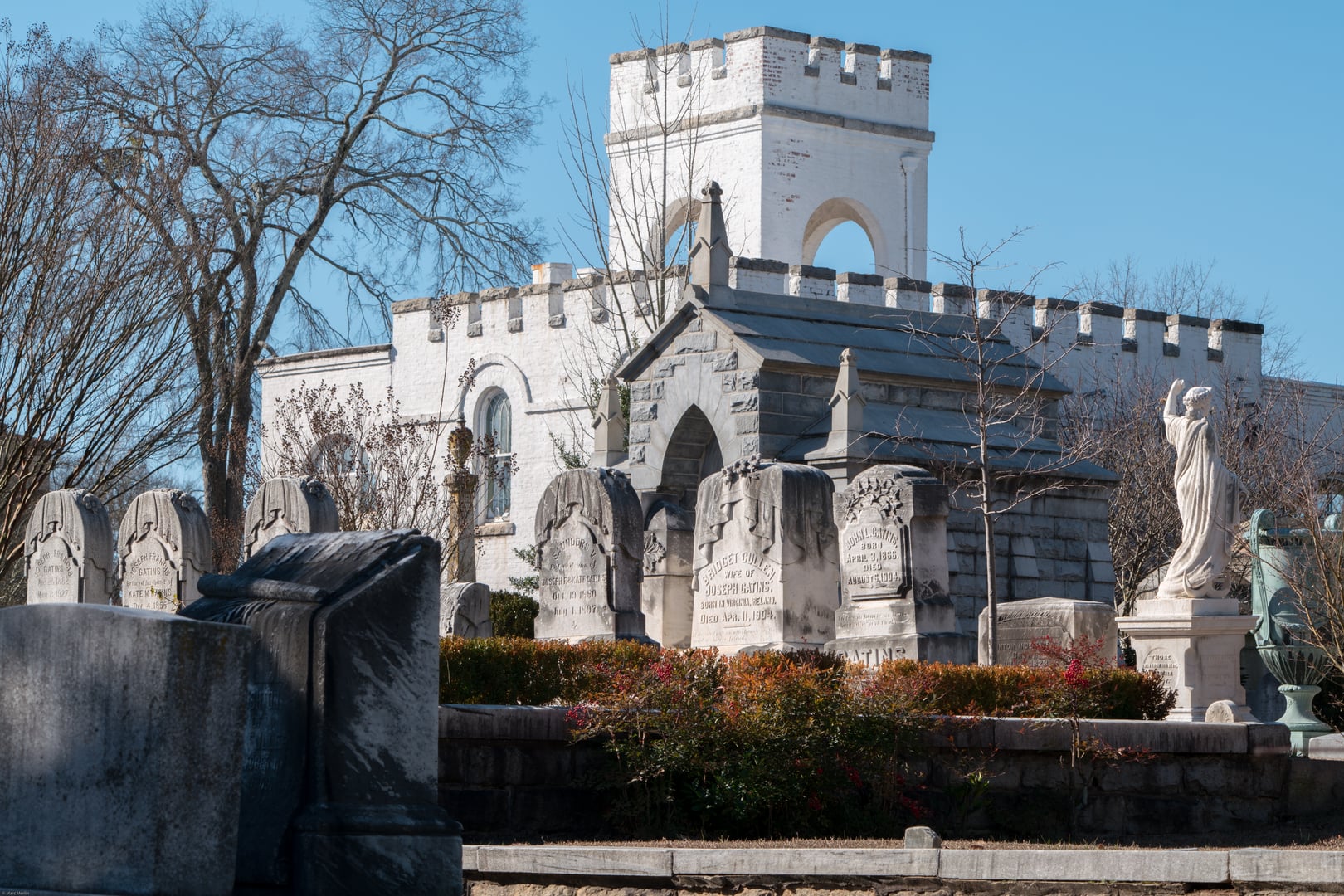
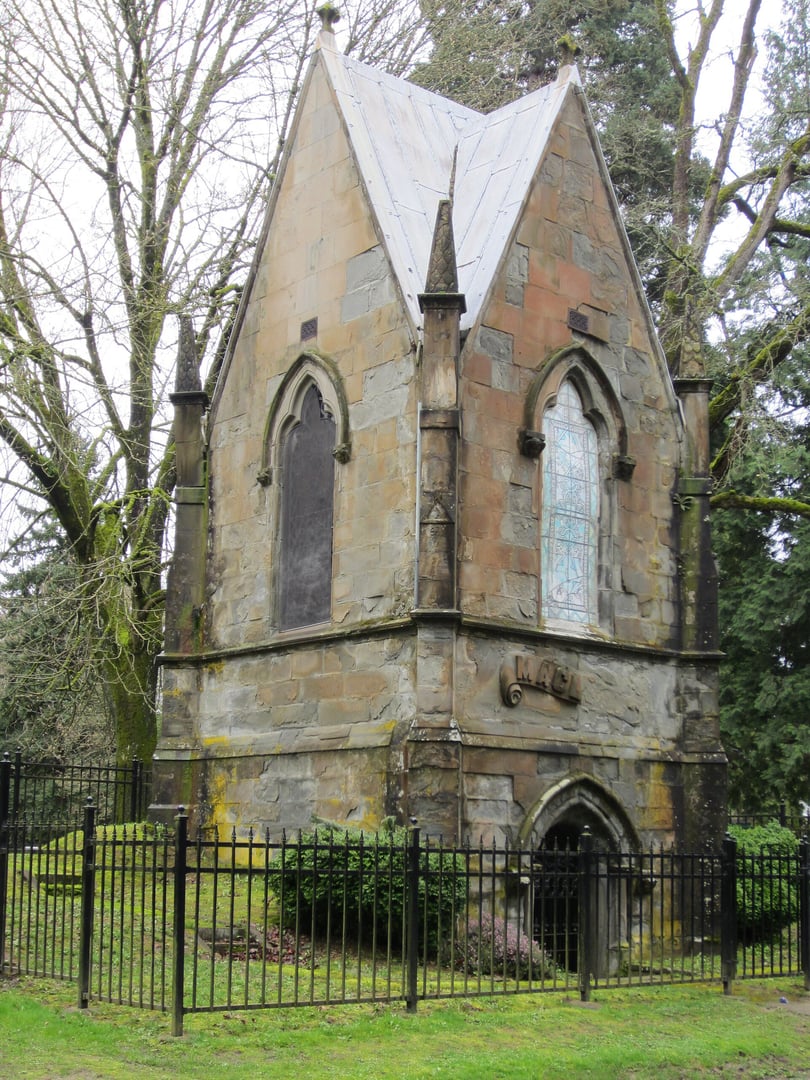
Est. 1888 · Spokane's oldest active public cemetery; founded 1888 · Burial site of many early Spokane pioneers and notable city figures · Elks staircase ('1,000 Steps') is a recognizable regional landmark · Documented historic Japanese burial section reflects local immigration and discrimination history · Former Great Northern Railway tunnel ran beneath the cemetery 1910-c.1970
Greenwood Memorial Terrace, originally Greenwood Cemetery, was founded in 1888 on a hilltop west of downtown Spokane. The cemetery is laid out across three natural terraced levels and contains 85 acres of consecrated ground. It is the resting place of many early Spokane pioneers and remains an active burial ground operated by the Fairmount Memorial Association.
In the 1890s, Spokane Lodge No. 228 of the Benevolent and Protective Order of Elks purchased a section of the cemetery and commissioned a stone staircase ascending the terraced hillside. By agreement, Elks members would be buried on the second terrace with their fraternal brothers, while their wives and children would occupy plots on the surrounding terraces. The Elks also built a mausoleum topped by a life-sized bronze elk statue. The staircase actually consists of approximately 60 steps but has been popularly known as the '1,000 Steps' since at least the early twentieth century. By 1970 the Elks Lodge had become insolvent, and in 1981 the bronze elk statue was sold to cover debts.
Between February 1909 and April 1910, the Great Northern Railway dug a tunnel beneath the cemetery as part of its Spokane-area rail expansion. The tunnel passed directly beneath the cemetery grounds and operated until about 1970, when the tracks were removed and both ends of the tunnel were buried.
The cemetery historically included separate Chinese and Japanese burial sections, reflecting late-19th and early-20th-century discriminatory burial practices that prohibited Chinese and Japanese residents from being interred in the same sections as White residents. The Chinese section was later relocated; the Japanese section remains documented at Greenwood. The cemetery's Spokane Historical entry notes this discriminatory history directly.
Sources
- https://spokanehistorical.org/items/show/77
- https://spokanehistorical.org/items/show/399
- https://www.atlasobscura.com/places/greenwood-cemetery
- https://www.findagrave.com/cemetery/76838/greenwood-memorial-terrace
- https://www.krem.com/article/news/haunted-fridays-the-mysteries-of-greenwood-cemetery/293-165473629
- https://spokanetalk.com/2023/09/05/the-creepy-history-of-the-ghostly-haunts-of-the-greenwood-cemetery-in-spokane/
Shadow figures and 'green man' apparition reported on the Elks staircaseVoices, shrieking, and whispered sounds at the top of the staircaseReports that visitors cannot complete the climb in full darknessOrbs and mist reported by ghost-tour participants
Per Atlas Obscura, KREM's 'Haunted Friday' coverage, the Gonzaga Bulletin, and Spokane Historical's 'Haunted Staircase' entry, the 1,000 Steps staircase (actually 60 steps) is the cemetery's primary site of paranormal lore. Local tradition holds that the staircase cannot be climbed in full darkness — that visitors will see faces of men, women, and children at the top, hear shrieking or whispered voices, or feel a sudden rain-like sensation that drives them back down. A specific 'green man' apparition is referenced in multiple local accounts.
A secondary strand of lore concerns Chinese railroad laborers. Spokane historian and contemporary writers have noted that Chinese laborers built much of the regional rail infrastructure in the late 19th and early 20th centuries, and an unverified local tradition holds that Chinese workers died during the 1909-10 Great Northern tunnel construction beneath Greenwood and were allegedly buried at the worksite by railroad company employees. SpokaneTalk's writeup explicitly notes that the author was unable to verify this account, and the Spokane Historical entry on the Japanese burial section discusses the documented discriminatory burial practices that segregated Chinese and Japanese residents from White cemetery sections — historical context that is verified, in contrast to the folkloric tunnel-burial claim.
HauntBound treats the 1,000 Steps tradition as community folklore. Where the lore intersects with the documented anti-Asian discrimination history of Pacific Northwest cemeteries, we cite the verified historical record (separate burial sections; later relocations) rather than romanticizing or sensationalizing the unverified tunnel-burial story. Visitors are encouraged to engage the site as a historical landmark first and a folkloric one second.
Notable Entities
Unnamed 'green man' apparition reported at the staircase top