Est. 1838 · National Register of Historic Places · Second-oldest surviving structure on Galveston Island · Prefabricated Maine-style architecture · Texas Republic-era finance and land policy · Texas Navy founding financing
Samuel May Williams arrived in Texas in 1822 as secretary to Stephen F. Austin, serving as the primary land-grant administrator for Austin's Colony. In that role Williams processed most of the official paperwork that assigned land to Anglo-American settlers — which also positioned him to accumulate mortgage debt against those same colonists when they could not pay their obligations.
After the Texas Revolution, Williams relocated to Galveston and became one of the island's principal financiers, founding a commercial bank and investing in the Galveston Wharf Company. He provided critical financing for the Republic of Texas Navy — a contribution recognized in accounts of the Texas naval forces of the 1836–1845 period. But his simultaneous foreclosure campaign on defaulted colonist mortgages, calling in debts that families had carried for years, generated lasting resentment. Contemporary accounts regularly described him as the most despised man in the republic.
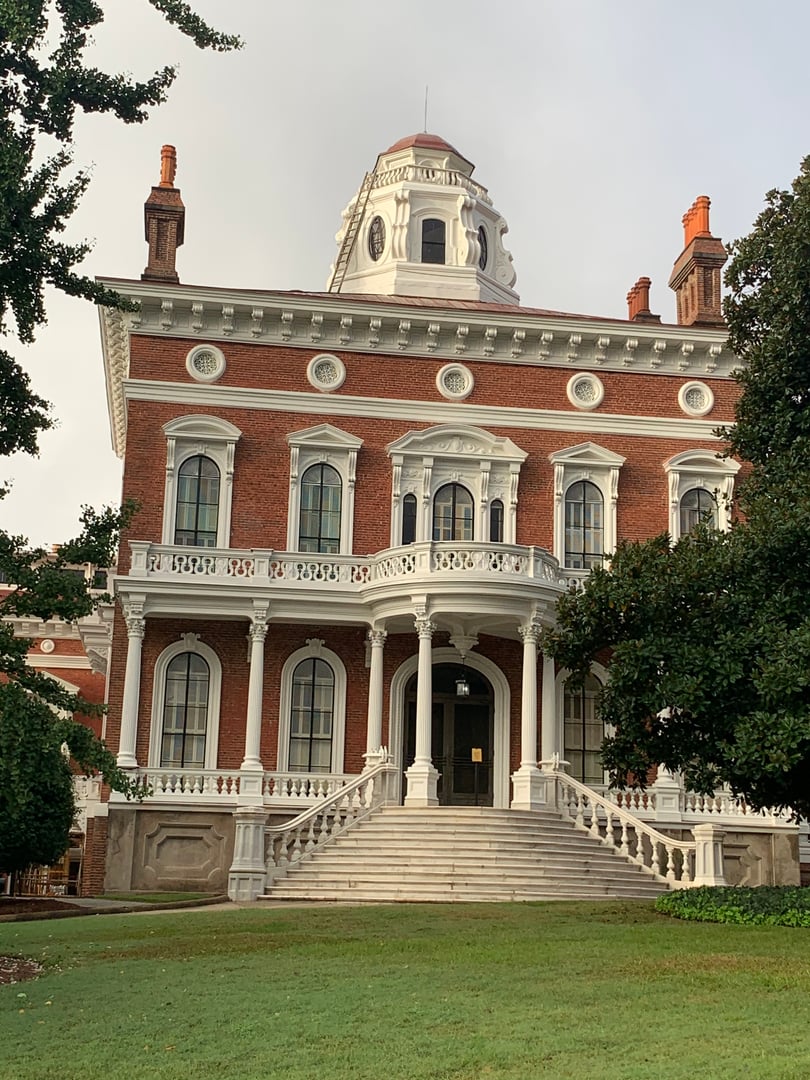
The house Williams built in 1838 is a prefabricated Maine-style structure, assembled from pre-cut lumber shipped from New England — a common technique for early Texas construction when local sawmills were absent. It survives as the second-oldest structure on Galveston Island. The Texas State Historical Association and the Galveston Historical Foundation both document the house as an important early Texas architectural example. It is listed on the National Register of Historic Places.
Sources
- https://en.wikipedia.org/wiki/Samuel_May_Williams_House
- https://www.tshaonline.org/handbook/entries/samuel-may-williams-house
- https://petticoatsandpistols.com/2015/10/21/galveston-ghosts/
Self-lighting fires in period fireplacesCold spots on the second floorMisty male apparition in the cupola
The paranormal folklore attached to the Williams House centers on its most famous occupant. According to accounts documented by Petticoats and Pistols and repeated in Galveston ghost-tour literature, fires have been found lit in the house's period fireplaces when no one has been inside — a detail that tour guides connect to Williams's known habit of sitting by the fire in his later years. Cold spots have been reported on the second floor, particularly in the rooms Williams is known to have used as his personal study.
The most-cited apparition is a misty male figure that has been observed in the cupola — the glassed observation structure at the roof peak. The cupola of the Williams House offered a clear view of Galveston Bay in the 1840s and 1850s, when Williams's banking and shipping interests required constant monitoring of vessel traffic. Visitors who have reported the figure describe it appearing briefly before fading, consistent with the 'misty' classification rather than a fully detailed apparition.
The Texas State Historical Association entry on the house does not address paranormal claims, treating the site strictly as an architectural and historical landmark. The ghost accounts circulate primarily through ghost-tour operators and independent history bloggers. The combination of Williams's documented controversial biography — the foreclosures, the financial power, the 'most hated man' epithet — makes him a narratively strong candidate for Galveston's haunted-location circuit.
Notable Entities
Samuel May Williams (attributed apparition)
Where this legend is told