Est. 1909 · Recorded Texas Historic Landmark · Frank Kell and Wichita Falls Commercial Development · Victorian-Neoclassical Architecture · Wichita County Heritage Society
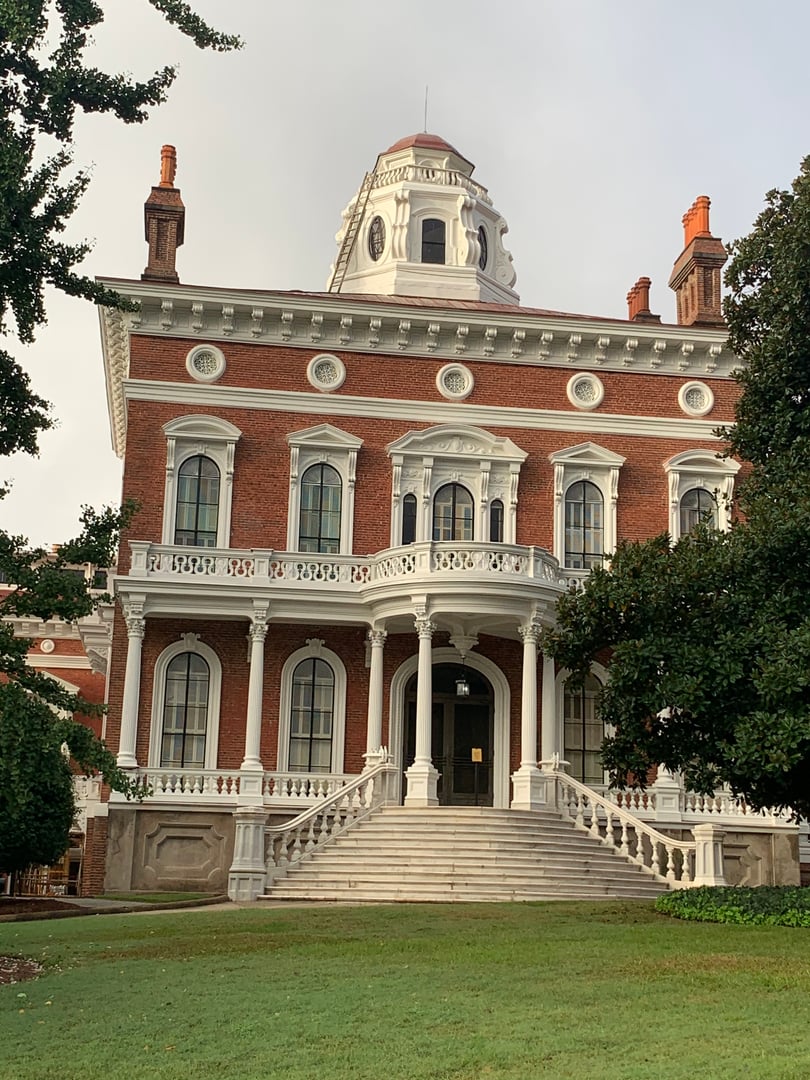
Frank Kell arrived in Wichita Falls in 1896 and, with his brother-in-law Joseph A. Kemp, became one of the dominant figures in the city's commercial development. The partners built or controlled grain mills, cotton gins, an ice plant, and several railroads that shaped the regional economy through the early twentieth century. By 1908, Kell commissioned construction of a substantial residence on Bluff Street — a Victorian home with Neoclassical detailing, completed in 1910 and furnished to reflect the family's standing.
The house remained in family hands for more than four decades. Kell died in 1941. His widow, Lula Kemp Kell, continued living in the home until her own death in 1957. Their daughter Willie May also died inside the house. According to the museum's records, five funerals in total were held in the home while the Kell family occupied it; the practice of holding funerals in the family parlor was standard for households of that era and social standing.
A son, Joseph Archibald Kell, died in an automobile accident in 1939 — not in the house but as part of the family's documented losses during the home's occupied years.
The Wichita County Heritage Society acquired the property and established the museum in 1980. The home now operates as a period house museum preserving the original family furnishings, textiles, decorative arts, and historic costumes. It is a Recorded Texas Historic Landmark.
Sources
- https://en.wikipedia.org/wiki/Kell_House_Museum
- https://wichitafallsarts.org/museums/kell-house-museum/
- https://www.newschannel6now.com/2018/10/27/haunting-kell-house/
Figures in windows of locked buildingDisembodied voicesEVP recordings of male voiceFootsteps in empty roomsDoors opening without causeObjects displaced overnight
The Kell House's documented paranormal reputation rests primarily on staff and volunteer accounts rather than staged investigation events. Curator Stacie Flood has noted publicly that guests and volunteers regularly report seeing things and hearing things they cannot explain — figures appearing in second-floor windows when the building is confirmed empty, footsteps in unoccupied rooms, doors opening independently, and objects shifted overnight.
Paranormal investigation teams have conducted sessions in the house and captured at least one EVP recording of a male voice saying 'mama signs a song.' Attribution has been speculative — Frank Kell and Joseph Kemp have both been suggested — but no evidentiary basis exists for identifying the voice. The recording is documented in local television coverage from 2018.
The house's most widely circulated story involves Flora Kemp, identified in local lore as 'the Crying Bride.' According to the legend, Flora — daughter of Joseph A. Kemp — tripped on the mansion's curving staircase on her wedding day and died of a broken neck. This story does not hold up against the historical record: Flora Kemp died of typhoid fever in 1910, a cause consistent with the period's documented disease burdens. Her memorial statue at Wichita Falls's Riverside Cemetery is said by some to shed tears, an image that has attached itself to the staircase-fall narrative rather than the documented facts of her death.
The five documented deaths associated with the home — Lula Kell, Willie May Kell, and three others whose funerals were held in the parlor — provide a factual foundation for the haunting tradition that does not require the invented bride story.
Notable Entities
Lula Kemp Kell (died in house)Willie May Kell (died in house)Flora Kemp (typhoid death attributed in legend to staircase fall)
Where this legend is told