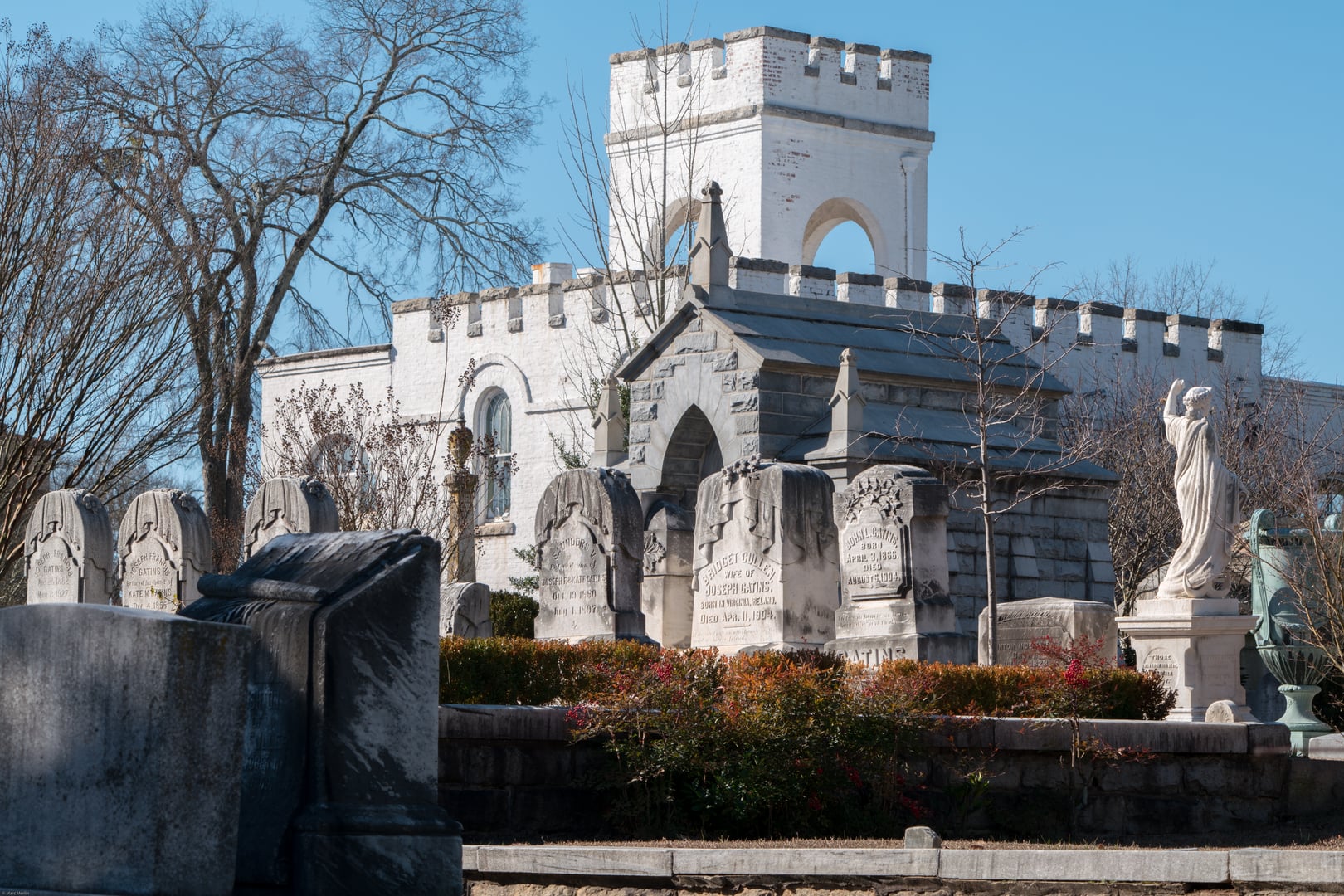
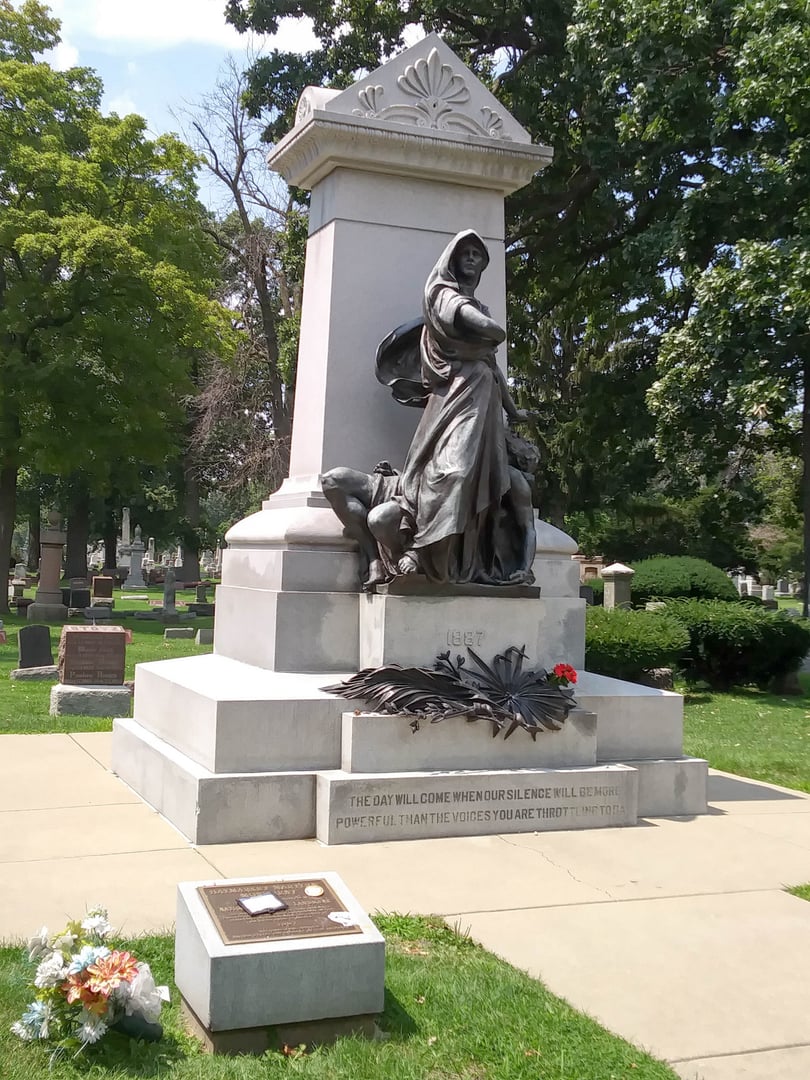
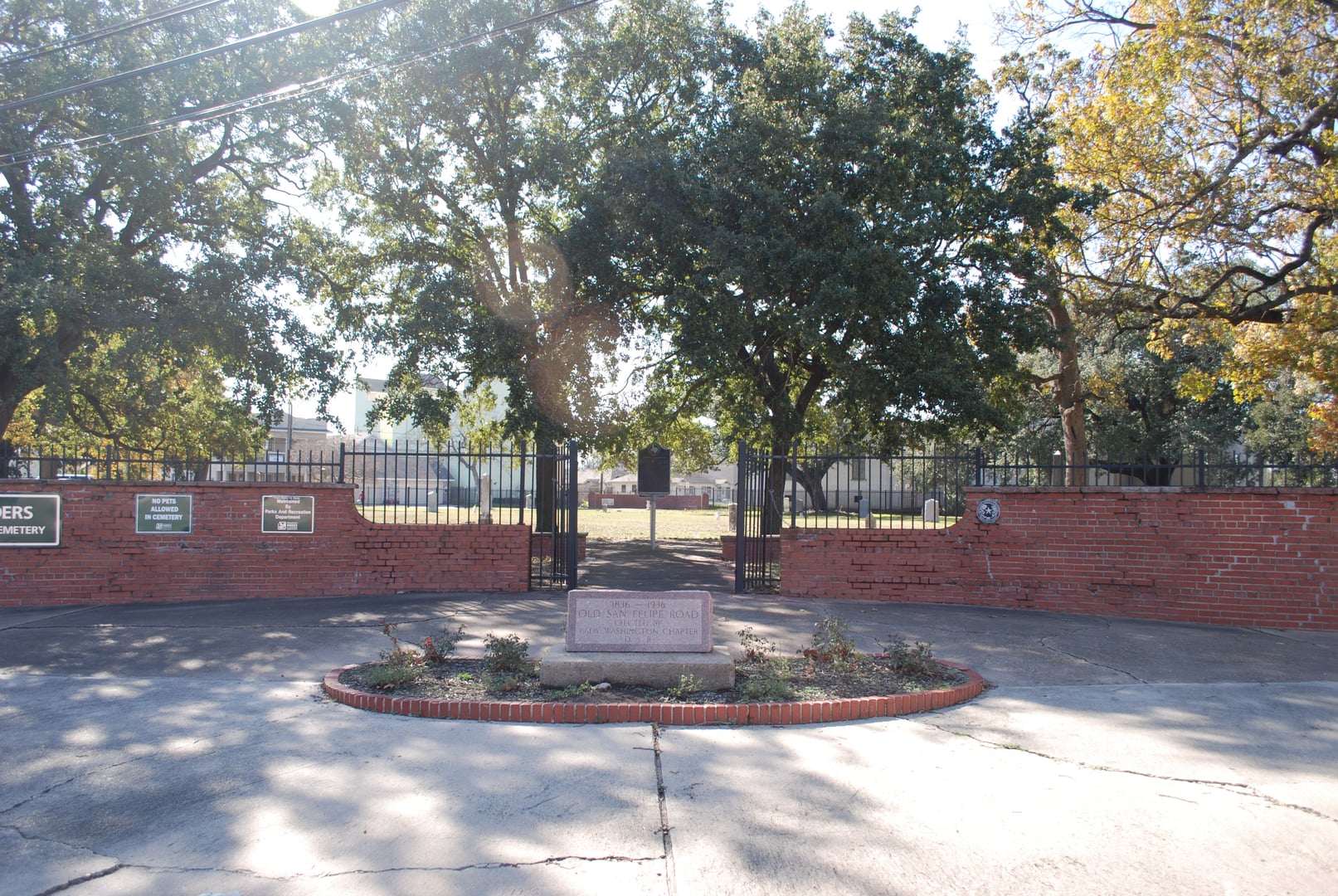
Est. 1871 · Houston's first professionally designed cemetery (1871) · Significant nineteenth-century American garden-cemetery example · Final resting place of Howard Hughes Jr., Anson Jones, and Gene Tierney · Confederate soldiers' section
Glenwood Cemetery was developed in 1871 on rolling land west of downtown Houston, becoming the first cemetery in the city laid out in the garden-cemetery style — a design tradition rooted in Boston's Mount Auburn (1831) that treated the cemetery as a contemplative landscape rather than a strictly utilitarian burial ground. The first burial occurred in 1872. By 1874, Glenwood was operating as a weekend recreational destination served by a mule-drawn street railway running west on Washington Road.
The cemetery is the final resting place of an extraordinary roster of Houston's economic and political leadership. Howard Hughes Jr. and several Sharp-Hughes Tool Company family members are buried at Glenwood, as are founders and early investors in Texaco and Humble Oil. Anson Jones, the last president of the Republic of Texas, has a family plot here. Other notable burials include Hollywood actress Gene Tierney, Texas governors William P. Hobby and Ross S. Sterling, philanthropist George R. Brown, and the founding president and first architect of Rice University.
A Confederate soldiers' section reflects the cemetery's nineteenth-century origins. The cemetery is administered by the nonprofit Glenwood Cemetery, Houston, and is a recognized contributing historic site in the city.
Sources
- https://en.wikipedia.org/wiki/Glenwood_Cemetery_(Houston,_Texas)
- https://www.glenwoodcemetery.org/
- https://www.papercitymag.com/culture/river-oaks-dead-houston-famous-unknown-cemeteries-haunt-history/
- https://www.houstoniamag.com/arts-and-culture/2023/10/glenwood-cemetery-famous-houstonians
Apparitions and shadow figures following visitorsElevated electromagnetic readings near Confederate section and children's gravesElectronic voice phenomena with older accents and vocabularyTall thin figure in 1940s attire near the Hughes family plot
Glenwood is one of the most-investigated cemeteries in the Houston region. The published paranormal accounts converge on several recurring strands. First, general visitor reports of apparitions and shadow figures — generally encountered during daylight hours, not after dark, since the cemetery is closed at night. Second, paranormal-investigator reports of elevated electromagnetic readings concentrated near the Confederate section, the children's graves, and the oldest sections housing the city's earliest pioneers. Third, electronic voice phenomena (EVP) collected by ghost-tour operators in which the captured voices use older Texas accents and vocabulary.
Two specific legends recur. The first involves a former cemetery caretaker said to have been murdered, with the case never officially solved; published ghost-tour and paranormal accounts repeat the claim but the underlying historical incident is not independently documented in mainstream sources, so the underlying murder should be treated as folklore. The second describes a tall thin figure in 1940s-era attire reported near the Howard Hughes Jr. family plot.
The cemetery itself, administered as a nonprofit historic property, does not market itself as a paranormal venue; the lore reaches the public via Ghost City Tours, the Hollow Hill paranormal blog, PaperCity Magazine's cemetery feature, and the US Ghost Adventures top-ten Houston list.
Notable Entities
Tall thin figure in 1940s attire near the Hughes plotMurdered cemetery caretaker (folkloric)
Where this legend is told