Est. 1848 · National Register Historic District (1993) · Mexican-American War Frontier Post · Civil War Occupation · UTRGV CHAPS Preservation Project
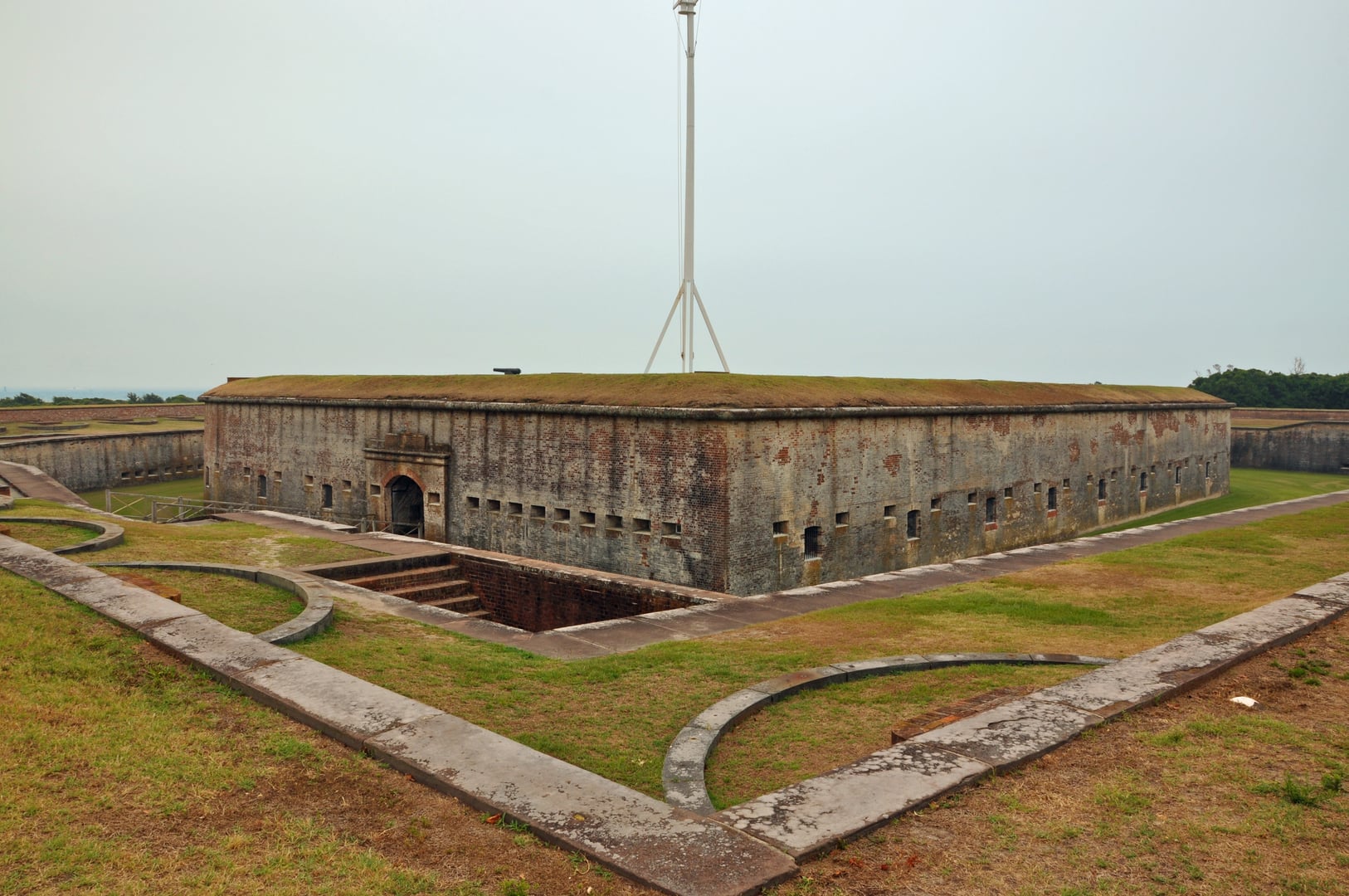
Fort Ringgold was established on October 26, 1848, as Ringgold Barracks, placed at Davis Landing along the Rio Grande by Captain J.H. La Motte of the 1st U.S. Infantry. The fort was named in honor of Major Samuel Ringgold, a U.S. Army artillery officer mortally wounded at the Battle of Palo Alto on May 8, 1846 — the opening engagement of the Mexican-American War.
As the southernmost installation among the chain of frontier forts built after the Mexican War, Fort Ringgold spent nearly a century guarding the river crossing at Rio Grande City, enforcing the border, and supporting U.S. interests in Starr County. Confederate forces took control of the post during the Civil War; Union forces eventually regained command. The fort was designated a National Register Historic District in 1993.
The installation was decommissioned in 1944, when soldiers were sent to the Pacific theater of World War II. The Rio Grande City school district took over the campus in 1948 and continues to operate administrative and educational facilities in the surviving brick structures. UTRGV's Community Historical Archaeology Project with Schools (CHAPS) has conducted preservation work and oral history collection at the site; UTRGV received a Telly Award in 2019 for its documentary 'And Then the Soldiers Were Gone,' which focused on the fort's closure and its impact on Rio Grande City.
Sources
- https://www.tshaonline.org/handbook/entries/fort-ringgold
- https://www.utrgv.edu/newsroom/2024/10/31/haunted-history-of-the-rgv-fort-ringgold.htm
- https://www.utrgv.edu/newsroom/2019/06/26-stories-to-tell-utrgvs-fort-ringgold-documentary-earns-telly-award.htm
Lights activating independentlyApparition of cavalry soldierShadow figureLady in White apparitionDoors opening and closingPhysical reactions (dizziness, hair standing)
Aminta Reyna Alaniz, a guide for Bessie Trolley Tours, describes a consistent pattern among night-shift security staff: lights in multiple buildings turn on and off without anyone in the rooms, doors close and open on their own, and workers report persistent discomfort in specific areas of the old hospital building.
Cathy Rubio, a museum technician at the Kelsey Bass Museum on the fort grounds, recounted a specific account: a worker installing phone lines around midnight encountered a man dressed in cavalry uniform with the high boots of the era. The figure stood in a doorway or corridor and then disappeared. Rubio also notes that a specific corner of one building causes a reliable physical reaction — hair standing on end, dizziness, nausea — in people who pass through it.
JoAnn Orta, a secretary for the Rio Grande City Grulla ISD, described seeing a dark shadow watching her and a coworker from across a room in the old hospital building. The Lady in White legend, documented in a museum photograph that Rubio discovered, describes a woman in a white gown who appears on the parade grounds, believed to be searching for a soldier who abandoned her. UTRGV's CHAPS program manager Roseann Bacha-Garza has collected and documented these oral accounts as part of the fort's cultural history work.
Notable Entities
Lady in WhiteCavalry soldier apparition
Where this legend is told