Est. 1851 · National Register of Historic Places (1972) · Butterfield Overland Mail Station · Texas Frontier Military Defense Line · Confederate Occupation Site · 5th Infantry Regiment History
The site known as Fort Phantom Hill takes its name from the hill itself — a modest rise on the Jones County plain that appears to vanish as you approach it, seeming to level into the surrounding grassland. A second explanation, more widely circulated, traces the name to a sentry who fired at what he believed was an approaching enemy and found nothing when troops investigated. Neither account has documentary support, but both were current by the time the Army abandoned the post.
Lieutenant Colonel John Joseph Abercrombie led five companies of the 5th Infantry to the site on November 14, 1851, on orders to establish a post protecting emigrants and settlers moving through Comanche territory. The location proved miserable almost immediately. Water was brackish and scarce, timber nonexistent, and the open plain offered no natural protection from the elements. Soldiers suffered scurvy, dysentery, typhoid, and pneumonia in succession. Officers' correspondence from the period describes the assignment in terms that do not leave much ambiguity: one officer wrote that he could not believe God had ever intended white men to occupy such a place.
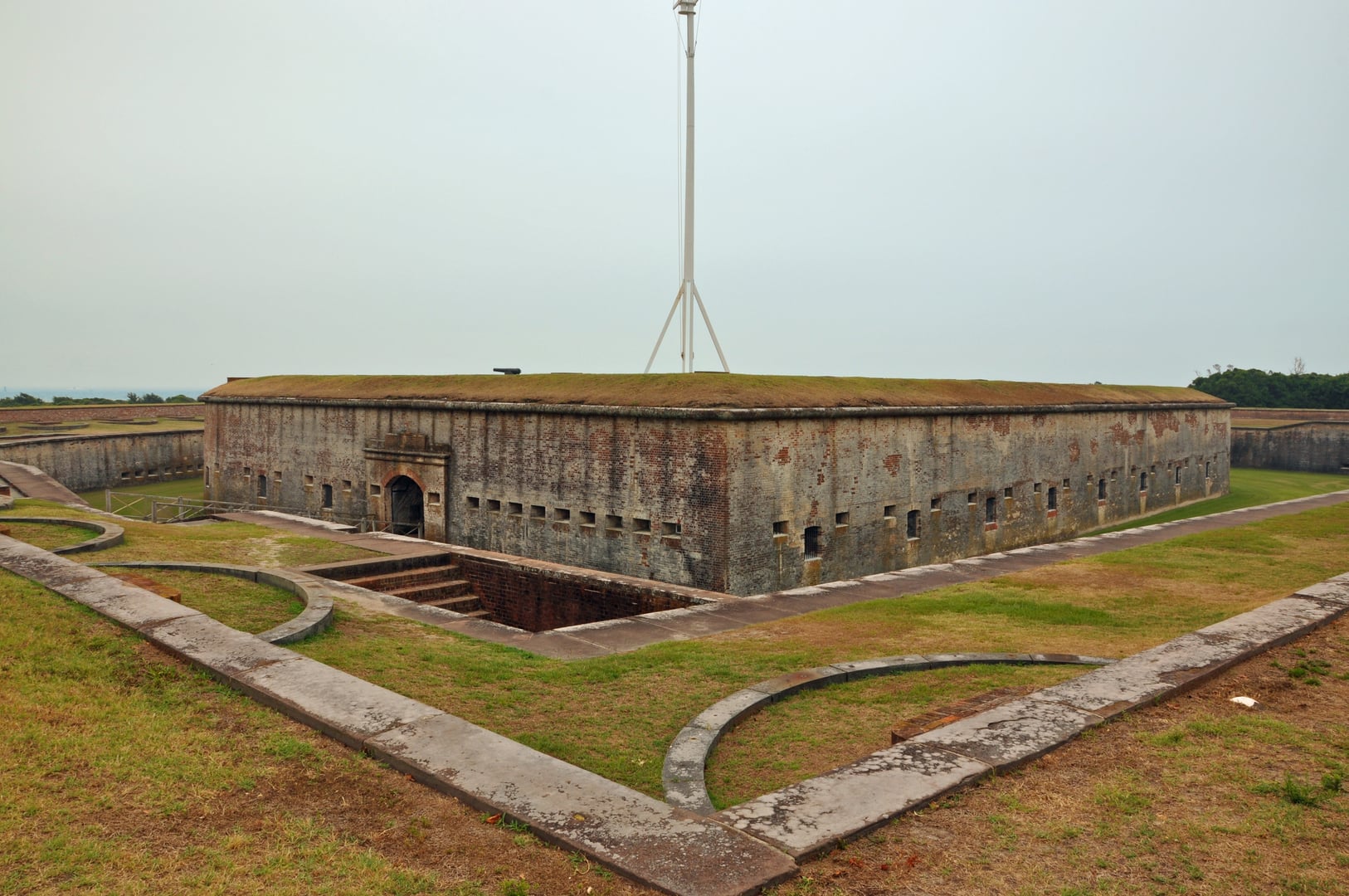
The Army ordered the post abandoned on April 6, 1854. As the garrison departed, the wooden structures were burned — officially attributed to vandals or Confederates, though enlisted men were widely suspected. Three stone buildings survived: the powder magazine, the commissary storehouse, and the guard house. Twelve stone chimneys remain standing from quarters that no longer exist, giving the site a surreal, skeletal quality.
From 1858 to 1861, the Butterfield Overland Mail operated a stagecoach station at the ruins. Confederate frontier troops occupied it during the Civil War, and the site served as a subpost of Fort Griffin during the Red River War campaigns of 1869–1875. The Fort Phantom Hill Foundation manages the 38-acre grounds today, and the site was listed on the National Register of Historic Places on September 14, 1972.
Sources
- https://en.wikipedia.org/wiki/Fort_Phantom_Hill
- https://fortphantom.org/
- https://www.legendsofamerica.com/tx-fortphantom/
Soldier apparitions in ruinsFlickering headlights near the lakeLocalized fogUnidentified figures in historical photographsUnexplained sounds and knocking on vehicles
Fort Phantom Hill's ghost stories divide roughly into two categories: those tied to the ruins themselves and those tied to the nearby reservoir.
The fort site carries reports of soldier apparitions — a psychic from Abilene described witnessing the officers' quarters restored to their original condition and encountering two uniformed men, one tall and thin, the other shorter with red hair, before both figures and the restored building faded. These accounts come from paranormal investigators and are unverifiable, but they are consistent with the site's identity as a place where men were stationed against their wishes and died of disease rather than battle.
The more frequently documented haunting involves the reservoir two miles south. Lake Fort Phantom Hill was built in 1937 to supply Abilene's water. Local lore — as detailed on the fort's official website — describes Mona Bell, a young woman whose WWII-veteran boyfriend allegedly returned, heard false rumors of infidelity, and strangled her at the lake, throwing her body into the water. Her spirit is said to cause headlights to flicker and vehicles to become surrounded by localized fog near the lake road. The Legends of America account notes multiple overlapping legends for the figure, including a pioneer woman, an abandoned bride, and the La Llorona tradition, suggesting the Mona Bell narrative is one layer atop older regional folklore. No newspaper documentation of a murder victim named Mona Bell at the lake has surfaced.
In 1959, the Pritchett family photographed the stone ruins and discovered, upon developing the prints, two unidentified figures — a man and a smaller woman — visible in the background. The family had no recollection of other visitors. The October 31, 2000 issue of the Abilene Reporter-News published an explanation for the photograph after 41 years of the image circulating as a mystery. Central Texas Ghost Search investigators conducted documented nighttime investigations at the fort in 2008.
Notable Entities
Mona Bell (alleged murder victim — unverified)Two uniformed apparitions (oral tradition)
Where this legend is told