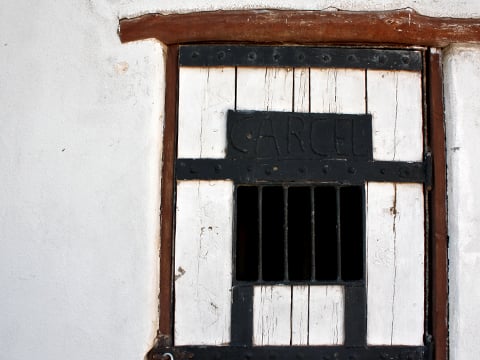
Est. 1909 · Site of Texas's 'Old Sparky' electric chair, used in 361 executions 1924-1964 · Operated 102 years as Imperial State Prison Farm and Central Unit (1909-2011) · Core site of Texas convict lease system, documented as predominantly Black workforce · Adjacent to Old Imperial Farm Cemetery where convict-lease prisoners were buried · Closure in 2011 preceded by documented riots and violent incidents
The Imperial State Prison Farm opened in 1909 on Fort Bend County land that had been a sugar cane plantation. From its earliest years, it operated under the convict lease system, in which the State of Texas leased incarcerated people to private interests for forced agricultural labor. According to Click2Houston's February 2026 investigative report on convict leasing in Sugar Land, the prison farm's workforce was overwhelmingly African American — a direct product of post-Reconstruction-era laws and selective enforcement designed to supply plantation-style labor after the formal end of slavery.
The facility was re-designated as the Central Unit as the Texas Department of Corrections expanded in the mid-twentieth century. Beginning in 1924, the Central Unit housed the electric chair used to carry out Texas death sentences — a device that came to be known as 'Old Sparky.' Between 1924 and 1964, when Texas switched to lethal injection as its execution method, Old Sparky was used in 361 executions at the Central Unit. The chair itself was later moved and is now displayed at the Texas Prison Museum in Huntsville.
Over its 102-year operational history, the Central Unit saw documented riots, violent incidents between inmates and guards, and staff-reported suicides. The facility appeared on ghost-hunter interest lists following its closure in 2011, though no formal paranormal investigation program was established at the site.
The 2018 discovery of 95 unmarked graves — identified as predominantly African American prisoners who died under the convict lease era — on adjacent property under a school construction site brought renewed national attention to the Imperial Farm's history. Reporting by Click2Houston in 2026 documented how convict leasing effectively built the infrastructure of modern Sugar Land, generating agricultural and industrial profit through coerced Black labor.
Sources
- https://thebullamarillo.com/central-unit-prison-texas-haunted/
- https://www.click2houston.com/news/local/2026/02/12/the-dark-history-behind-sugar-land-how-convict-leasing-built-the-city-and-the-legacy-of-the-sugar-land-95/
Unexplained sounds from empty cellblocksShadow figures at windowsAtmospheric heaviness noted by investigators
After the Central Unit closed in 2011, the shuttered buildings drew attention from ghost hunters and paranormal investigators interested in the facility's documented history of executions, violence, and death. Regional coverage documented reports of unexplained sounds from the empty cellblocks, shadow figures seen at windows, and an atmospheric heaviness that investigators attributed to the cumulative weight of deaths at the location across more than a century of operation.
The 361 executions carried out by electric chair between 1924 and 1964 form the most concrete historical anchor for paranormal interest. The convict lease era deaths — documented in the adjacent Old Imperial Farm Cemetery and in the 95 unmarked graves discovered in 2018 — add additional historical context, though the connection between those deaths and any specific paranormal claims at the Central Unit itself is not documented in sources reviewed.
No formal ghost hunt or investigation program operates at the Central Unit. The site is not open to the public, and accounts of activity come from individuals who documented what they reported seeing or hearing from the perimeter of the facility.
Notable Entities
Old Sparky (electric chair, 361 executions)
Media Appearances
- The Dark History Behind Sugar Land (Click2Houston, 2026)
Where this legend is told