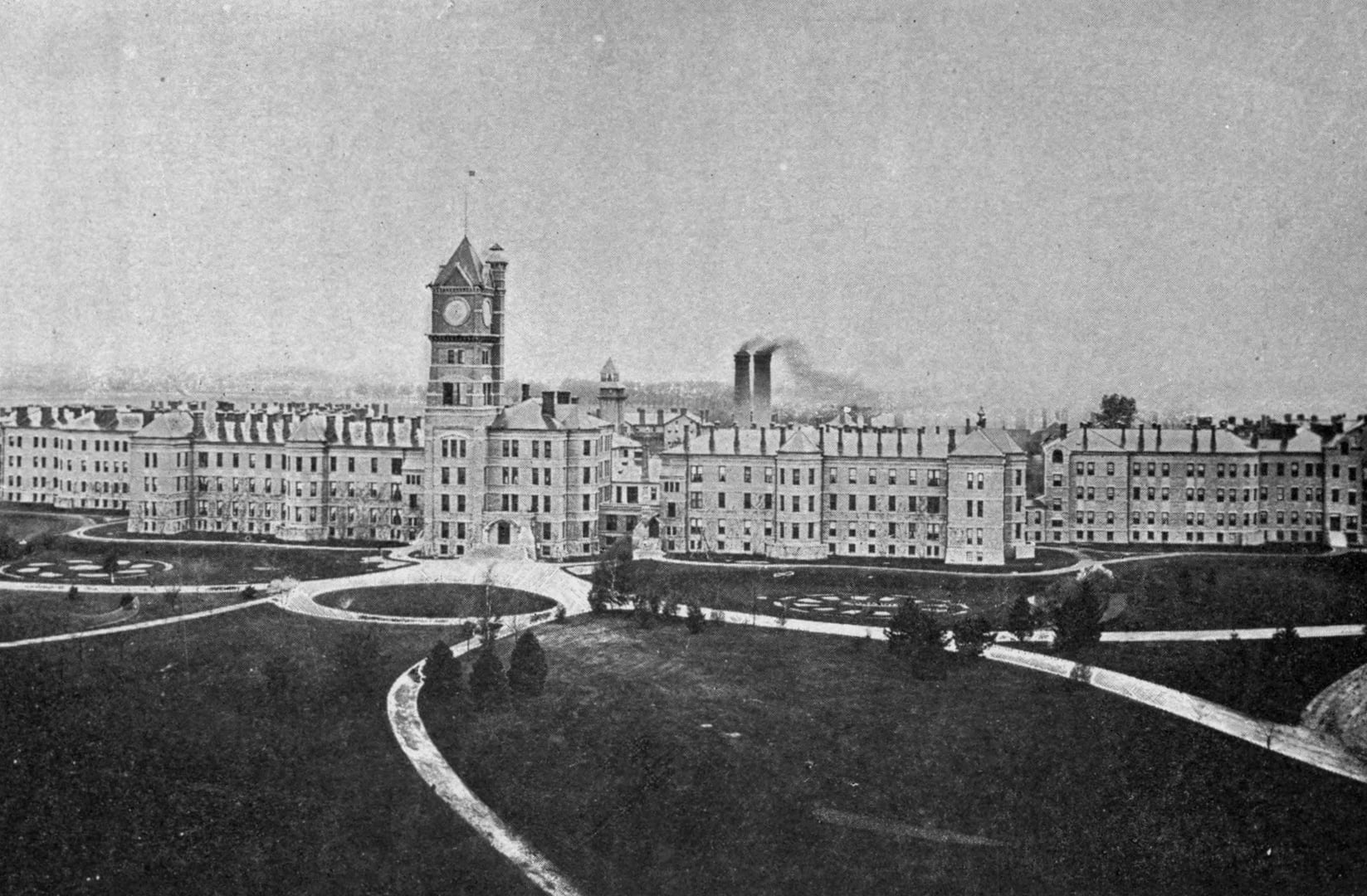
Est. 1889 · Last standing Victorian-era state psychiatric hospital in Tennessee · Documented underground tunnel system connecting original ward buildings · Constructed 1886–1889 under state expansion of Tennessee's asylum system · Documented by the Society of Architectural Historians
Tennessee's state asylum system expanded in the late nineteenth century to address the limitations of the original Central State Hospital in Nashville. The General Assembly funded a western facility; construction at Bolivar in Hardeman County ran from 1886 to 1889, and the institution opened as the Western State Hospital for the Insane.
The campus was built to the self-sufficient institutional model standard for the period: ward buildings, a farm, laundry, kitchen, and service infrastructure, all linked by an underground tunnel network. The tunnels allowed movement of patients, food, and supplies between buildings in all weather — a practical engineering choice that also became a central feature of the site's later reputation.
The Society of Architectural Historians' Archipedia documents the surviving Victorian-era structures as significant examples of late-nineteenth-century institutional architecture in Tennessee. The institution is one of only two large-scale state psychiatric hospitals from that era still standing in the state; Lakeshore Mental Health Institute in Knoxville (opened 1886) closed in 2012 and its main buildings were largely demolished.
Western Mental Health Institute continues to operate as an active state psychiatric facility under Tennessee's Department of Mental Health and Substance Abuse Services. Because of its active operational status, the campus is not open to the public. Former staff and local accounts describe sounds echoing from the tunnel system — accounts documented in regional haunted-history sources — but the facility's continuing use means access for any investigation is not available.
Sources
- https://sah-archipedia.org/buildings/TN-01-069-0098
- https://abandonedsoutheast.com/2016/11/01/mental-asylum/
Unexplained sounds echoing in the tunnel systemShadowy figures on the campus groundsVoices and footsteps in the underground tunnels
The haunted reputation of Western Mental Health Institute concentrates almost entirely on its underground tunnel network. The tunnels were built as a functional connection between the ward buildings and service infrastructure, but they have accumulated a separate identity in local and regional ghost lore.
Accounts documented by the Tennessee Hauntings blog (2008) include former staff reports of unexplained sounds — voices, footsteps, and other noises — that reportedly carry through the tunnel network in ways that resist obvious explanation. A recurring strand of the local lore holds that certain patients who disappeared from the campus in earlier decades made their way into the tunnel system and were never fully accounted for; the sourcing for these specific claims is folkloric rather than documented in official records.
Because the facility remains an active psychiatric hospital, it is inaccessible to outside investigators or visitors, which has paradoxically preserved the lore in an unverified state. The Abandoned Southeast documentation (2016) describes the tunnel architecture and physical layout. The institutional history itself — over a century of psychiatric care in an era when treatment practices were frequently coercive and understaffed — provides a factual backdrop against which the lore has developed, even if specific paranormal claims remain unconfirmed.