Est. 1853 · Confederate Major Nathaniel Cheairs plantation · Civil War field hospital (1864 Tennessee Campaign) · General John Bell Hood's Battle of Franklin planning site · Battle of Spring Hill staging ground (November 29, 1864)
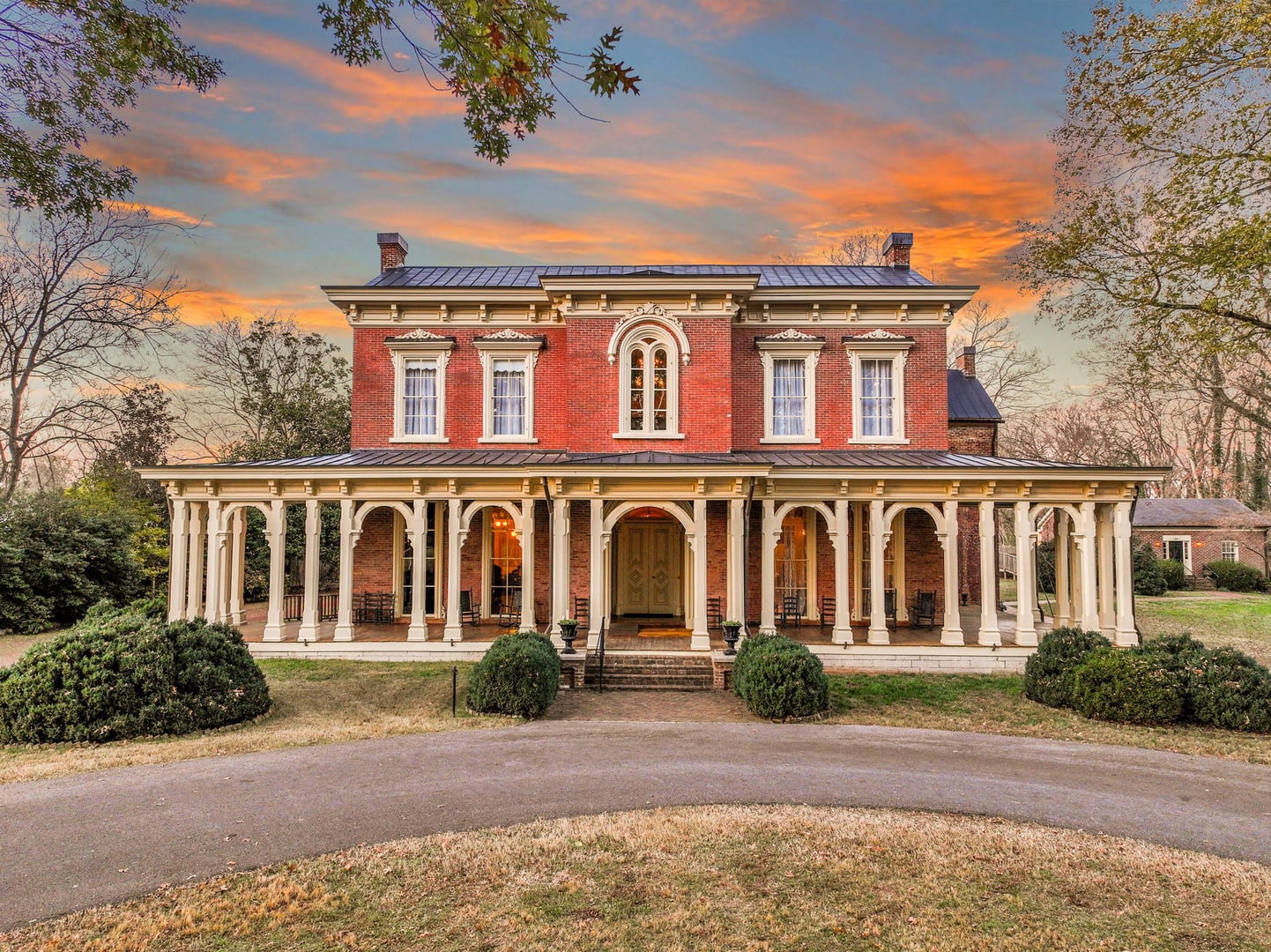
Rippavilla Plantation was completed in 1853 for Major Nathaniel Cheairs, a prominent Maury County planter and Confederate officer. The Greek Revival mansion sat on productive agricultural land along the Columbia-to-Nashville road that would carry armies through it a decade later. The Cheairs family's wealth was built on enslaved labor, a history the site acknowledges in its interpretive programs.
During the Tennessee Campaign of late 1864, Rippavilla became a node in one of the war's most consequential decisions. On the evening of November 29, 1864, General John Bell Hood gathered his commanders at the mansion to plan the assault on Franklin. The following day's Battle of Franklin produced catastrophic Confederate losses — nearly 7,000 casualties in a few hours — and historians regard Hood's decision, made under this roof, as among the most consequential command failures of the war.
The mansion also served as a field hospital during the campaign. Local accounts hold that surgical waste, including amputated limbs, was disposed of through windows into the yard, and that some of the soldiers who died of their wounds were interred on the grounds. A local historian quoted in a WKRN special report stated: 'If any house could be haunted in Maury County, it would no doubt be this one.'
Rippavilla is now managed as a historic site and museum open to the public, with guided tours covering both plantation history and the Civil War occupation.
Sources
- https://en.wikipedia.org/wiki/Rippavilla_Plantation
- https://www.wkrn.com/special-reports/haunted-tennessee/rippavilla-plantation-if-any-house-could-be-haunted-this-one-would-be/
- https://www.southernspiritguide.org/the-fickleness-of-phantoms-rippavilla-plantation/
Apparition of a young girl (identified as Annabel)Phantom boot steps on cobblestonesElectronic voice phenomena (EVPs)Environmental temperature anomalies in specific rooms
The paranormal activity reported at Rippavilla Plantation connects directly to the violence that passed through it in 1864. Staff have reported hearing phantom boot steps on the cobblestone walkways outside the main entrance — a sound that corresponds to the kind of military traffic the property experienced during the Tennessee Campaign.
The most distinctive apparition is a little girl referred to as Annabel. Her appearances have been reported by both staff and visiting investigators over a period of years. No historical record has been found to identify a child named Annabel who died at the property, though given the field hospital use and the number of soldiers buried in the yard, investigators treat the grounds as having multiple potential presences.
A Southern Spirit Guide investigation documented EVPs captured during a formal session at Rippavilla, alongside investigators' accounts of environmental anomalies in specific rooms. The WKRN television network featured the property in its Haunted Tennessee special, in which a local historian's assessment — that no house in the county had greater cause to be haunted — was offered without irony.
Notable Entities
Annabel (unidentified child apparition)Gen. John Bell Hood (historical figure, planning site)
Media Appearances
- Haunted Tennessee (Television special, WKRN)