Est. 1898 · Charles E. Fowler / Youngstown Bridge Company engineering · Pratt deck-truss design · Fifth bridge at this Tennessee River crossing · National Register of Historic Places
The 1898 Gay Street Bridge is the fifth and longest-lived bridge at this Tennessee River crossing in Knoxville. The site's bridge history reflects the engineering arc of the 19th-century South: during the Civil War, Union General Ambrose E. Burnside's forces installed a pontoon crossing. After the war Burnside oversaw construction of a permanent stone-pier bridge, which washed away in March 1867. A covered wooden bridge replaced it on May 2, 1875, only to be destroyed by a tornado. A wooden Howe-truss bridge built by G. W. Saulpaw served from 1880 until the current span opened in 1898.
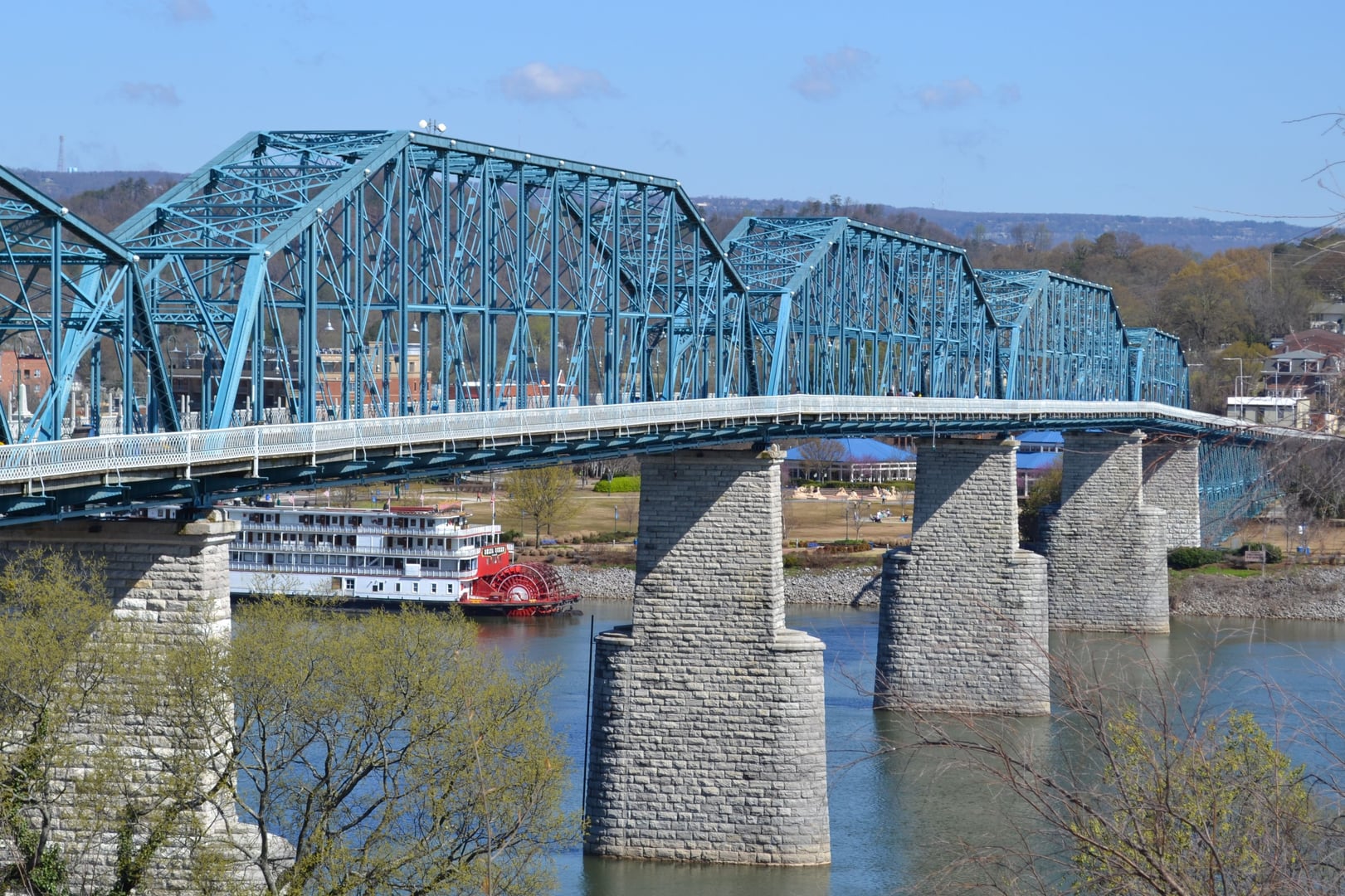
The 1898 bridge is a Pratt deck-truss design engineered by Charles E. Fowler, chief engineer of the Youngstown Bridge Company in Ohio. It is steel-framed with a roadway carried on top of the truss work — a configuration that allowed unobstructed clearance for river traffic below. The bridge served as the principal North-South Tennessee River crossing for downtown Knoxville for more than a century and was added to the National Register of Historic Places.
The span was closed to all traffic on June 25, 2024, after city engineers identified structural concerns in critical truss members. In February 2025 officials announced the bridge would never again carry general vehicle traffic. After repair work, the bridge reopened to pedestrians and cyclists on December 16, 2025, with future use possibly extended to transit buses and emergency vehicles. The Knoxville History Project published a 'Requiem for the Gay Street Bridge' essay in February 2025 documenting the structure's social and architectural importance.
Sources
- https://en.wikipedia.org/wiki/Gay_Street_Bridge
- https://knoxvillehistoryproject.org/2025/02/24/requiem-for-the-gay-street-bridge/
- https://insideofknoxville.com/2026/02/ghost-walking-the-lost-bridges-that-preceded-the-gay-street-bridge/
- https://new2knox.com/7-most-haunted-spots-in-knoxville/
Third light flickering / going outResistance of phenomenon to multiple rewires
According to Knoxville ghost-tour operators including US Ghost Adventures and the New2Knox blog, the Gay Street Bridge is haunted by the spirit of a man said to have fled a lynch mob onto an earlier bridge at this crossing and fallen to his death. The lore holds that for more than a hundred years, the third light on the current 1898 bridge has continually flickered and gone out — and that the city has repeatedly rewired the bridge (including a full rewire in the early 2000s) without effect, the ghost playfully or insistently interfering with the electrical system regardless.
The ghost-light phenomenon — a specific, repeated, locally-documented oddity that maintenance crews have wrestled with — is the strongest element of the legend. It is unusual to find this kind of municipal-maintenance-anchored detail in a haunting story, and the repeated documented rewiring lends the report at least operational credibility, whatever the cause.
The attributed origin date, however, is historically problematic. Tour operators cite 1815 as the year of the lynch-mob death. Yet the documented bridge history at this crossing begins with a Civil War-era pontoon bridge (1860s), followed by Burnside's 1867 stone bridge, an 1875 covered bridge, an 1880 wooden truss, and the present 1898 steel span. In 1815 Knoxville's residents crossed the Tennessee River by ferry, not by bridge. The legend's specific date should be treated as folklore rather than confirmed history; the underlying tradition of a 19th-century death at one of the predecessor bridges remains plausible but is not documented in primary records consulted for this entry.
The Inside of Knoxville website published a February 2026 'Ghost Walking the Lost Bridges That Preceded the Gay Street Bridge' essay treating the site as a layered location whose multiple destroyed predecessors form their own ghostly archaeology beneath the current span.
Notable Entities
Unidentified man fleeing lynch mob (folkloric, undated)
Media Appearances
- US Ghost Adventures Most Haunted Places in Knoxville
- New2Knox haunted spots article
- Inside of Knoxville Ghost Walking essay (Feb 2026)
Where this legend is told