Guided Tour
Blount Mansion Historic Site Tour
Docent-led tour of the 1792 frame house, including the office where Tennessee's first state constitution was drafted, paired with the adjacent Craighead-Jackson House.
- Duration:
- 1 hr
HauntBound archive · catalog record
Reported phenomena, as catalogued
1792 frame house in downtown Knoxville where William Blount lived as governor of the Southwest Territory and where Tennessee's first state constitution was drafted; the active paranormal lore typically attributed to Blount Mansion actually centers on the adjacent Craighead-Jackson House.
200 West Hill Avenue, Knoxville, TN 37902
Research updated June 2026
Age
All Ages
Cost
$
Museum admission combined with Craighead-Jackson House
Access
Limited Access
Two-story 18th-century frame house with original stairs and uneven floors
Equipment
Photos OK
Est. 1792 · Home of William Blount, only territorial governor of the Southwest Territory · Site where Tennessee's first state constitution was drafted in 1796 · Generally considered Knoxville's first frame (non-log) dwelling · National Historic Landmark; operated as a museum since 1925 · Adjacent to and managed alongside the Craighead-Jackson House
Blount Mansion was built around 1792 at the top of the bluff overlooking the Tennessee River in what is now downtown Knoxville. William Blount (1749-1800), the only territorial governor of the Southwest Territory and a signer of the United States Constitution, lived in the house with his family during his term as governor. The frame construction made it stand out among the predominantly log dwellings of frontier Knoxville; tradition holds it was the first non-log dwelling in the city.
The mansion's most significant single historical event came in 1796, when the convention that drafted Tennessee's first state constitution met in Blount's small office building adjacent to the main house. From this location Blount oversaw the territorial transition and the admission of Tennessee as the 16th state of the Union. He went on to serve as one of Tennessee's first U.S. senators before his expulsion in 1797.
Blount died in 1800, reportedly of a fever that struck the household. Across two centuries the home, the surrounding properties, and the city as a whole saw outbreaks of yellow fever, cholera, and (later) the 1918 Spanish flu pandemic. The Blount Mansion Association acquired and saved the property from demolition in 1925 and has operated it as a museum since.
Blount Mansion was added to the National Register of Historic Places and was later designated a National Historic Landmark. The site today operates as a historic-house museum together with the adjacent Craighead-Jackson House across State Street, also managed by the Blount Mansion Association.
Sources
The paranormal lore commonly grouped under 'Blount Mansion' is, on close reading of published sources, almost entirely attached to the adjacent Craighead-Jackson House at 1000 State Street, not to William Blount's 1792 governor's residence. VisitKnoxville's haunted-places writeup groups the two properties together under the heading 'Blount Mansion - Craighead-Jackson House,' but the specific stories — the female servant who burned to death in a fireplace, footsteps on the front stairs, doors found unlocked, windows raised — are all set at the Craighead-Jackson House.
What lore is associated with the 1792 mansion itself is comparatively thin but is documented across multiple independent sources. VisitKnoxville and New2Knox both report that tour-goers have seen William Blount staring out the mansion's windows, with visitors capturing a silhouette against the glass. According to the UT Daily Beacon (University of Tennessee student newspaper), the mansion has been the site of creepy tales, myths, and mysterious happenings during seasonal haunted tours, with stories tied to Native Americans, Blount family members, and the documented deaths across the site's two-century history. William Blount died of a fever at the mansion on March 21, 1800, having fallen ill ten days earlier on March 11, a detail cited as the likeliest historical anchor for the upper-floor silhouette reports. The US Ghost Adventures Knoxville Ghost Tour includes the mansion as a stop alongside the Craighead-Jackson House.
This entry preserves Blount Mansion as a public-facing site while making clear that the primary haunted narrative is at the Craighead-Jackson House next door. For richer ghost-tour-grade content, the Craighead-Jackson entry in this dataset is the better match.
Notable Entities
Media Appearances
Docent-led tour of the 1792 frame house, including the office where Tennessee's first state constitution was drafted, paired with the adjacent Craighead-Jackson House.
Some links on this page may earn HauntBound a small commission when you book, at no extra cost to you. Our editorial picks are independent. Full disclosure
This Knoxville tour includes Blount Mansion on its route.
Every HauntBound history is researched from documented sources. We clearly separate verified historical fact from paranormal folklore.
Free Guide
11 verified stops, rated for families, mapped in order. Free.
One email to confirm, then the guide link. Unsubscribe anytime.
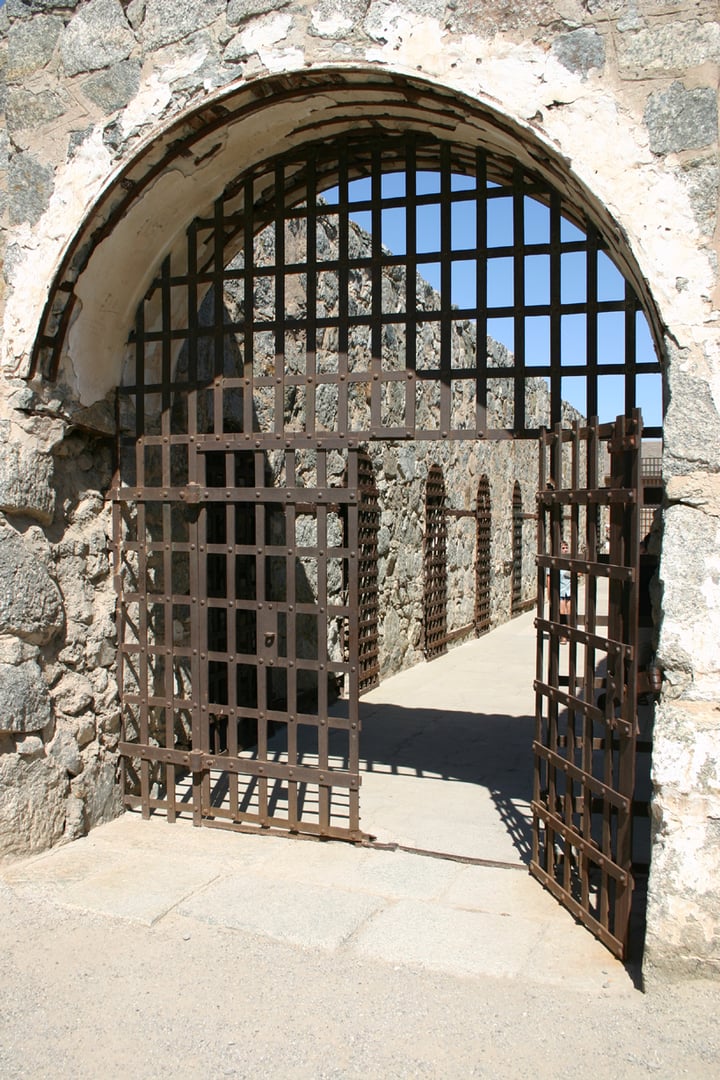
Yuma, AZ
Yuma Territorial Prison operated from 1876 to 1909 on a bluff overlooking the Colorado River in Yuma, Arizona. It held 3,069 prisoners during its 33-year operation, including 29 women. The facility became a state historic park and has been voted by USA Today readers as the Best Haunted Destination in the nation.
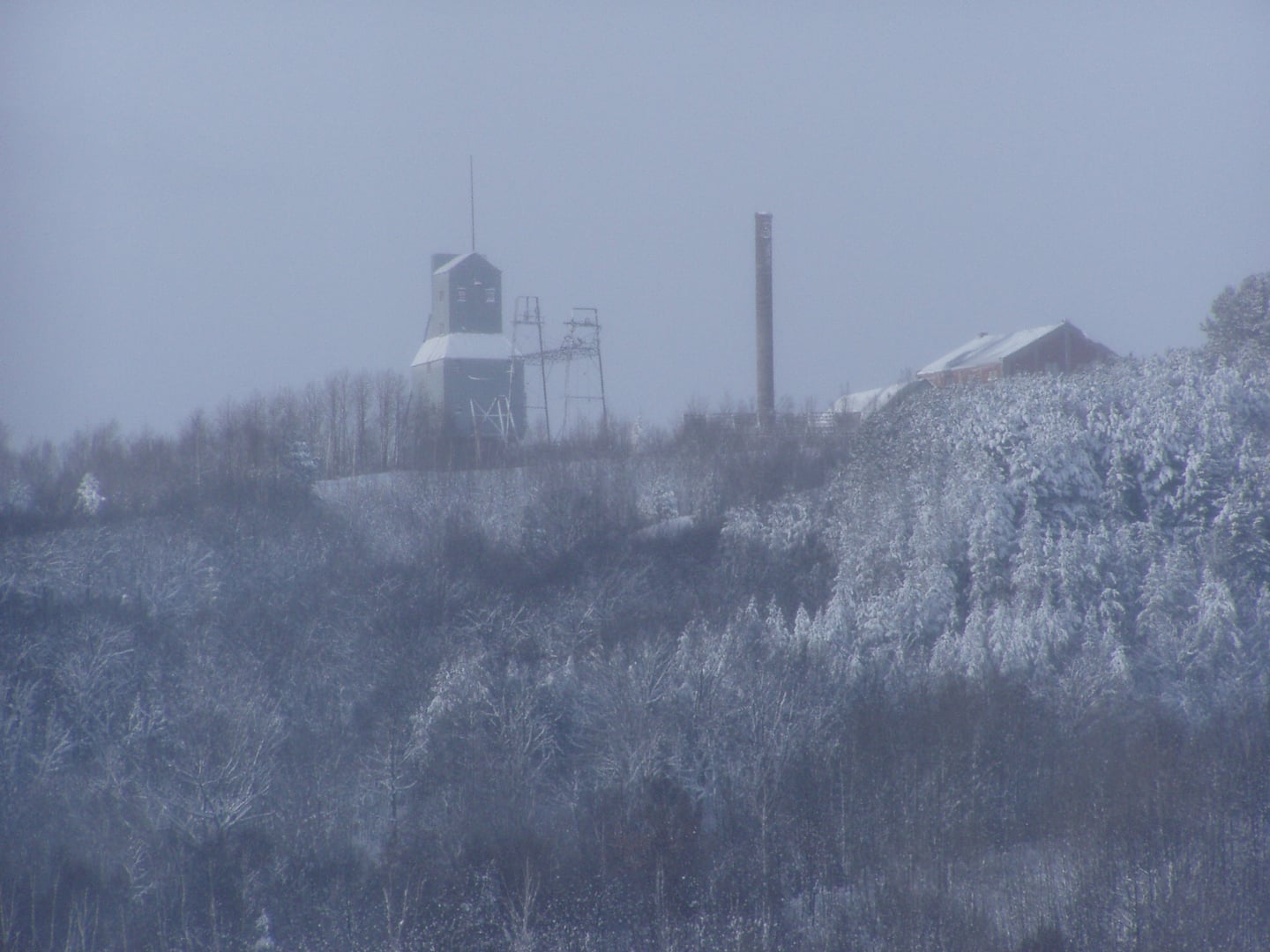
Hancock, MI
The Quincy Mining Company began extracting copper from the Keweenaw Peninsula in 1846 and operated continuously until 1945, producing nearly a billion pounds of copper. During that period, 253 workers died in documented underground accidents. At its deepest, the mine reached 9,000 feet — the deepest copper mine in the world at the time — and its No. 2 shaft hoist house is a National Historic Landmark.
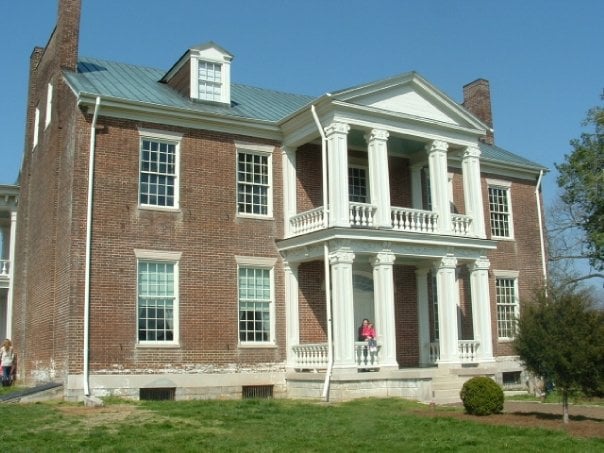
Franklin, TN
Carnton, built in 1826 in Franklin, Tennessee, served as the largest temporary Confederate field hospital after the November 30, 1864, Battle of Franklin. Approximately 300 wounded soldiers were treated inside the house in a single night, and four Confederate generals' bodies were laid out on the back porch the following morning. Carrie and John McGavock later donated land for the McGavock Confederate Cemetery on the property — the largest privately owned military cemetery in the United States.