Est. 1810 · Early Gothic Revival cathedral by John Holden Greene (1810) · Built on site of 1722 King's Church — site of continuous Anglican/Episcopal worship since · Burial ground contains graves of enslaved Providence residents — central to the Center for Reconciliation · Lovecraft's favorite Providence cemetery; Poe-Whitman courtship landmark
The site at 271 North Main Street has been a center of Anglican and Episcopal worship in Providence since 1722, when the original wooden King's Church was built. The current Early Gothic Revival stone cathedral was constructed in 1810 to designs by Providence's leading early-19th-century architect, John Holden Greene. The building represents one of the earliest Gothic Revival church designs in the United States, predating the more widespread mid-19th-century Gothic Revival movement.
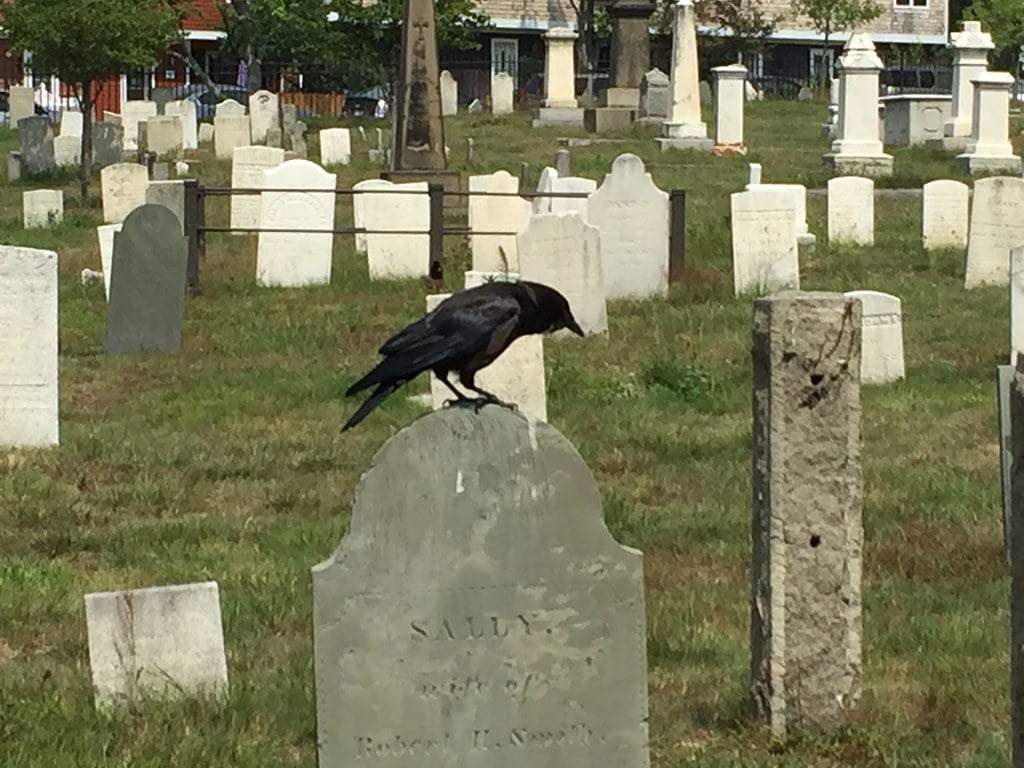
The adjacent burial ground predates the current cathedral and contains graves from the 18th and 19th centuries. The cemetery includes burials of enslaved Providence residents alongside their enslavers — a fact that has become central to the cathedral's reckoning with its institutional history. Rhode Island and the Episcopal Diocese of Rhode Island were deeply entangled with the transatlantic slave trade, and the cathedral's North Main Street site sits within the historic commercial and ecclesiastical center of that economy.
In 2012 the cathedral closed for regular worship. The Episcopal Diocese of Rhode Island subsequently announced plans to reopen the building as the Center for Reconciliation, a programming space dedicated to addressing the church's historic ties to slavery and the work of racial reconciliation in Providence and beyond. The building is documented by the Wikipedia entry for Cathedral of St. John (Providence, Rhode Island), Visit Rhode Island, and the Episcopal Diocese of Rhode Island.
The cathedral and its churchyard are most famous in Providence literary history for their association with H.P. Lovecraft, who frequented the cemetery as a writing spot, and with Edgar Allan Poe, who wandered the graveyard during his 1848 courtship of Providence poet Sarah Helen Whitman — Whitman's house at 88 Benefit Street stood directly behind the cemetery.
Sources
- https://en.wikipedia.org/wiki/Cathedral_of_St._John_(Providence,_Rhode_Island)
- https://www.visitrhodeisland.com/listing/cathedral-of-st-john-&-burial-ground/9841/
- http://newenglandfolklore.blogspot.com/2013/08/lovecraft-poe-and-ghosts-in-st-johns.html
- https://www.hplovecraft.com/creation/sites/walktour.aspx
- https://www.literarytraveler.com/articles/hp_lovecraft_rhodeisland/
Lovecraft's reported 'faint luminosity bobbing above a distant nameless grave'Atmospheric Poe-figure apparition along Benefit Street and in the cemetery (literary-tradition)Sense of 'vampiric horror' described in Lovecraft's letters
According to New England Folklore, the official Lovecraft Walking Tour (hplovecraft.com), and Literary Traveler, the St. John's burial ground was H.P. Lovecraft's favorite Providence cemetery and a recurring setting in his correspondence. In a letter to a friend, Lovecraft wrote: 'About the hidden churchyard of St. John's — there must be some unsuspected vampiric horror burrowing down there & emitting vague miasmatic influences, since you are the third person to receive a definite creep of fear from it.'
Lovecraft took friends to the cemetery at midnight on multiple occasions. According to his own letters, on one such midnight visit he reported 'a faint luminosity bobbing above a distant nameless grave.' He used the cemetery as a writing spot, sitting on tombs to compose acrostic poems featuring Edgar Allan Poe's name — a documented Lovecraft pastime preserved in his correspondence.
The Poe connection is direct. Edgar Allan Poe traveled to Providence repeatedly in autumn 1848 to court the poet and spiritualist Sarah Helen Whitman (1803-1878), whose house at 88 Benefit Street stood directly behind the St. John's cemetery. Lovecraft wrote that 'Poe knew of this place, & is said to have wandered among its whispering willows during his visit here 90 years ago.' Local tradition places a Poe-figure apparition along Benefit Street and in the cemetery at dawn and dusk.
We address the sensitivity-flagged history with editorial care: the burial ground contains the graves of enslaved Providence residents, and the cathedral is reopening as the Center for Reconciliation precisely to confront that history. Paranormal lore here is treated as Lovecraft-Poe literary tradition, separate from the documented historical violence of the enslaved-burials context — which is not romanticized 'ancient curse' material but documented institutional and human history that the diocese is actively addressing.
Notable Entities
Atmospheric presence linked to H.P. Lovecraft's own midnight visitsEdgar Allan Poe — wandered the graveyard 1848 while courting Sarah Helen Whitman
Media Appearances
- Official Lovecraft Walking Tour (hplovecraft.com)
- New England Folklore blog entry
- Literary Traveler — 'H.P. Lovecraft, Providence, Rhode Island'