Self-Guided Visit
Self-Guided Pioneer Cemetery Walk
Walk the 30-acre grounds, find graves of Portland mayors and pioneer families, and use the Friends of Lone Fir Cemetery interpretive materials.
- Duration:
- 1.5 hr
HauntBound archive · catalog record
Reported phenomena, as catalogued
Portland's oldest continuously used cemetery, founded 1846 and originally named Mount Crawford for victims of the 1854 Gazelle steamboat explosion; ~25,000 burials including six city mayors.
649 SE 26th Ave, Portland, OR 97214
Research updated October 2026
Age
All Ages
Cost
Free
Free public access during posted daylight hours.
Access
Wheelchair OK
Paved interior roads with grass-and-gravel pathways between grave plots; mostly level.
Equipment
Photos OK
Est. 1846 · Portland's oldest continuously used cemetery · Originally named Mount Crawford for Crawford Dobbins, who died in the 1854 Gazelle steamboat explosion · Roughly 25,000 burials including six Portland mayors · Listed on the National Register of Historic Places in 2007 · Includes a Chinese-American section now the subject of an interpretive project
The cemetery's earliest recorded burial occurred in 1846, when pioneer Emmor Stephens, father of J.B. Stephens, was buried on the family donation land claim that today lies on the east side of the Willamette River across from downtown Portland. In 1854, J.B. Stephens sold the property to Colburn Barrell, with a condition that Emmor's grave be preserved.
In April 1854 the steamboat Gazelle exploded at Canemah, near Oregon City, killing twenty-four of its roughly fifty passengers, including Barrell's business partner Crawford Dobbins and his friend D.P. Fuller. Barrell set aside ten acres of the Stephens land as a burial ground for the explosion victims and named it Mount Crawford in his partner's memory. Plots in the cemetery were initially sold for $10.
A group of local families later acquired the property and renamed it Lone Fir, reportedly after a solitary fir tree that stood on the otherwise treeless grounds. By 1866 the site had expanded to roughly thirty acres. Burials grew rapidly through the second half of the nineteenth century, fueled in part by the diphtheria, scarlet-fever, and typhoid epidemics that swept Portland and disproportionately killed children. The cemetery contains an estimated 25,000 burials, including those of six Portland mayors as well as Chinese-American laborers whose section was for many years unmarked and is now the subject of an active interpretive project.
Lone Fir entered a period of substantial neglect between roughly the 1960s and 1990s, when funding lapsed and headstones suffered vandalism and weathering. The Friends of Lone Fir Cemetery, founded in 1999, led a stewardship campaign that helped secure listing on the National Register of Historic Places in 2007. The cemetery is now operated by Metro and remains an active site of community history programming.
Sources
Lone Fir's haunted reputation took shape during the mid-twentieth century when, according to Friends of Lone Fir and local historians, the grounds were poorly maintained and attracted nighttime trespassers. Modern ghost-walking-tour operators including Portland Ghosts and Ghost City Tours have long featured the cemetery as a centerpiece of their itineraries.
Reported phenomena fall into a few patterns. Visitors describe hearing children's voices, including faint laughter or shouting, and footsteps on gravel, especially in sections where many young people are buried (Portland Ghosts; Ghost City Tours). The lore connects these reports to the very large number of nineteenth-century child burials at Lone Fir from diphtheria, scarlet-fever, and typhoid epidemics.
A second strand of lore connects the cemetery's origin to its founding role as the burial ground for the twenty-four victims of the 1854 Gazelle steamboat explosion. Tour narratives present these victims as among the cemetery's earliest 'restless' residents, though this framing is folkloric rather than historically attested.
Friends of Lone Fir and Metro consistently emphasize the cemetery's role as an active burial ground worthy of respect; both organizations gently steer ghost-curious visitors toward documented social history (epidemics, the Chinese-American section, pioneer families) rather than sensationalized accounts.
Notable Entities
Walk the 30-acre grounds, find graves of Portland mayors and pioneer families, and use the Friends of Lone Fir Cemetery interpretive materials.
Monthly guided history walks led by the Friends of Lone Fir Cemetery on the second Saturday of each month, from 10 to noon, highlighting Portland's founders and regionally known pioneers. Reservations and donations are not required; a $10 per person donation is suggested.
A guided walking tour of Lone Fir Pioneer Cemetery at dusk on Halloween, October 31, 2026. Tours begin on the hour starting at 3:00 p.m., the final tour ends at 6:00 p.m., and each lasts about one hour. Tickets are required: you must attend the tour time on your ticket, and there are no walk-up ticket sales.
Some links on this page may earn HauntBound a small commission when you book, at no extra cost to you. Our editorial picks are independent. Full disclosure
Every HauntBound history is researched from documented sources. We clearly separate verified historical fact from paranormal folklore.
Free Guide
11 verified stops, rated for families, mapped in order. Free.
One email to confirm, then the guide link. Unsubscribe anytime.
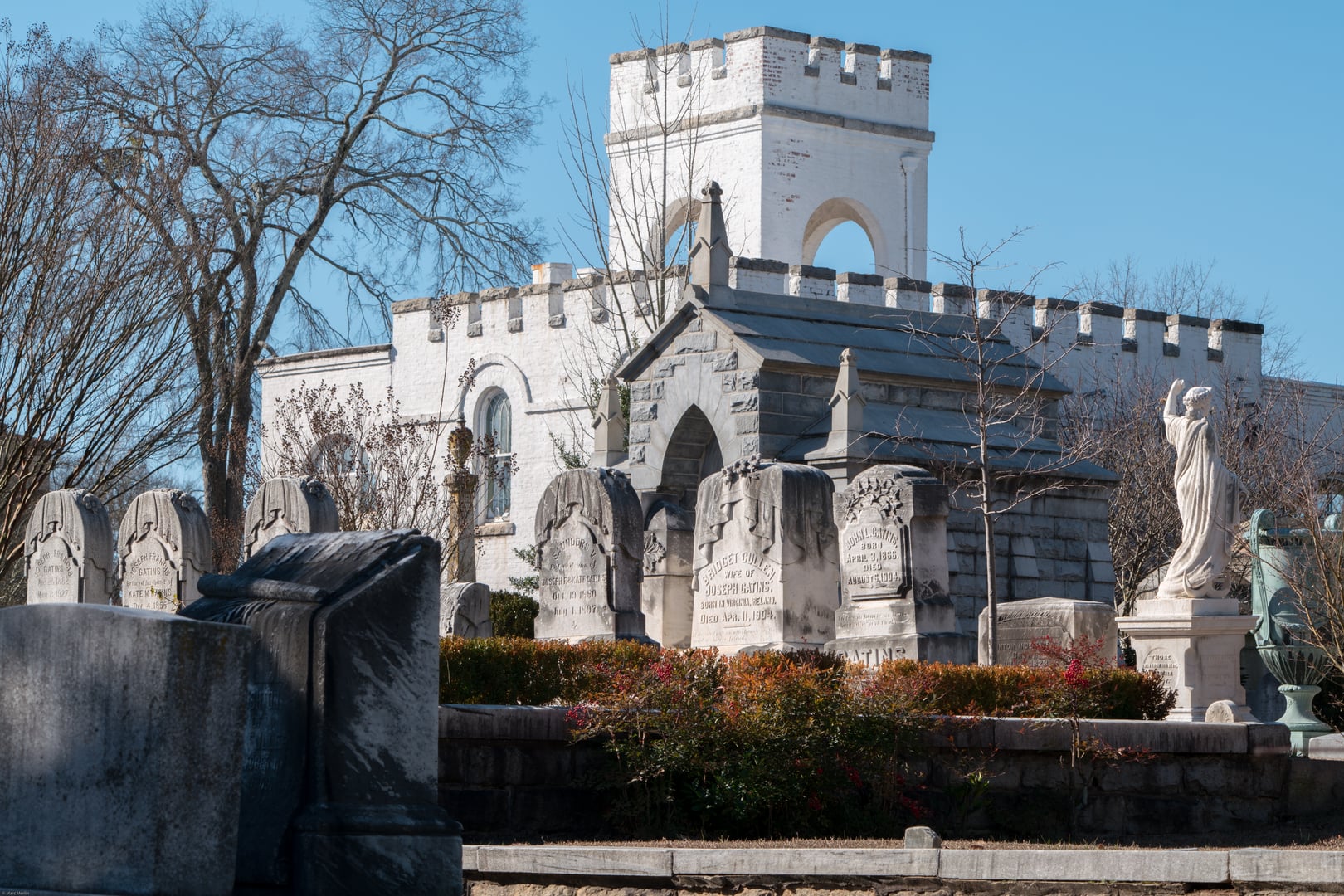
Atlanta, GA
Historic Oakland Cemetery was chartered in 1850 as the six-acre 'Atlanta Cemetery,' renamed Oakland in 1872, and expanded to 48 acres. Approximately 70,000 people are interred, including roughly 6,900 Confederate soldiers (3,000 unidentified), four Confederate generals, six Georgia governors, 27 Atlanta mayors, Margaret Mitchell, golfer Bobby Jones, and Maynard Jackson, Atlanta's first African American mayor. The cemetery was listed on the National Register of Historic Places on April 28, 1976.
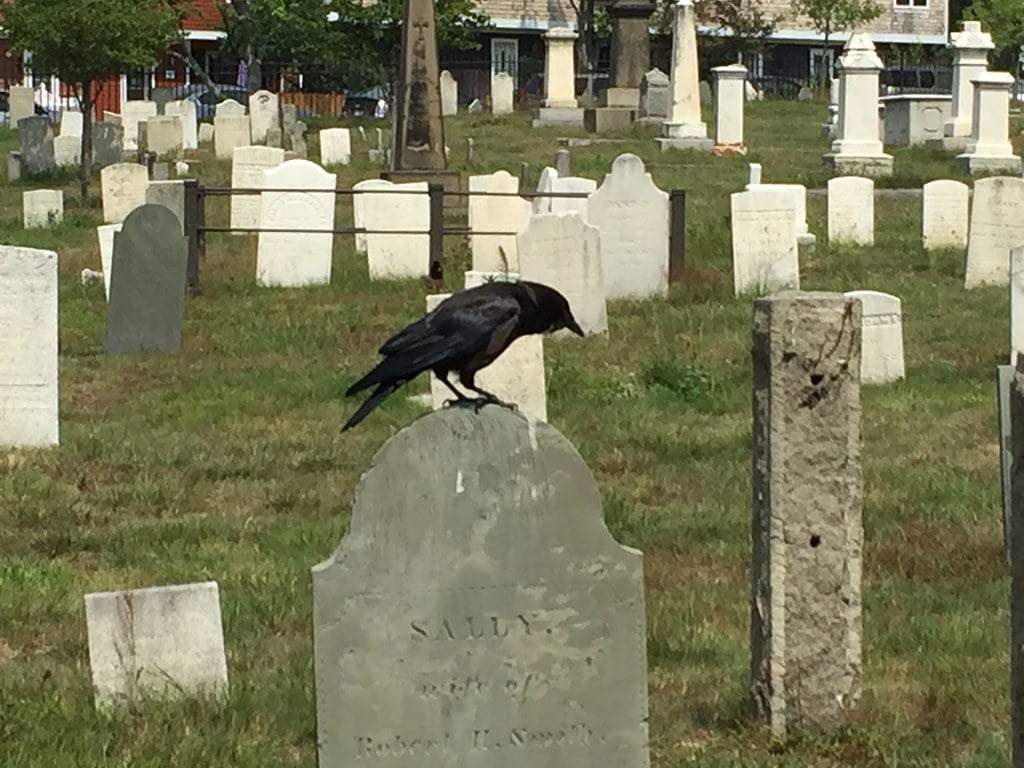
Portland, ME
Established in 1668, Eastern Cemetery is Portland's oldest historic site and oldest landscape, occupying roughly seven acres at the base of Munjoy Hill. The grounds hold an estimated 4,000 marked graves and an additional ~3,000 unmarked burials. It was listed on the National Register of Historic Places in 1973 and has been preserved and interpreted by the nonprofit Spirits Alive since 2006.
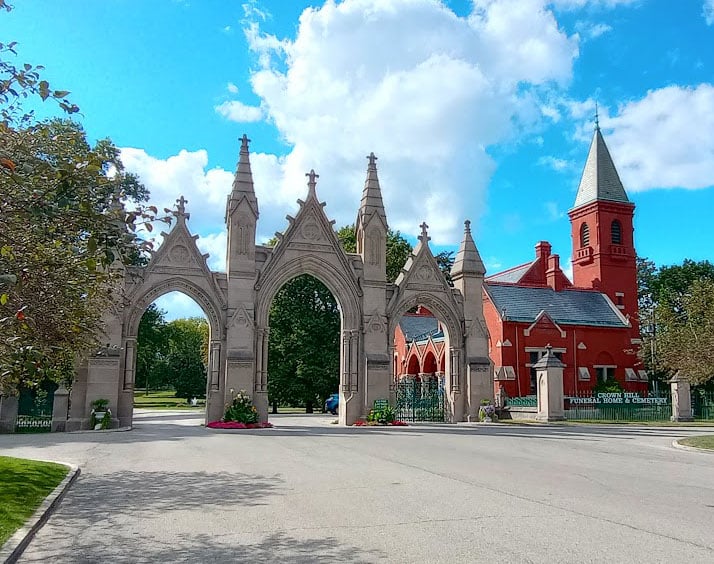
Indianapolis, IN
Crown Hill Cemetery was established in 1863 and formally dedicated June 1, 1864 on 555 acres of rolling land north of downtown Indianapolis. It is the third-largest non-governmental cemetery in the United States and the final resting place of President Benjamin Harrison, three U.S. vice presidents, poet James Whitcomb Riley, abolitionist editor Levi Coffin, and gangster John Dillinger. Crown Hill is listed on the National Register of Historic Places.