Est. 1847 · Early Yamhill County seat · 1886 Corker ax murder · 1887 hanging of Richard Marple · Origin of the Lafayette curse legend
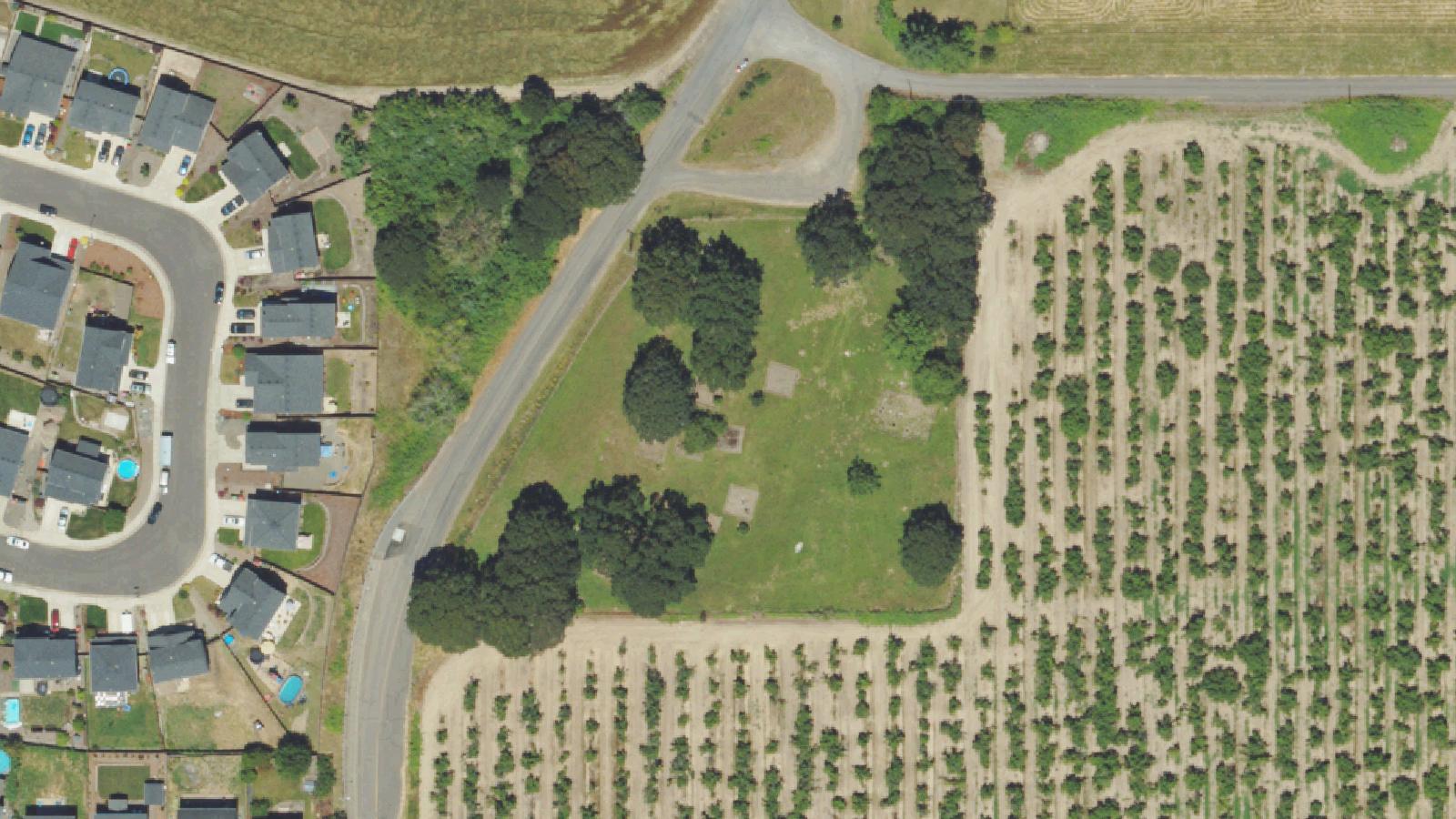
Lafayette was one of the earliest towns in Oregon's Yamhill County and served for a time as the county seat. Its pioneer cemetery, on the hillside above town, contains burials dating to the mid-19th century and is among the older surviving cemeteries in the Willamette Valley.
The town's enduring 'curse' legend is rooted in a well-documented crime. On November 1, 1886, the local storekeeper David I. Corker, a 57-year-old man who was hard of hearing and ran his shop alone, was found in his bed having been killed with an ax. Suspicion fell on Richard Marple, a 27-year-old newcomer who had moved to Lafayette from Corvallis in 1885 and was suspected of several area robberies.
Despite alibi testimony from his wife and mother, a jury convicted Marple of first-degree murder on April 9, 1887. He was hanged on November 11, 1887, in a wooden stockade beside the county jail. The execution was botched: the knot slipped, and rather than breaking his neck the noose slowly strangled him over a prolonged and agonizing period.
According to multiple local-history accounts, during the hanging Marple's mother, Anna Eliza Marple, cried out that the town would burn and never prosper. In 1888, the rival town of McMinnville won the county seat away from Lafayette, and the town never regained its former standing, suffering a series of damaging fires in the years that followed. These documented events became the historical seed of the later 'witch's curse' folklore.
Sources
- https://newlafayette.org/lafayette-history/an-ax-murder-a-hanging-and-a-curse-in-lafayette/
- http://offbeatoregon.com/1710d.marple-the-triple-ax-murderer-466.html
- https://redmondspokesman.com/2017/11/15/brutal-1886-lafayette-ax-murder-couldnt-have-been-more-sordid/
- https://www.findagrave.com/memorial/66311816/anna-eliza-marple
- https://www.sinistercoffeeandcreamery.com/blog/lafayette
Apparition walking the cemetery at nightTown curse folkloreReports of unexplained scratches
Over the decades, the documented Marple execution evolved into one of Oregon's best-known town legends. In the popular folklore version, a woman accused of witchcraft was hanged and, before dying, cursed Lafayette to burn to the ground three times. The town is widely said to have burned twice already, leaving residents to wonder about a third fire.
The historical kernel is more sordid than supernatural. The 'curse' traces to Anna Marple, mother of the hanged Richard Marple, who according to local-history accounts shouted at his 1887 execution that the town would burn and never prosper. Lafayette's subsequent loss of the county seat in 1888 and its history of fires gave the outburst the appearance of prophecy, and the story gradually transformed into a witch legend detached from the original crime.
The cemetery itself is the focal point of the modern haunting tradition. Visitors and local teenagers report seeing a figure standing among or walking through the graves at night, and the so-called 'witch's grave' is a longtime local pilgrimage spot. Some retellings add lurid embellishments such as visitors being scratched, but these are uncorroborated and circulate through folklore and ghost-tour channels rather than documented record.
The legend is covered by numerous Oregon folklore outlets, and the underlying Marple case is documented in local history archives and regional newspapers. Out of respect for the historical record, this entry treats the 'witch' framing as folklore layered over a real 19th-century crime. Visitors should note the cemetery is gated and patrolled at night.
Notable Entities
The 'Lafayette witch' (folklore)