Est. 1872 · National Register of Historic Places (1997) · 1872 Odd Fellows pioneer cemetery · Largest cemetery in Eugene by acreage and interments · 145 Civil War veterans among ~5,000 burials
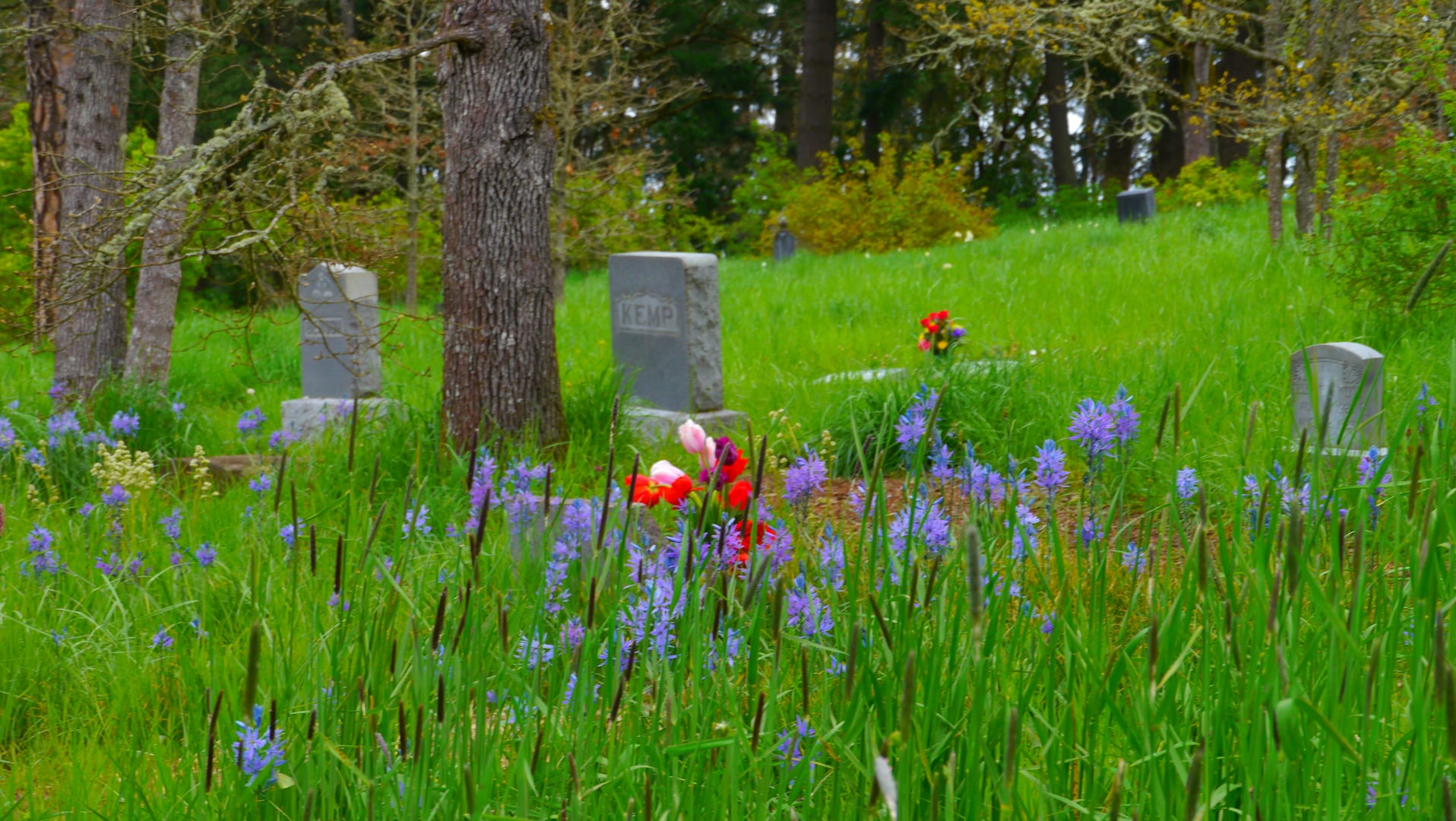
Eugene Pioneer Cemetery was established in 1872 by the Spencer Butte Lodge No. 9 of the Independent Order of Odd Fellows. The 16-acre tract sits on the south edge of the University of Oregon campus and is one of Eugene's three oldest cemeteries. With approximately 5,000 burials, it is the largest cemetery in Eugene by both acreage and number of interments.
Notable burials include Medal of Honor recipient Louis Renninger (1841-1908), former U.S. Representative James Henry Dickey Henderson (1810-1885), and Oregon Secretary of State Harrison R. Kincaid (1836-1920). The cemetery also honors 145 Civil War veterans, along with veterans of the Spanish-American War, World War I, and World War II.
The cemetery was added to the National Register of Historic Places on August 1, 1997. Its position directly beside the University of Oregon, threaded by paths that students use as shortcuts to class, has made it a fixture of campus life and the focus of University of Oregon folklore collections that document the stories attached to its monuments.
Sources
- https://en.wikipedia.org/wiki/Eugene_Pioneer_Cemetery
- https://news.uoregon.edu/content/ghost-stories-and-folklore-mac-court-and-pioneer-cemetery
- https://eugenepioneercemetery.org/
Apparition of a woman in whiteVanishing bagpiperBagpipe music with no source
The University of Oregon's official news service has published an account of the folklore attached to Pioneer Cemetery, making this one of the better-documented campus haunting traditions in the state. The stories center on two recurring figures. The first is a woman in a white, colonial-style dress, described by students taking shortcuts through the cemetery as floating in fog among the monuments, sometimes seen tending or cleaning gravestones. The second is a man in full Highland regalia who plays the bagpipes and dissolves behind trees and crumbling old markers when approached.
The most consistent report is auditory. Students and neighbors describe the sound of bagpipes drifting from the cemetery in the dark; when curious listeners go to find the source, there is none. Local accounts say the activity is most often noticed late at night, around the time a nearby church bell marks 10 p.m.
Because these are folklore figures rather than identifiable individuals, no real person is named in the haunting, and the cemetery should be treated as the working historic burial ground it is. The strong anchor here is the documentation itself: the University of Oregon's folklore archives preserve and recount these stories rather than leaving them to anonymous aggregator listings.
Notable Entities
Woman in White (folklore figure)The Bagpiper (folklore figure)
Where this legend is told