Est. 1921 · 1921 Italian Renaissance villa by Noble B. Flemming · Built for oil-field equipment magnate David R. Travis (born David Rabinowitz) · J. Arthur Hull added 1920s greenhouse and sunken garden · Snedden family purchased the mansion in 1932 · Acquired by City of Tulsa in 1954 as the Tulsa Garden Center
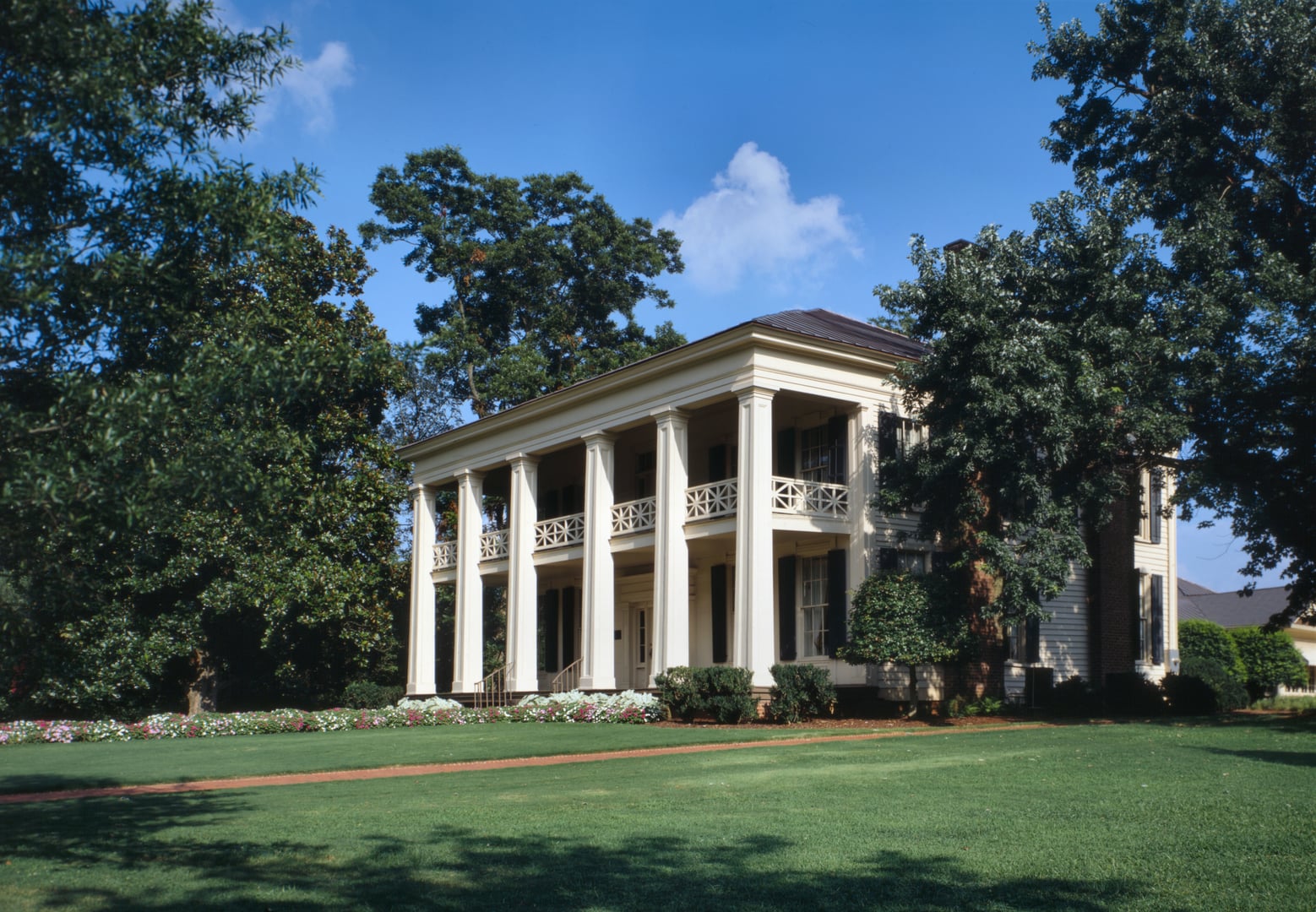
The Italian Renaissance villa now known as the Tulsa Garden Center mansion was designed by Tulsa architect Noble B. Flemming (also spelled Fleming in some sources) for David R. Travis, a Russian-Jewish immigrant born David Rabinowitz, who moved to Tulsa in 1913 and built his fortune in the oil-field equipment business. Construction began in 1919 and the twenty-one-room, ten-bathroom home was completed in 1921. The villa sits on a hillside in what is now Woodward Park, in the South Peoria corridor.
In 1923, J. Arthur (James Arthur) Hull and his wife, Lina Jane Hull, purchased the home and ten surrounding acres. Hull added the Lord & Burnham greenhouse and the formal sunken garden that survives today. Local haunting lore names a Mary Hull, said to have lived at the home in the 1920s and to have died there; her exact relationship to the Hull family is not documented in the archival record reviewed for this entry. The Sneddens purchased the mansion from the Hulls for $25,000 on January 5, 1932.
Oilman William G. Skelly purchased the property in October 1950, paying cash, but never lived in the house. He retained ownership for four years and sold the home and surrounding 7.5 acres to the City of Tulsa on October 18, 1954, for $85,000. The city designated the property as the Tulsa Garden Center, and it has functioned as a community horticulture, education, and event venue ever since.
The grounds include the Linnaeus Teaching Garden, the Tulsa Rose Garden with nearly 250 varieties of roses across five terraced levels, and the three-acre Tulsa Arboretum. The mansion is also documented in the Library of Congress collections.
Sources
- https://www.tulsagardencenter.org/the-mansion
- http://historictulsa.blogspot.com/2009/06/tulsa-garden-centerdonald-travis.html
- https://www.newson6.com/story/5e36707c2f69d76f620808b3/tulsa-garden-center-mansion-said-to-be-haunted-by-former-resident
- https://www.loc.gov/item/ok0105/
- https://www.tulsapeople.com/tulsa-people/october-2010/ghost-town/article_4bd0f484-b2db-54ba-a3f1-e335adafe358.html
- https://tulsaworld.com/life-entertainment/5-to-find-most-notable-haunted-places-around-tulsa/article_46b1aec1-77a1-5317-aa3a-1842eaf925d4.html
Ghostly figures brushing past on the staircaseElevator opening and closing on its ownDoorbell chiming without causePhones ringing simultaneouslyBrochures flying off library shelvesSense of a quiet female presence in upstairs rooms
The Tulsa Garden Center mansion is one of the city's most-cited haunted historic homes, with lore documented by NewsOn6, Tulsa People magazine, the Garden Center itself, and the Paranormal Investigation Team of Tulsa (PITT).
The most frequently named figure is Mary Hull, a 1920s resident of the mansion. (The mansion was purchased in 1923 by J. Arthur Hull and his wife, Lina Jane Hull, along with the surrounding ten-acre parcel; Mary Hull's exact relationship to the family is not established in the archival record reviewed for this entry.) According to local accounts, Mary Hull died at the home in the 1920s; her presence is said to remain at the mansion, with staff describing the sensation of being brushed past on the staircase and a recurring impression of a quiet female presence in the second-floor rooms.
The Garden Center is one of the few Tulsa institutions to openly support paranormal investigation of its property. PITT-team investigations have reportedly documented the elevator opening and closing on its own; the doorbell chiming without cause; the building's phones ringing simultaneously when no calls were placed; and a stack of brochures lifting from a shelf, traveling approximately nine feet through the air, and landing on the floor in front of investigators.
The building's history is otherwise quiet - there is no documented violent event or scandal in the historical record. The lore is grounded in the death of a single named historical person (Mary Hull, 1920s) and in well-documented investigator reports during the building's modern Garden Center era. The earlier paranormal write-ups that attributed the activity to a 'daughter-in-law of a prior owner who died after the city acquired the home' do not appear to be supported by archival sources reviewed for this entry; the most consistent named figure across local sources is Mary Hull.
Notable Entities
Mary Hull (1920s resident said to have died at the home; relationship to the Hull family not documented in archival sources)
Media Appearances
- NewsOn6: 'Tulsa Garden Center Mansion Said To Be Haunted By Former Resident'
- Tulsa People (October 2010): 'Ghost town'