Self-Guided Visit
Depot Visit
Explore the 1903 red-brick Santa Fe Depot, restored in 1998 and now home to a restaurant and event space in the former Harvey House wing. At its peak the station processed up to 40 trains daily.
- Duration:
- 1 hr
HauntBound archive · catalog record
Reported phenomena, as catalogued
Guthrie's 1903 red-brick Santa Fe Depot processed as many as 40 trains a day at its peak; now a restaurant and event venue, it is said to be watched over by a woman in Victorian dress who waits at the second-story windows for a train that never arrives.
403 W Oklahoma Ave, Guthrie, OK 73044
Research updated September 2026
Age
All Ages
Cost
$
No admission fee to view the exterior; the depot now operates as a restaurant and event venue, so a visit inside means dining or attending a booked event.
Access
Wheelchair OK
Ground-floor restaurant access; downtown paved sidewalks.
Equipment
Photos OK
Est. 1903 · 1903 Santa Fe Railway depot serving Oklahoma Territory's first capital · Processed up to 40 trains per day at peak operation · Closed 1979; Harvey House wing restored 1998 as restaurant and event venue · Part of Guthrie's National Historic Landmark downtown district
The Guthrie Santa Fe Depot at 403 West Oklahoma Avenue was constructed in 1903 by the Atchison, Topeka and Santa Fe Railway. It sits in the heart of a city that was Oklahoma Territory's first capital — a status Guthrie held from the 1889 Land Run until Oklahoma City assumed it in 1910. The red-brick structure was designed to serve a rapidly growing territorial capital, and at its peak the station saw as many as 40 trains per day, making it one of the busiest rail stops in the region.
The depot operated through Oklahoma statehood and into the mid-twentieth century, handling both passenger service and freight. It closed in 1979 as rail passenger traffic declined nationally. In 1998 the building's northern wing, which once housed the Harvey House restaurant, was restored and reopened as a restaurant and event space, a use it retains today. Wikipedia's entry on Guthrie Station documents the structure's history and its role in the Santa Fe Railway's Oklahoma network.
The surrounding block is part of Guthrie's National Historic Landmark district, which encompasses one of the most complete ensembles of late-Victorian commercial architecture in the United States. The depot's red-brick construction and its relationship to the Harvey House restaurant network — which served rail travelers across the Santa Fe system — give it particular historical significance among Oklahoma's railroad-era buildings.
The building was listed in multiple sources documenting Guthrie's preserved Victorian-era institutions, and local historians note that it represents the last major railroad terminal built for Guthrie during its period as the territorial center of commerce.
Sources
The primary paranormal account associated with the Guthrie Santa Fe Depot centers on a woman referred to in local ghost lore as 'Ms. Pearl Harvey.' She is described as appearing at the second-story windows wearing Victorian dress, her gaze fixed on the tracks outside as if anticipating an arriving train that never comes. Ghost tourism sources identify her as the wife of Fred Harvey, the restaurateur who built the famous Harvey House restaurant chain that served Santa Fe Railway travelers across the American Southwest.
The Fred Harvey identification should be treated as local tradition rather than confirmed biography — the specific claim that Pearl Harvey haunts this depot has not been corroborated in historical records reviewed for this entry. Fred Harvey (1835–1901) was a real and well-documented figure in American railroad history, and his company operated a restaurant in association with the Guthrie depot, but the ghost identification is sourced exclusively from local paranormal guides.
Additional reported phenomena include disembodied voices heard inside the depot during off-hours and what witnesses describe as phantom train whistles audible near the building at night. Guthrieliving.com, which covers Guthrie's haunted sites, lists the depot among the city's most active paranormal locations. The combination of the building's closure period, its association with thousands of travelers over eight decades, and its setting within Guthrie's well-documented haunted-city reputation has sustained the lore across multiple generations of local storytelling.
Notable Entities
Explore the 1903 red-brick Santa Fe Depot, restored in 1998 and now home to a restaurant and event space in the former Harvey House wing. At its peak the station processed up to 40 trains daily.
Guthrie ghost tours include the depot as a documented haunted site, covering the Victorian phantom in the second-story window and reports of phantom train whistles heard near the building.
Some links on this page may earn HauntBound a small commission when you book, at no extra cost to you. Our editorial picks are independent. Full disclosure
This Guthrie tour includes Old Santa Fe Depot (Guthrie Station) on its route.
Every HauntBound history is researched from documented sources. We clearly separate verified historical fact from paranormal folklore.
Free Guide
9 verified stops, rated for families, mapped in order. Free.
One email to confirm, then the guide link. Unsubscribe anytime.
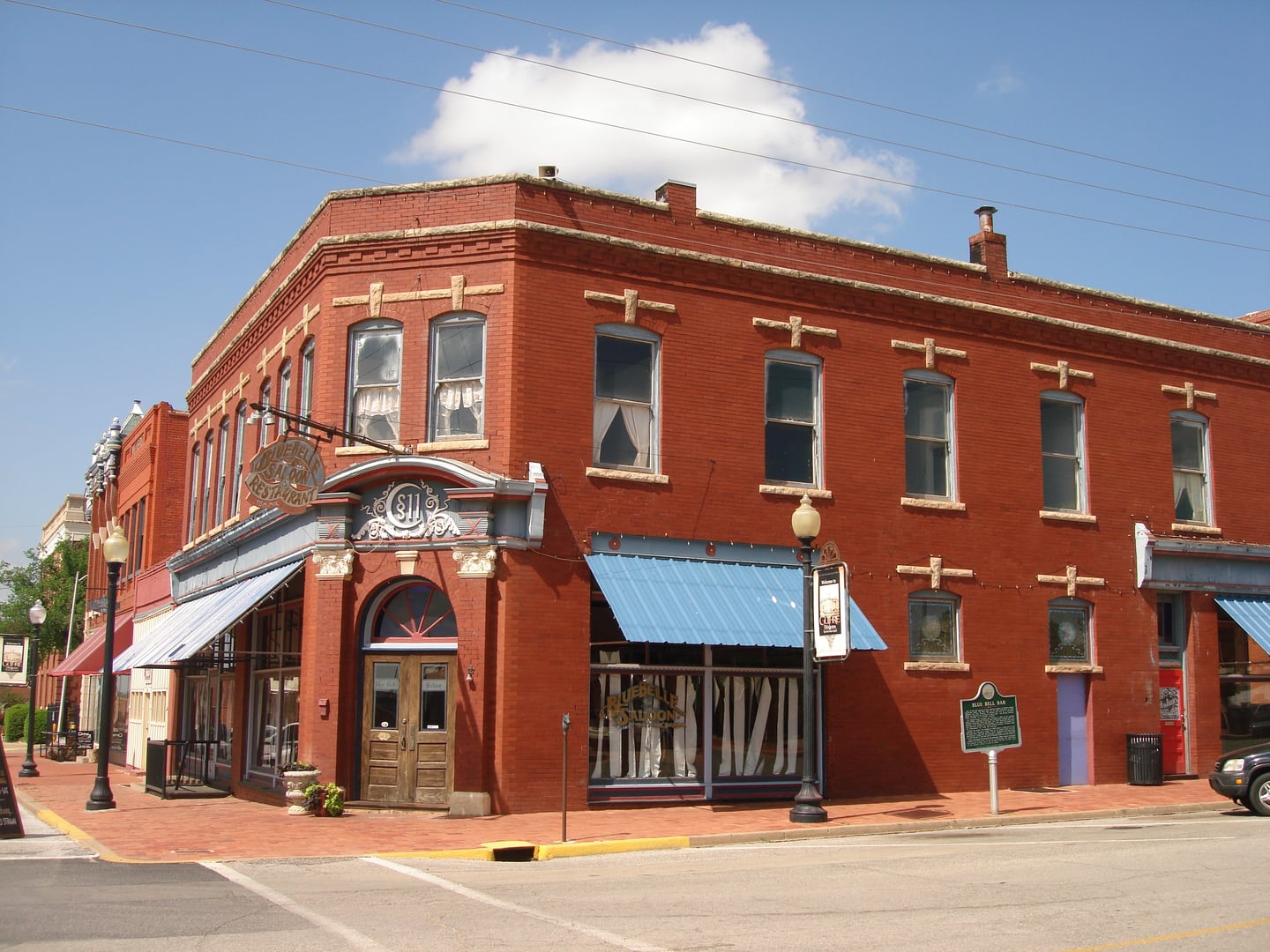
Guthrie, OK
The present brick Blue Belle Saloon building replaced the original frame saloon in 1903. A historical marker confirms its founding by John Selstrom and Jack Tearney, its operation as a brothel by Madame Miss Lizzie, and that future Western film star Tom Mix worked there as a bartender. Temple Houston, son of Sam Houston and noted frontier lawyer, was a regular patron.
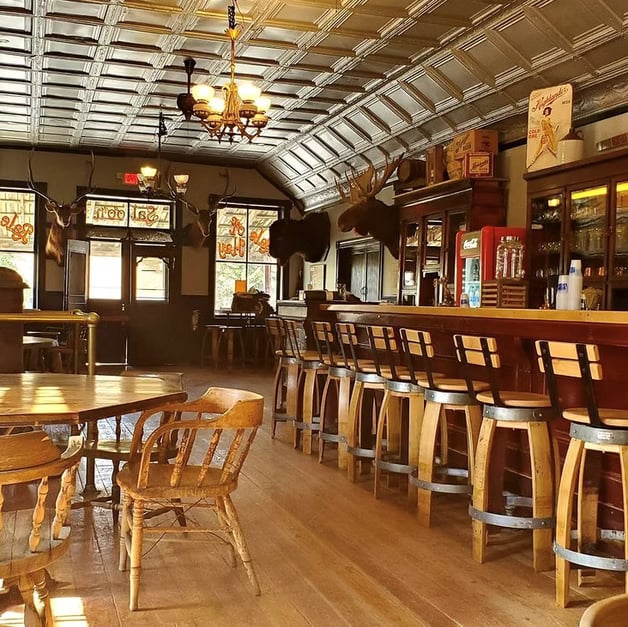
Virginia City, MT
The Bale of Hay Saloon occupies one of Virginia City's oldest buildings, reported by Southwest Montana as dating to 1863, and is often called Montana's oldest bar. The official operator history identifies the J.F. Stoer Saloon, run by Henry Schwenk, from 1869 to 1890, followed by Smith and Boyd in the 1890s, who named it for the hay bales stacked outside for horses at the neighboring stable.
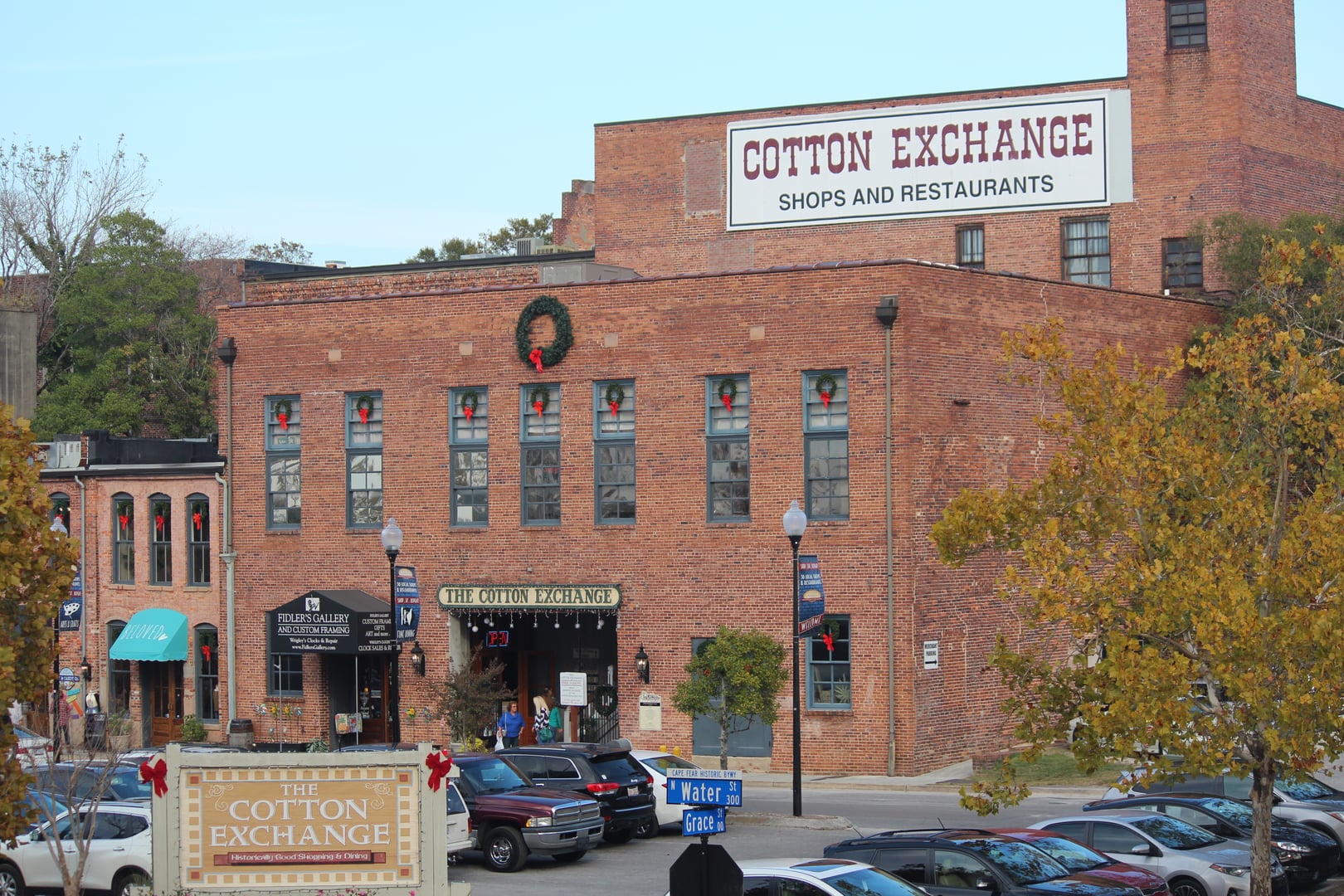
Wilmington, NC
The Cotton Exchange at 321 North Front Street in Wilmington, North Carolina is a downtown commercial complex of eight restored 19th-century buildings — many of them associated with the cotton trade that defined the city's commerce in the late 1800s — that have been adaptively reused since the 1970s as a unified shopping and dining district housing about 30 tenants.