Drive-By
Exterior Viewing of the Former Hospital
View the restored five-story 1925 hospital building from the public street. The interior is now private senior housing and is not open for tours or investigations.
- Duration:
- 20 min
HauntBound archive · catalog record
Reported phenomena — as catalogued
A 1925 Guthrie hospital that sat abandoned for four decades — long Oklahoma's most-investigated 'haunted hospital,' with third-floor apparitions and dread-filled photographs — now restored as the Villas of Benedictine Pointe senior community.
2000 W Warner Ave, Guthrie, OK 73044
Research updated June 2026
Age
All Ages
Cost
Free
The building is now occupied senior housing (the Villas of Benedictine Pointe), not a tour site. There is no public interior access; it can be viewed from the public right-of-way only.
Access
Limited Access
Urban residential street in west Guthrie; sidewalks and street parking nearby. No public building access.
Equipment
Photos OK
Est. 1925 · 1925 Methodist Episcopal hospital project completed in 1932 as Cimarron Valley Wesley Hospital · Completed by the Order of the Sisters of Benedict after their 1946 purchase · Operated as Alverno Heights Hospital (1964) and Logan County Memorial Hospital (1974) · Abandoned 1978-2020; one of Oklahoma's most-photographed abandoned buildings · Redeveloped around 2020 into the Villas of Benedictine Pointe senior community
The large brick building at 2000 W Warner Avenue in Guthrie, Oklahoma, has carried many names. Construction was begun in 1925 by a Methodist Episcopal conference, but the Great Depression stalled the unfinished structure. In 1932 a Guthrie nonprofit acquired and opened it as Cimarron Valley Wesley Hospital. In 1946 the Order of the Sisters of Benedict purchased the property and completed construction.
In 1964 the hospital was bought by St. Anthony Hospital, operated by the Sisters of St. Francis of Maryville, Missouri, and renamed Alverno Heights Hospital. It took its best-known name, Logan County Memorial Hospital, in 1974, and was deeded to Logan County in 1977. The following year, in October 1978, a replacement hospital was built west of Guthrie, and the original five-story, roughly 55,000-square-foot building was abandoned.
For about four decades the empty hospital was one of the most photographed abandoned buildings in Oklahoma, a fixture of urban-exploration sites such as AbandonedOK. A 1982 plan by R&T Properties to convert it into apartments never got off the ground. Around 2016 Belmont Management acquired the building for senior housing, and by 2020 it had been fully redeveloped as the Villas of Benedictine Pointe, a 52-unit affordable apartment community for residents aged 62 and older, with the developer noting efforts to keep the restoration 'historically correct.'
Today the building is occupied housing rather than an abandoned ruin, and there is no public interior access. The hospital's decades-long reputation as a haunted site belongs to its long abandoned era and survives in regional folklore and the records of paranormal teams who investigated it.
Sources
For the four decades the hospital stood empty, it drew paranormal investigators and urban explorers from across Oklahoma. The reports that accumulated, gathered on sites such as Scary HQ, the Haunted Oklahoma blog, and Waymarking, describe figures appearing in the upper-floor windows of the empty building, especially the third floor, and lights seen flickering on and off inside a building with no power.
The most often-repeated claim is atmospheric rather than visual: visitors described a strong, oppressive feeling of fear, doom, and dread that they said grew suddenly more intense whenever they raised a camera to take a photograph. According to regional coverage, a local group described as the Oklahoma City Paranormal Research Group investigated the property over a span of years, running cameras through the facility and reporting collected 'evidence' of activity.
These accounts are anonymous and were never independently verified, and skeptics among the building's own visitors disputed the more sensational versions. We present them as the folklore of the abandoned era. With the building now restored as occupied senior housing, the paranormal tradition is historical: it belongs to the empty hospital that stood here, not to the residences that occupy it today.
Notable Entities
Media Appearances
View the restored five-story 1925 hospital building from the public street. The interior is now private senior housing and is not open for tours or investigations.
Some links on this page may earn HauntBound a small commission when you book, at no extra cost to you. Our editorial picks are independent. Full disclosure
Every HauntBound history is researched from documented sources. We clearly separate verified historical fact from paranormal folklore.
Free Guide
9 verified stops, rated for families, mapped in order. Free.
One email to confirm, then the guide link. Unsubscribe anytime.
Los Angeles, CA
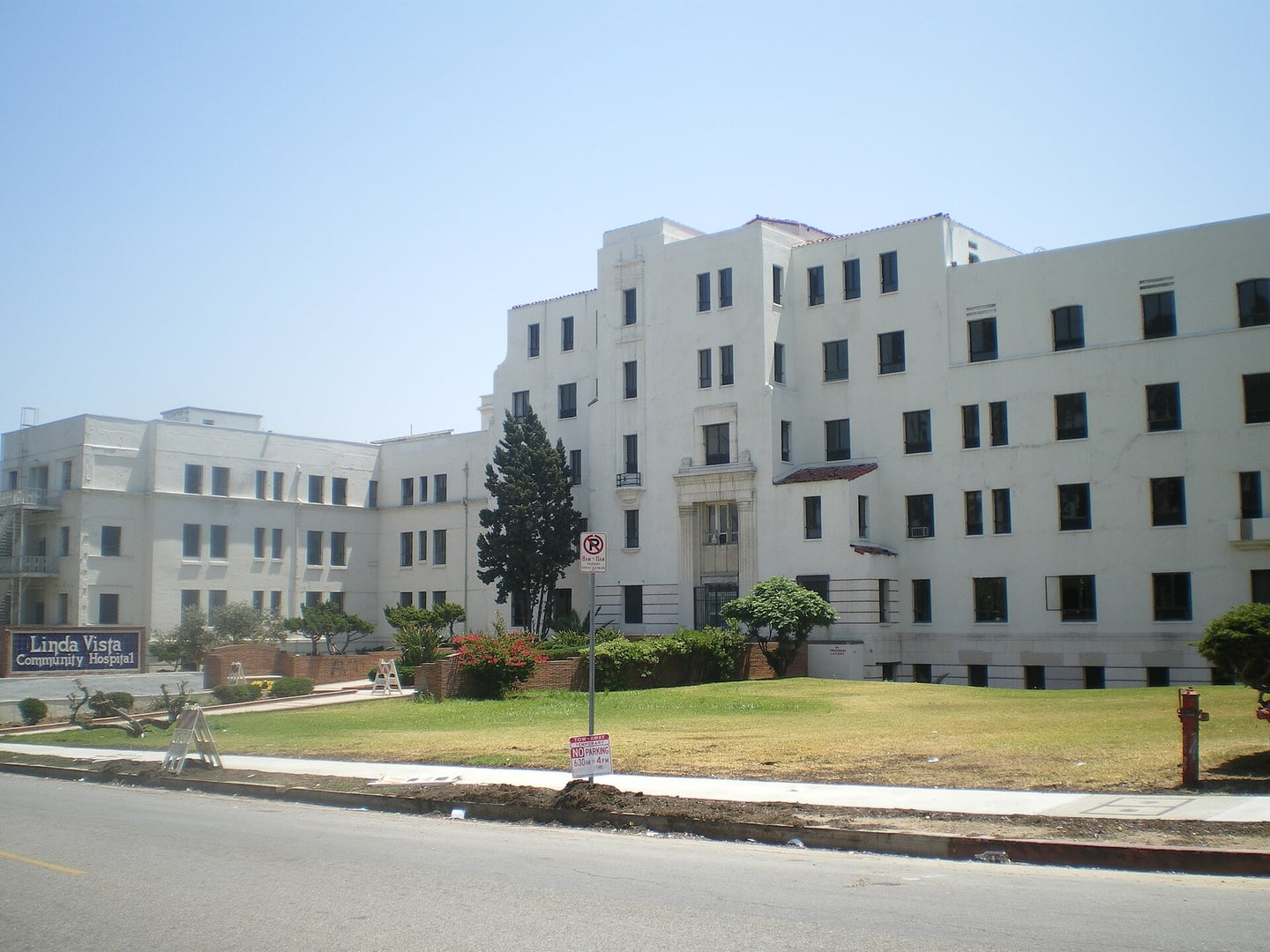
The Linda Vista Community Hospital opened in 1904 in Boyle Heights, Los Angeles, originally as the Santa Fe Coast Lines Hospital serving railroad employees. The Mission Revival building operated as a community hospital through the late twentieth century, sat vacant from 1991 to 2011 while serving as a frequent horror-film location, and was converted to senior affordable housing in 2012.
Jersey City, NJ
Built in 1931 as part of Mayor Frank Hague's Jersey City Medical Center complex and named for his mother, Margaret Hague Maternity Hospital was one of the largest maternity facilities in the country. At its 1923 operational peak the infant mortality rate approached one in five live births. After the maternity ward closed in 1979 and the hospital went bankrupt in 1988, the Art Deco building was converted to The Beacon luxury apartments.
Buffalo, NY
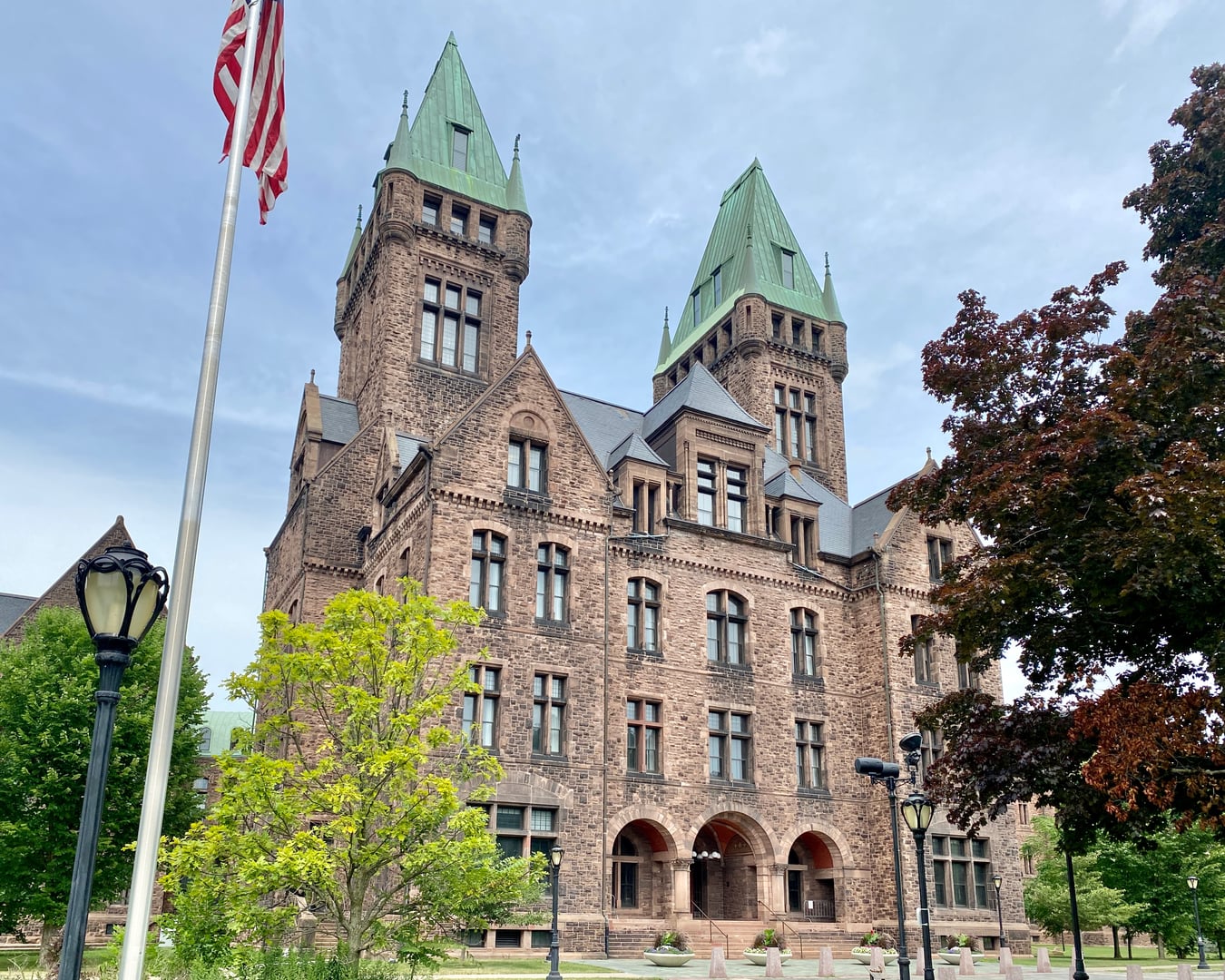
The Richardson Olmsted Complex in Buffalo was constructed beginning in 1871 as the Buffalo State Asylum for the Insane, based on the Kirkbride Plan of psychiatric treatment. Designed by renowned architect H.H. Richardson and landscape architect Frederick Law Olmsted, the 203-acre campus formally opened in 1880. The facility operated as a psychiatric hospital until 1974, when patients were transferred and the complex fell into decay. Modern restoration efforts have partially reopened the campus as Hotel Henry.