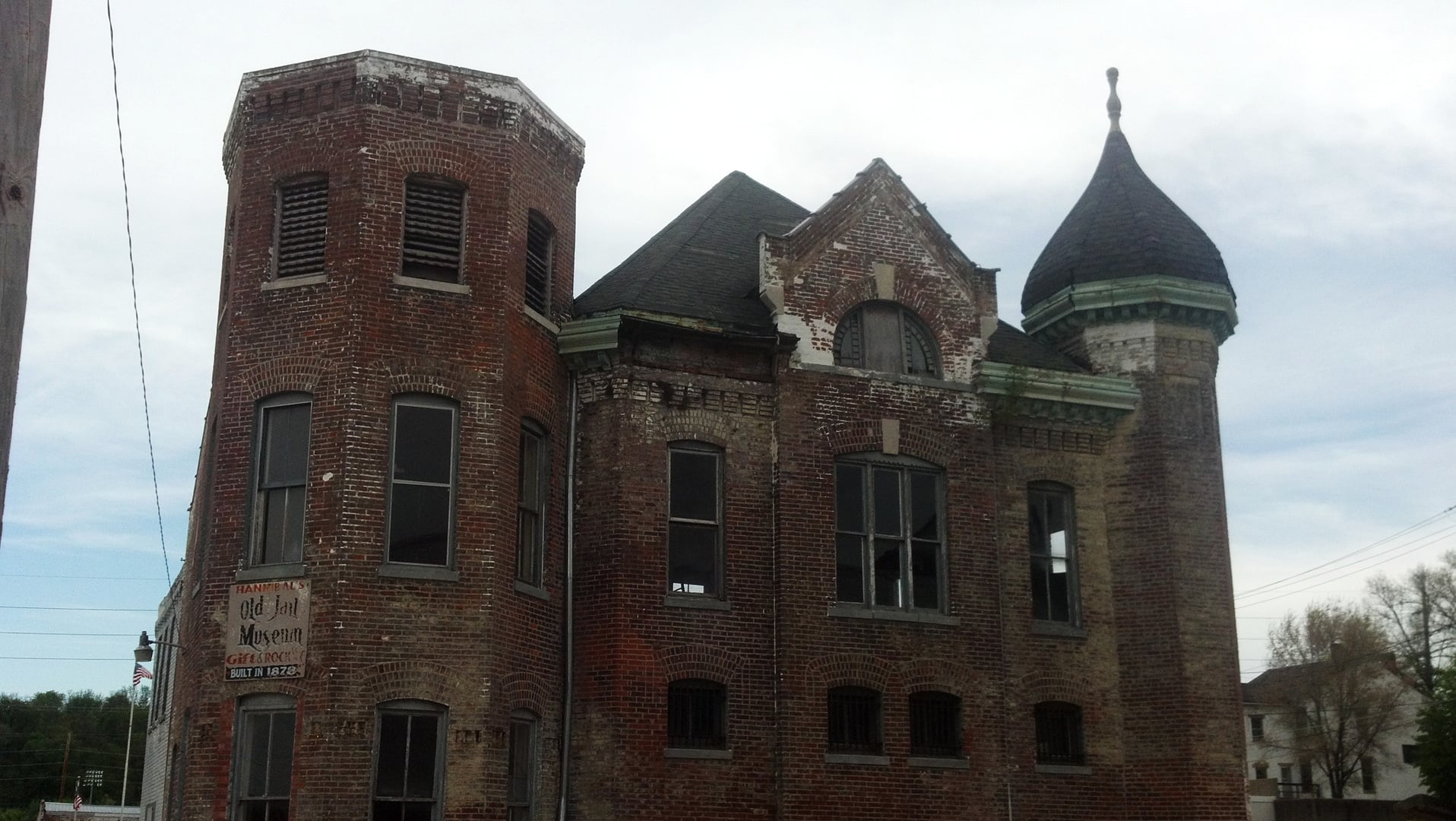
Est. 1892 · First federal prison in the American Midwest, 1892 · Site of the 1896 Bill Doolin mass escape — 13 prisoners freed · Later served as Nazarene church and Samaritan Foundation cult compound · Condemned; stands as remnant of Oklahoma Territory's criminal justice infrastructure
The First Territorial Prison at 200 North Noble Avenue in Guthrie, Oklahoma, was constructed in 1892 as the federal government's first purpose-built detention facility in the American Midwest. Built with 18-inch walls of limestone and brick, the structure was designed to hold up to 90 inmates across two floors and a basement that included solitary confinement cells. It served as the primary holding facility for criminals apprehended across Oklahoma Territory and was known colloquially as the 'Black Jail' for the dark character of its thick-walled construction.
The prison's most famous moment came on July 5, 1896, when the outlaw Bill Doolin — one of the most wanted men in Oklahoma Territory — led a mass escape that freed him and 13 other prisoners. Doolin's gang had been among the territory's most active criminal enterprises, and the escape was a significant embarrassment to territorial law enforcement. Doolin was killed by a U.S. Marshal posse later that same year.
After its federal prison function ended with Oklahoma statehood in 1907, the building went through a series of conversions. It served at some point as a congregation site for a Nazarene church group before being occupied by an organization called the Samaritan Foundation, described in contemporary accounts as a religious cult. The foundation's occupation of the building drew local attention and concern before the structure was eventually condemned. A Medium article from a local history account documents the prison's full history from Black Jail to Samaritan cult house, and blogoklahoma.us records it as an official Logan County historical site.
The condemned building stands at its original address and is visible from the public sidewalk, its massive walls intact despite more than 130 years of alternating uses.
Sources
- https://medium.com/@TheSBT/mystery-building-of-oklahoma-from-black-jail-to-samaritan-cult-house-e4418a509ad5
- http://blogoklahoma.us/place.aspx?id=667
Presence attributed to James Phillips in areas associated with his imprisonmentAtmosphere of dread reported in basement solitary confinement blockGeneral paranormal reputation associated with the building's violent and tragic history
The primary ghost associated with the First Territorial Prison is James Phillips, who appears in local historical accounts as the first white man sentenced to hang at the facility. According to the sources documented for this entry, Phillips died — by means not specified in available records — before the scheduled execution could be carried out in 1907. His death before the hangman's appointed day is the kind of inconclusive ending that paranormal tradition tends to attach itself to, and his presence is reported by investigators who have studied the building's history.
The basement solitary confinement block, where inmates were held in isolation below ground, is identified in multiple accounts as the most atmospherically intense part of the structure. The combination of the building's prison function, its mass escape, its period as a cult compound, and its condemned status gives investigators considerable historical material to work with, though specific witness accounts of physical phenomena at the Black Jail are less thoroughly documented than those at other Guthrie sites.
Strangestrangestrange.com, which covers paranormal sites, includes the Black Jail in a documented account of the building's layered dark history. The building's condemned status means it cannot be entered legally, which limits the corpus of documented investigation accounts.
Notable Entities
James Phillips (reportedly first white man sentenced to hang at facility; died before 1907 execution)Bill Doolin (outlaw; escaped 1896 — historical figure, not reported as apparition)