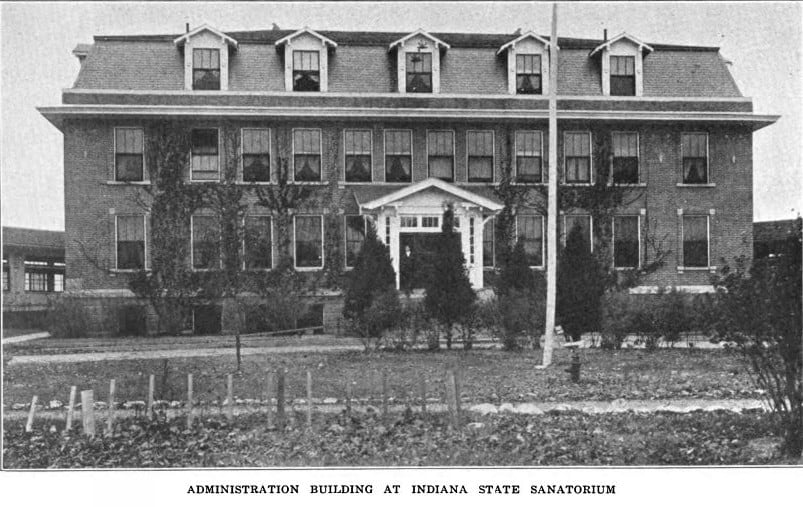
Est. 1915 · Built Specifically to Treat Choctaw and Chickasaw TB Patients · Documents Federal Indian Health Policy in the Allotment Era · Harper Building Children's Ward Added 1930 · Oral Accounts of Surgical Procedures Without Anesthesia · Original Buildings Survive on Active VA Campus
The Eastern Oklahoma Tuberculosis Sanatorium was a federal response to the tuberculosis crisis devastating Choctaw and Chickasaw communities in the early 20th century. The allotment era following the Curtis Act of 1898 had disrupted traditional Indigenous land use and community patterns, contributing to poverty and overcrowded living conditions that accelerated the spread of tuberculosis. By the 1910s, TB mortality in the Choctaw and Chickasaw Nations was severe enough to prompt federal construction of a dedicated facility.
Construction proceeded between 1915 and 1921 on land in the Kiamichi Mountains near Talihina, Le Flore County. The mountain setting was chosen in part for the same reasons that drove sanatorium construction elsewhere in the United States during this era: the belief that altitude, fresh air, and isolation contributed to recovery from tuberculosis, which was not yet treatable with antibiotics. The facility served Indigenous patients referred by the federal Indian Service.
The Harper Building, a separate 65-bed ward specifically for children with tuberculosis, was added to the campus in 1930. Child tuberculosis patients required long-term residential treatment, and the Harper Building housed children separated from their families for extended periods — often months or years.
Oral accounts documented in the Eastern Oklahoma Tuberculosis Sanatorium digital archive describe a practice that was not uncommon in early 20th-century TB treatment: surgical lung-collapse procedures, including thoracoplasty and artificial pneumothorax, which were intended to rest an infected lung and allow it to heal. The accounts document that these procedures were performed on Indigenous patients without anesthesia. The intersection of federal authority over Indian Health, the relative powerlessness of Choctaw and Chickasaw patients within the federal system, and the experimental character of TB surgery in this era produced conditions in which patients had limited ability to refuse or challenge treatment.
The original sanatorium buildings survive on the campus, which today operates as the Jack C. Montgomery Veterans Affairs Medical Center, a full-service VA hospital. The Eastern Oklahoma Tuberculosis Sanatorium project at eots.omeka.net maintains a digital archive of the facility's history.
Sources
- https://eots.omeka.net/about
- https://www.asylumprojects.org/index.php/Eastern_Oklahoma_Tuberculosis_Sanatorium
- https://petticoatsandpistols.com/tag/talihina-indian-tuberculosis-hospital/
Sensed presence in Harper BuildingUnexplained sounds in former children's wardAtmospheric unease on campus grounds
The Eastern Oklahoma Tuberculosis Sanatorium is primarily a site of documented historical weight rather than paranormal spectacle. The Harper Building, the former children's ward where tuberculosis patients under age 18 were housed for extended treatment periods, is the focus of most accounts of anomalous activity on the campus.
Local oral tradition and accounts collected by researchers who have documented the site describe the Harper Building as the most atmospherically charged part of the campus. The building's history — children separated from Choctaw and Chickasaw families, subjected to painful medical procedures, some dying far from home — contributes to its character. Accounts describe a persistent sense of presence, unexplained sounds, and the feeling of being watched in the Harper Building's corridors and wards.
The broader sanatorium campus also figures in local memory as a place marked by accumulated loss. Patients who died at the facility during the pre-antibiotic era of tuberculosis treatment were buried without always being returned to their tribal communities. The on-grounds cemetery sections represent this history materially.
The documentation of this site by the Eastern Oklahoma Tuberculosis Sanatorium digital archive reflects the importance of preserving the Choctaw and Chickasaw experience of federal medical institutions — an experience defined by lack of consent and limited agency — as a matter of historical record rather than sensationalism.