Guided Tour
Live Performance or Screening
Attend a production, concert, or film screening in the 589-seat Greek Revival hall, restored by a citizens' preservation group after the building sat closed for over a decade.
- Duration:
- 2 hr
HauntBound archive · catalog record
Reported phenomena, as catalogued
+ 1 further entry on record
An 1880s hotel turned 1914 Greek Revival opera house on Pawhuska's Main Street, said to be haunted by the owner's daughter, Sappho Constantine.
110 W Main St, Pawhuska, OK 74056
Research updated October 2026
Age
All Ages
Cost
$$
Ticket prices vary by production; see website for current schedule and pricing.
Access
Wheelchair OK
Ground-floor historic theater; downtown Main Street storefront.
Equipment
Photos OK
1880s hotel converted to a Greek Revival opera house by C.C. Constantine in 1911 · Official 1914 grand opening with a touring Broadway production · Operated as Pawhuska's last indoor movie house (as the Kihekah Theatre) until 1974 · Restored 1984-1986 and listed on the National Register of Historic Places
The building at 110 W Main Street in Pawhuska began as the Pawhuska House hotel in the 1880s, when the town was the seat of the Osage Nation's newly designated county. In 1911, C.C. Constantine took over the property and had it remodeled into an opera house, with a terracotta proscenium and pressed tin ceiling done in Greek Revival style. The theater held an informal opening in 1914 with a silent film screening of Neptune's Daughter, and an official grand opening that December 22 featuring a live touring production of the Broadway musical The Prince of Pilsen.
As cinema displaced vaudeville, the venue was renamed the Kihekah Theatre around 1926 and operated as Pawhuska's last indoor movie house for decades. It closed in 1974 amid declining downtown attendance. The building sat vacant for a decade until 1984, when local residents formed the Pawhuska Downtown Revitalization and Preservation Association to restore it to its historical appearance.
That restoration effort succeeded in listing the theater on the National Register of Historic Places in 1986, along with membership in the National League of Historic Theatres. Today the 589-seat hall is managed by a volunteer board, the Constantine Arts Council Trust Authority, and hosts live theater, concerts, and film screenings.
The building's two eras — hotel and theater — both left a documented mark on Osage County history. Two deaths in the building's hotel years, one from pneumonia in 1895 and one from typhoid fever in 1905, are cited by local researchers as the origin point for reports of unexplained activity that predate the 1914 theater conversion by years.
Sources
The theater's central ghost story centers on Sappho Constantine, described in local accounts as the daughter of the theater's namesake owner. According to the Pawhuska preservation community, workmen restoring the building in the 1980s were the first to report her presence, describing light footsteps and an apparition backstage. A 1987 Tulsa World article carried the story to a wider audience, and it has circulated in Pawhuska ever since, including a mention in Ellen Robson and Dianne Halicki's 1999 book Haunted Highway: The Spirits of Route 66.
A 2016 KTUL investigative segment interviewed several people connected to the building, including members of the Constantine Arts Council Trust Authority. Vanessa Rouse described a general sense of presence in the space; volunteer Serena Jeffers reported hearing sighs through a microphone that had been switched off; then-president Garrett Hartness described hearing the same door sound repeat three times; and Laurie O'Driscoll said three people in her group heard what sounded like a child's voice. A visiting paranormal investigator, Jeremy Koscelny of Nowata Bartlesville Paranormal Investigators, cautioned that unexplained is not the same as paranormal.
Separately, some local tellings connect sounds of a phantom brawl to the building's earlier decades as the Pawhuska House hotel, and a handful of visitors have speculated that early 1900s opera singer Enrico Caruso's spirit lingers from the venue's vaudeville era, though that claim has no documented tie to an actual Caruso appearance at the theater and should be treated as folklore rather than history.
Notable Entities
Media Appearances
Attend a production, concert, or film screening in the 589-seat Greek Revival hall, restored by a citizens' preservation group after the building sat closed for over a decade.
View the theater's Main Street facade, one of the anchors of Pawhuska's National Register-listed downtown, and check the History page for the building's run as a hotel, opera house, and movie house.
Some links on this page may earn HauntBound a small commission when you book, at no extra cost to you. Our editorial picks are independent. Full disclosure
Every HauntBound history is researched from documented sources. We clearly separate verified historical fact from paranormal folklore.
Free Guide
9 verified stops, rated for families, mapped in order. Free.
One email to confirm, then the guide link. Unsubscribe anytime.
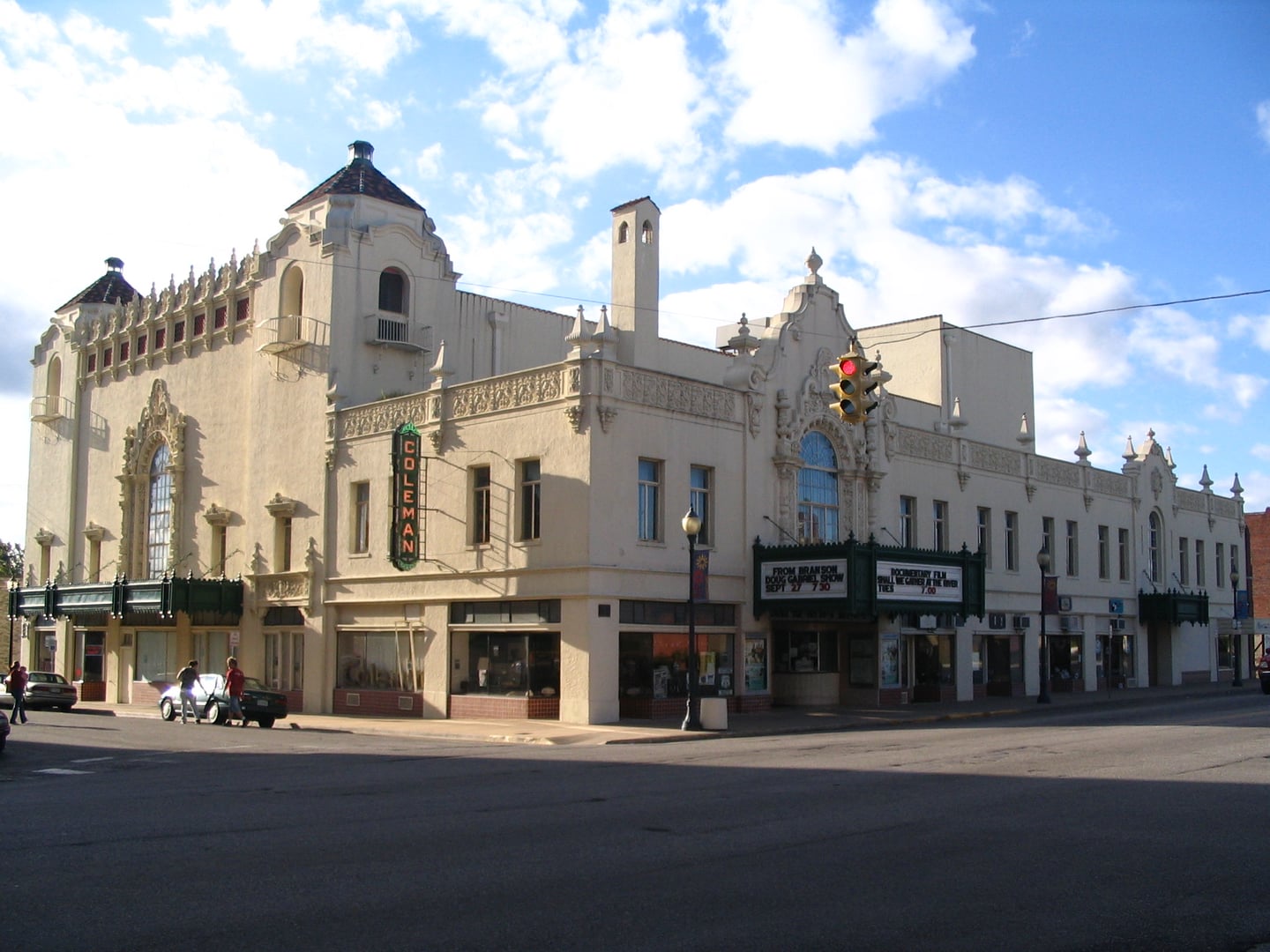
Miami, OK
George L. Coleman Sr., a Miami mining magnate, built the Coleman Theatre on historic Route 66 in 1929 at a cost of roughly $600,000, opening April 18, 1929, to a sold-out house of 1,600. Designed by the Boller Brothers with a Spanish Colonial Revival exterior and Louis XV interior, it hosted vaudeville acts and film for decades before the Coleman family donated it to the City of Miami in 1989 for volunteer-led restoration.
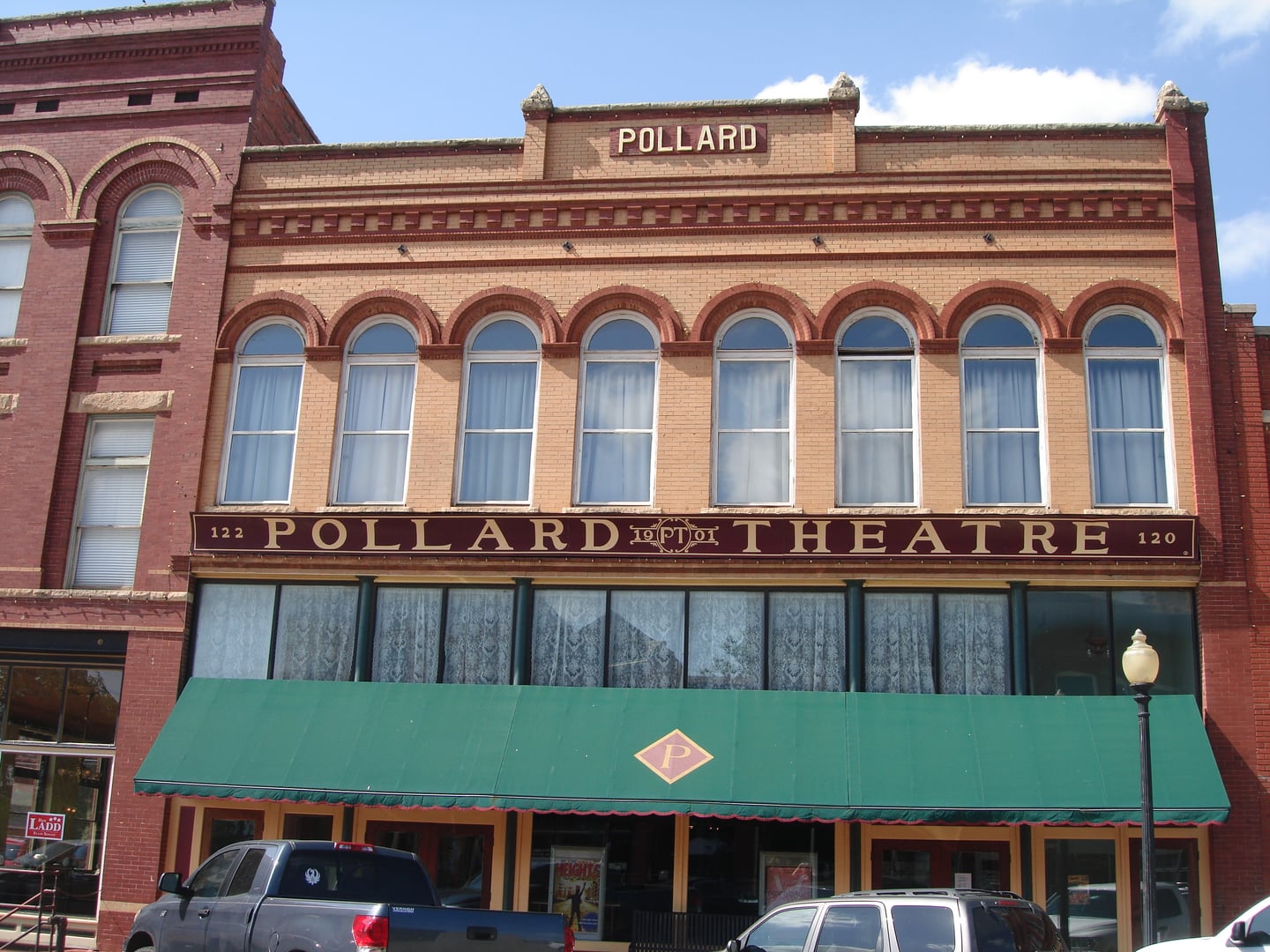
Guthrie, OK
The Pollard Theatre building at 1214 Division Street was constructed in 1901 as Patterson Furniture, which also operated a funeral parlor on the premises. George Pollard purchased the property in 1919 and converted it to a vaudeville house; it now operates as a nonprofit live-performance theater. The venue's own website confirms the 1901 construction date, the furniture and funeral origins, and the 1919 vaudeville conversion.
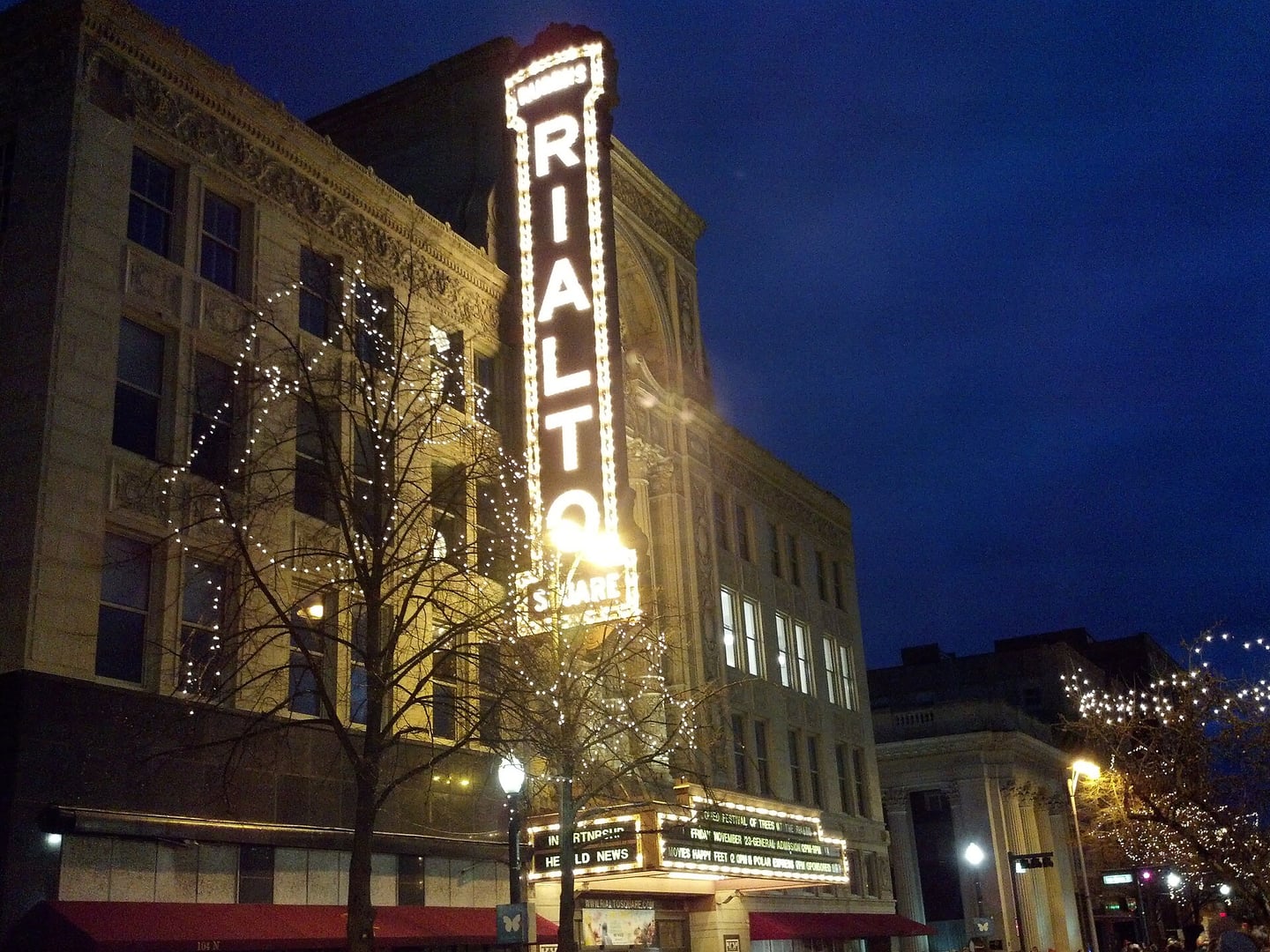
Joliet, IL
The Rialto Square Theatre opened May 24, 1926, designed by Chicago firm Rapp & Rapp for the six Rubens brothers. Its Neo-Baroque interior — modeled in part on the Hall of Mirrors at Versailles — earned it a place on the American Institute of Architects's '150 Great Places in Illinois' and a listing on the National Register of Historic Places.