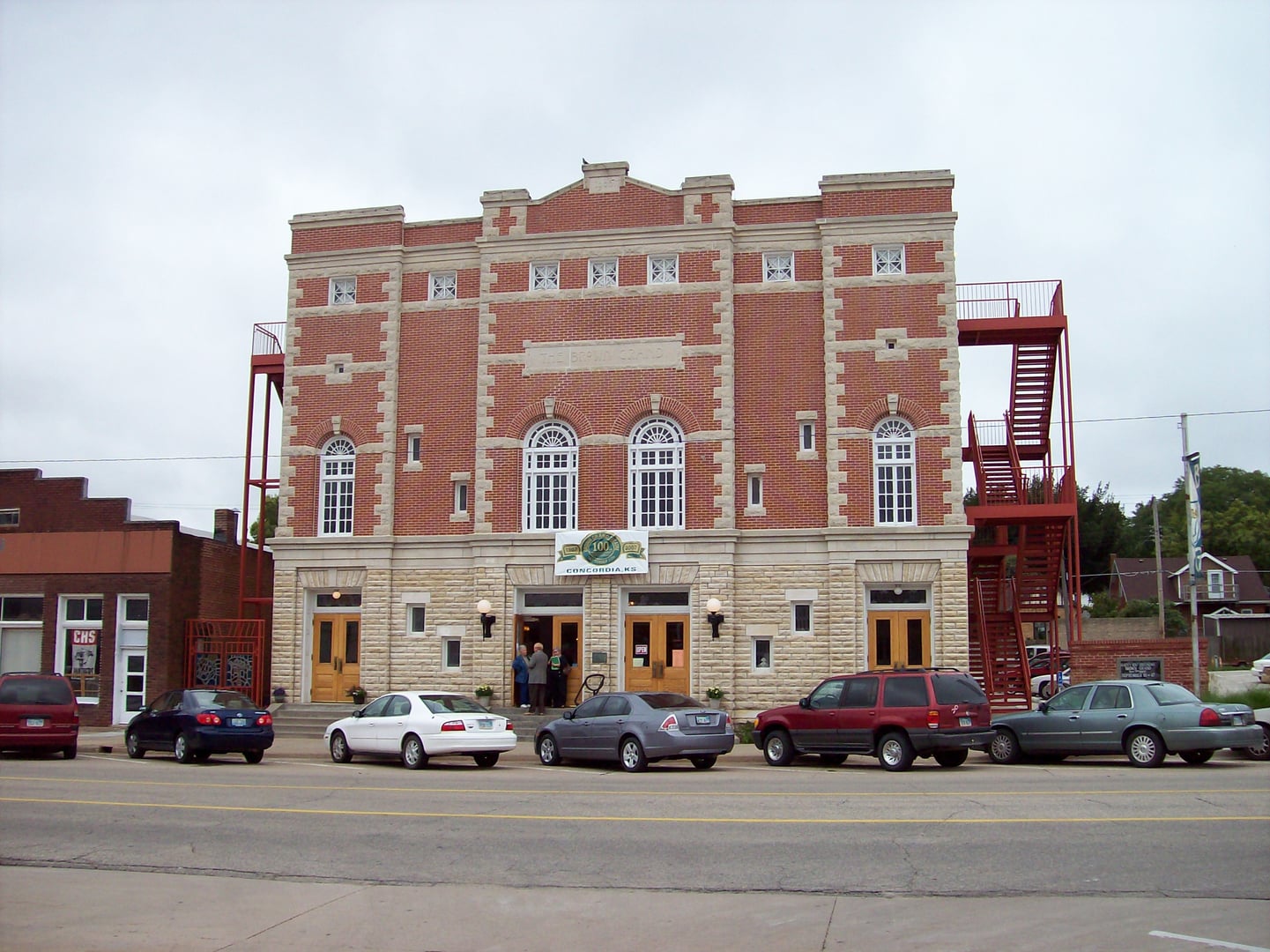
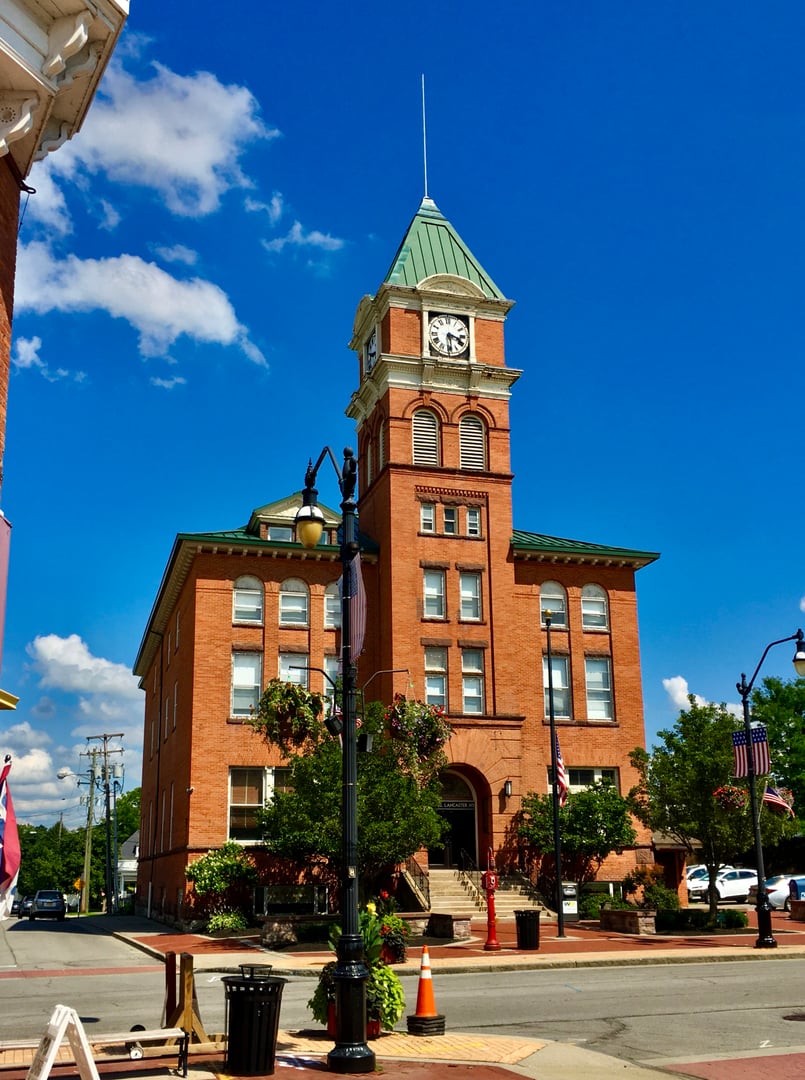
Combined municipal government offices and a performance hall under one roof · Among the first buildings in Morgan County wired for electric light · Featured on Travel Channel's Portals to Hell (2019)
McConnelsville broke ground on the Twin City Opera House on October 20, 1889, hiring architect H.C. Lindsay to design a three-story building that would serve two purposes at once: a working town hall with municipal offices and a full performance auditorium with a stage, ballroom, and tower. The building opened May 28, 1892, with a production of Gilbert and Sullivan's The Mikado. Promoters had billed the opera house as the first building in Morgan County lit by electricity, but the town's generating plant failed that evening, and much of the opening-night crowd left in the dark before the show.
The opera house kept pace with changing entertainment technology through the early 20th century. A silent-film projection system was installed in 1913, the same year the building's elevated position on Main Street kept it above a major regional flood that damaged lower-lying storefronts. Sound pictures arrived in 1936 after a renovation added the equipment needed to show talkies alongside the venue's live bookings.
The building continued as McConnelsville's combined civic and performance space for most of the 20th century. A hidden stairway, sealed off from public use, was rediscovered during electrical work in the 1980s. The Twin City Opera House still operates today as a nonprofit community theater, running a regular season of plays and concerts in the same auditorium where The Mikado opened in 1892.
Sources
- https://twincityoperahouse.com/
- https://hauntedtwincityoperahouse.com/history-of-the-twin-city-opera-house/
- https://projects.thepostathens.com/SpecialProjects/beyond-the-bubble/the-haunting-of-the-twin-city-opera-house.html
- https://www.imdb.com/title/tt10246050/
- https://www.higgypop.com/news/portals-to-hell-twin-city-opera-house/
- https://www.panicd.com/twin-city-opera-house.html
EVPsApparitionsObjects movingFlashlight responses
The opera house's current operators run organized paranormal investigations built around years of guest and staff accounts rather than a single origin story. Eric Glosser, a retired police officer who has spent years documenting activity in the building, has profiled 14 distinct presences and argues the building holds more than one "portal," a claim he made on the 2019 Travel Channel episode of Portals to Hell.
The most consistently reported presence is nicknamed Elizabeth, described as a playful, responsive energy centered on the catwalk above the stage and the sub-basement below it; investigators report flashlight responses and toy-related activity in these areas. A second recurring account describes a figure resembling a longtime usher, remembered locally as Everett Miller, seen and heard continuing his rounds through the aisles of the auditorium.
Over 300 EVP recordings have reportedly been logged at the venue across various investigations, along with accounts of drapes closing on their own and objects shifting position. The building's operators describe these as recurring guest and investigator reports rather than verified events, and frame each account as "reported" without claiming certainty about its cause.
Notable Entities
Elizabeth (catwalk presence)Everett Miller (usher figure)
Media Appearances
- Portals to Hell: Twin City Opera House (Travel Channel, 2019)