Est. 1804 · Site of Hamilton's Rossville Cemetery, platted 1804 · Approximately 150 pioneer graves displaced in 1878 to create parkland · Part of the Rossville Historic District
Rossville was platted on March 14, 1804 by John Sutherland, Henry Brown, Jacob Burnet, James Smith, and William Ruffin on the west bank of the Great Miami River. Among the settlement's earliest civic features was a cemetery at Park and D Streets that served the community as it grew through the first half of the nineteenth century.
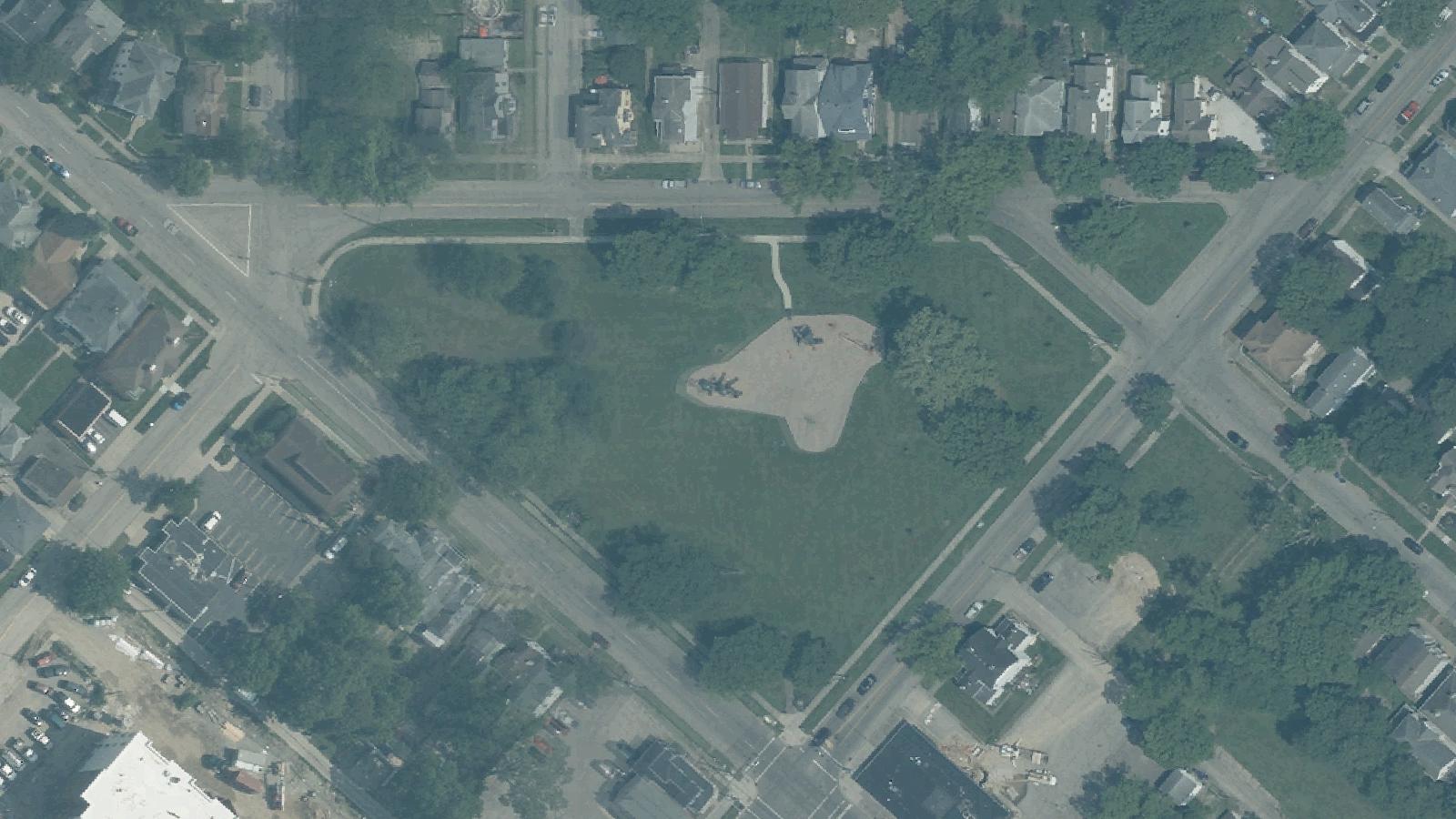
In 1878, the city of Hamilton made the decision to convert the cemetery into parkland, today known as Sutherland Park. The transfer of remains was incomplete by any measure. Greenwood Cemetery records document that over 1,800 remains from two Hamilton pioneer cemeteries were eventually relocated there, confirming the scale of the displacement from Rossville. But the Rossville cemetery contained approximately 150 interments, many of them unmarked or poorly recorded by nineteenth-century standards, and subsequent development of the site unearthed human remains.
The site carries no formal memorial beyond the historic plaque acknowledging its origins. Visitors familiar with the city's history know the ground beneath the park's play equipment and walking paths as one of Butler County's earliest burial grounds. The Rossville Historic District marker nearby documents the broader settlement context.
Sources
- https://greenwoodch.com/history/
- https://www.travelbutlercounty.com/blog/post/hamiltons-most-haunted
- https://www.hmdb.org/m.asp?m=28790
Disturbed burial groundUnearthed human remains during development
The dark history here is archival rather than anecdotal. When city workers leveled the Rossville Cemetery in 1878, the documentation of individual graves was poor enough that an unknown number of interments were disturbed rather than relocated. Subsequent construction and landscaping over the following decades occasionally surfaced human remains, reinforcing local memory of what lies beneath the park.
Travel Butler County includes the site in its roundup of Hamilton's most haunted locations, citing the sheer number of pioneer dead whose resting place was effectively erased. The ground does not announce itself: no grave markers survive on the surface, and without the historic plaque and the city's burial records, the site reads as a completely ordinary neighborhood park. That gap between appearance and history is, for many visitors, the point.