Guided Tour Booking Required
Exterior View on West Broad
The Palace Theatre's restored West Broad Street marquee is visible from the sidewalk year-round; the lobby and auditorium are accessible only during ticketed performances.
- Duration:
- 15 min
HauntBound archive · catalog record
Reported phenomena, as catalogued
1926 Adam-style movie palace operated by CAPA where a vintage-uniformed usher reportedly seats patrons and vanishes mid-conversation.
34 W Broad Street, Columbus, OH 43215
Research updated June 2026
Age
All Ages
Cost
$$
Performance tickets vary; CAPA-managed venue typically open only for ticketed shows.
Access
Wheelchair OK
Restored historic theater with elevator access
Equipment
No Photos
Est. 1926 · Keith-Albee Vaudeville Circuit · Movie Palace Era · Thomas W. Lamb Architecture · LeVeque Tower Complex
The Palace Theatre opened to the public on November 8, 1926 as part of B. F. Keith's vaudeville circuit (consolidated as Keith-Albee). Architect Thomas W. Lamb designed it in the Adam style — restrained neoclassical ornament with pastel plasterwork — a sharp contrast to his Spanish Baroque Ohio Theatre two blocks east. The 2,695-seat auditorium occupied the lower stories of the LeVeque-Lincoln Tower (now the LeVeque Tower), which was briefly the tallest building between New York and Chicago when it opened in 1927.
As vaudeville faded the Palace transitioned to first-run movies, then to a mixed-use programming model. By the late 20th century the Columbus Association for the Performing Arts (CAPA) had assumed management of the building alongside its sister venues the Ohio Theatre and the Southern Theatre, programming Broadway tours, Columbus Symphony pops concerts, comedy, and concert acts.
A restoration program preserved the auditorium's 1920s plasterwork and the lobby's ornamental detailing. The building remains in continuous use and shares CAPA's downtown performing-arts cluster with the Ohio and Southern theaters.
Sources
Per regional ghost-tour coverage (Taking the Kids, the Ohio Exploration Society's Franklin County registry) and an October 2009 piece in OSU's student paper The Lantern, the Palace Theatre's most-told tale is the vanishing usher. Patrons describe being shown to a seat by a uniformed staff member whose clothing matches no modern Palace dress code and who disappears in mid-conversation moments later.
The green room has its own reputation. Actors and touring performers have reported feeling sudden, intense cold while alone — including in summer — and described unexplained touches on the shoulder or back. Columbus Symphony musicians performing pops concerts in the auditorium have reported the sense of being watched from the upper balconies and have described hearing applause echoing after live audiences have left the building.
A persistent but uncorroborated detail in some local retellings is that magician Harry Blackstone Jr. conducted a séance on stage at the Palace. The claim circulates in Ohio Exploration Society material; primary documentation has not surfaced in the sources reviewed for this entry.
Notable Entities
Media Appearances
The Palace Theatre's restored West Broad Street marquee is visible from the sidewalk year-round; the lobby and auditorium are accessible only during ticketed performances.
Some links on this page may earn HauntBound a small commission when you book, at no extra cost to you. Our editorial picks are independent. Full disclosure
Every HauntBound history is researched from documented sources. We clearly separate verified historical fact from paranormal folklore.
Free Guide
11 verified stops, rated for families, mapped in order. Free.
One email to confirm, then the guide link. Unsubscribe anytime.
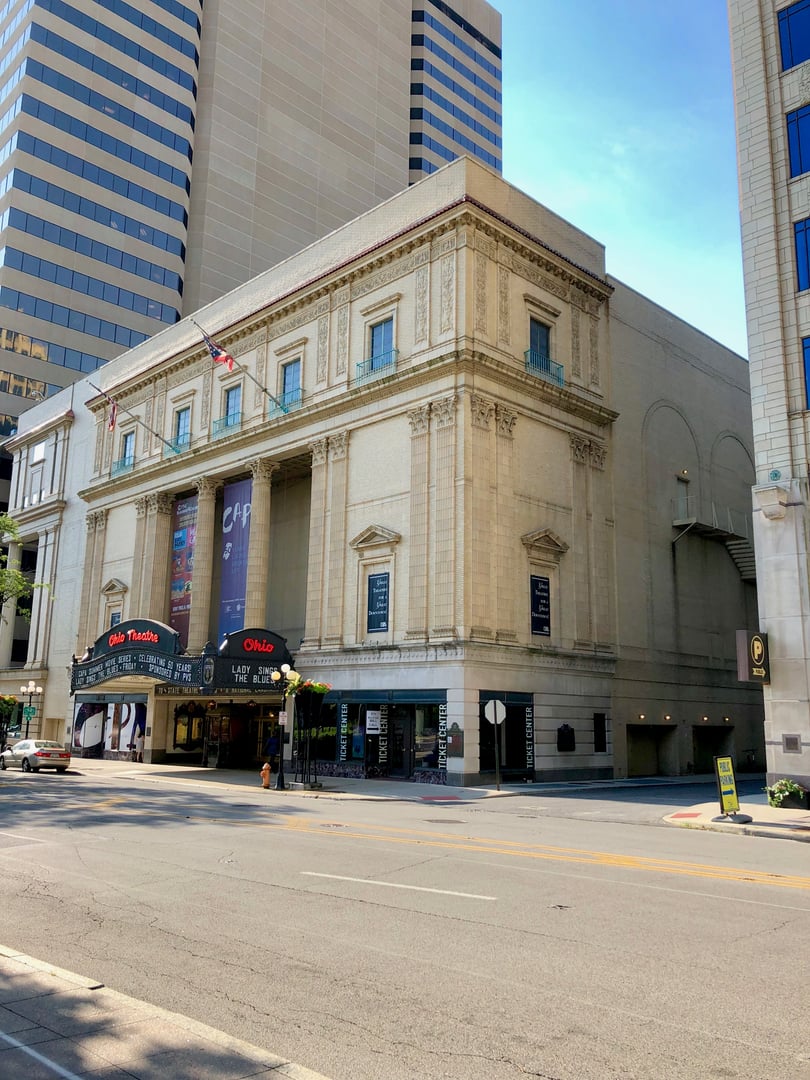
Columbus, OH
The Ohio Theatre opened on March 17, 1928 as a Loew's movie palace designed by Thomas W. Lamb in the Spanish Baroque style and seating roughly 3,000. After a 1969 closure and demolition threat, community members formed the Columbus Association for the Performing Arts to save the building. It was designated a National Historic Landmark in 1977 and remains CAPA's flagship venue and home to the Columbus Symphony.
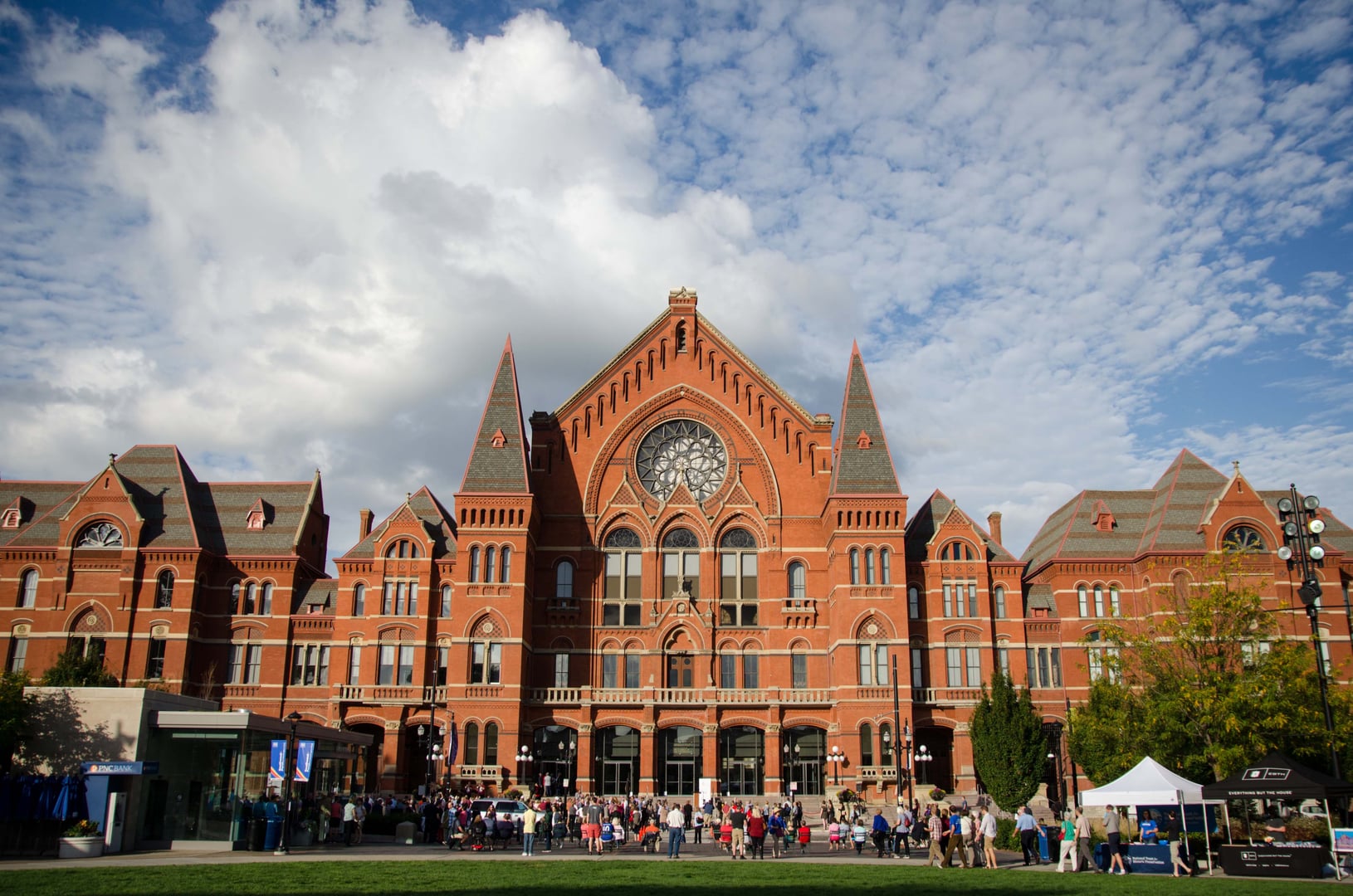
Cincinnati, OH
Cincinnati Music Hall at 1241 Elm Street opened in 1878, designed in the High Victorian Gothic style. It was built on land that had served as the city's potter's field — a burial ground for the indigent, disease victims, and unidentified dead — used from the 1820s until the cemetery closed around 1857. Bones have been discovered beneath the building in 1927, 1988, and again during the 2016-2017 renovation. The building was designated a National Historic Landmark in 1975.
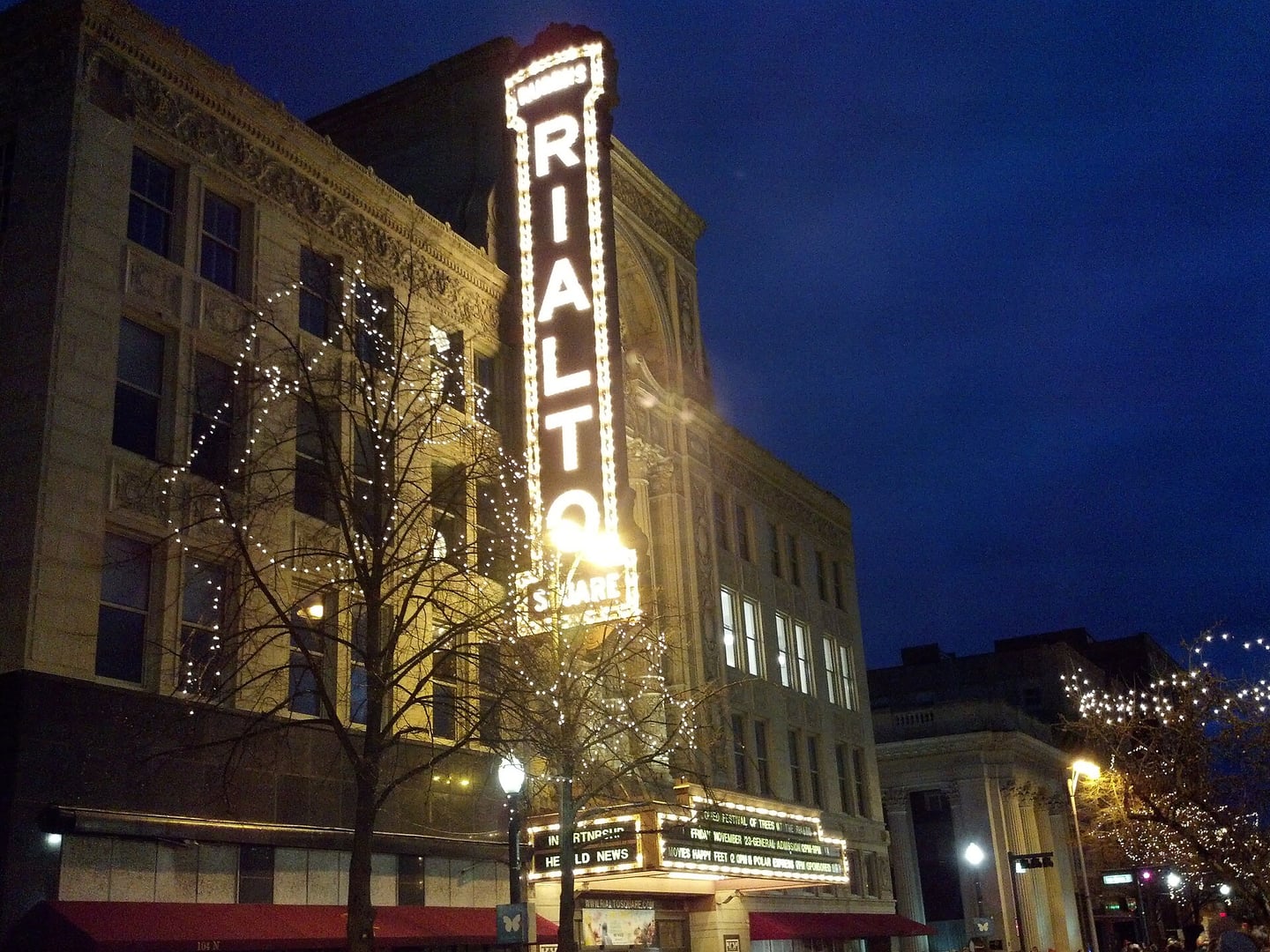
Joliet, IL
The Rialto Square Theatre opened May 24, 1926, designed by Chicago firm Rapp & Rapp for the six Rubens brothers. Its Neo-Baroque interior — modeled in part on the Hall of Mirrors at Versailles — earned it a place on the American Institute of Architects's '150 Great Places in Illinois' and a listing on the National Register of Historic Places.