Est. 1826 · Operating since 1826; one of America's most continuously significant prisons · 614 executions by electric chair 1891–1963, including Julius and Ethel Rosenberg, June 19 1953 · 1825 marble cellblock built by prisoners using stone quarried on site · 2026 bicentennial museum opening in historic Olive Opera House
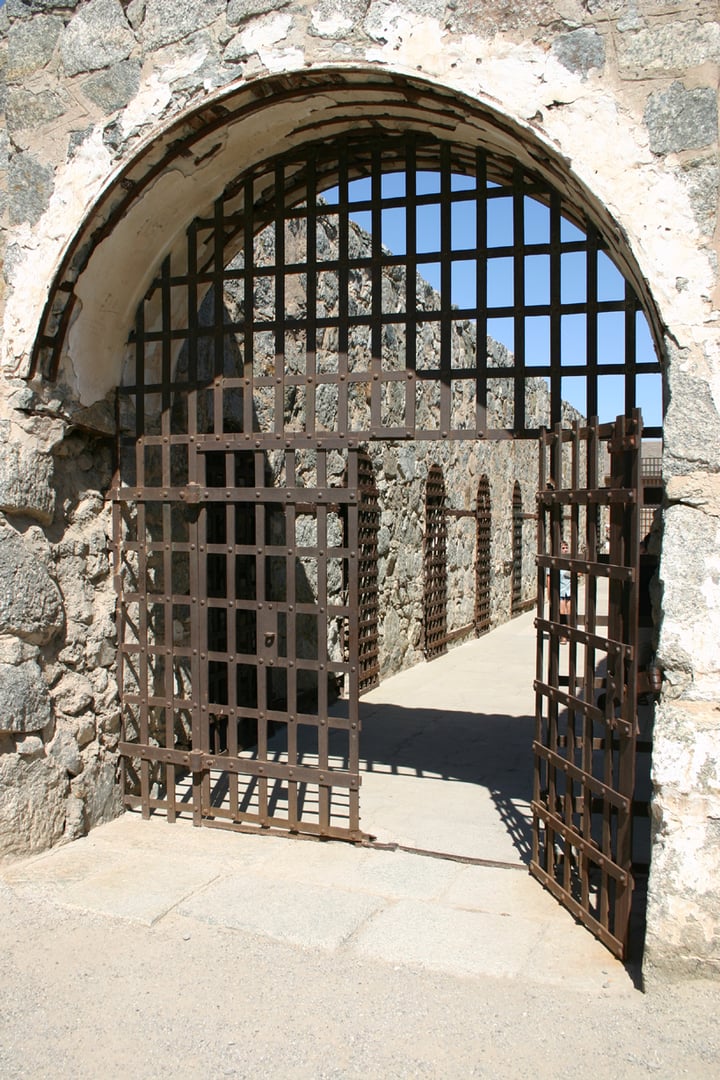
New York State appropriated funds in 1825 to establish a prison at Mount Pleasant, a Hudson River site in what is now Ossining. The name derives from the Sintsink people, from whom the colonial government purchased the land in 1685. One hundred men were transferred from Auburn Prison to construct the new facility — using marble quarried from the same site. The stone they cut found its way into NYU, Grace Church, and the U.S. Treasury Building, a material connection between prison labor and civic architecture that the museum now documents.
The prison adopted the Auburn System: solitary confinement at night, group labor during the day, enforced silence. A Death House was constructed in 1920 and an electric chair installed in 1922. Between 1891 and 1963, Sing Sing executed 614 people — 610 men and 4 women — under federal and state death sentences. The last person executed in New York State was Eddie Lee Mays, on August 15, 1963.
The most internationally watched executions were those of Julius and Ethel Rosenberg, convicted of espionage for passing nuclear weapon research to the Soviet Union. They were executed on June 19, 1953. Their case remains contested — Julius's guilt is generally accepted by historians; Ethel's role and the proportionality of her sentence continue to be debated.
Sing Sing also had an unusual popular culture profile during the 1930s and 1940s, serving as a movie backdrop and, briefly, hosting baseball games against the New York Yankees. The death penalty in New York was abolished in 1972. The prison remains operational today as a maximum-security facility. The Sing Sing Prison Museum opened its 2026 bicentennial visitor center and exhibition gallery in the historic Olive Opera House, framing the institution as a site of conscience for examining American criminal justice.
Sources
- https://en.wikipedia.org/wiki/Sing_Sing
- https://www.singsingprisonmuseum.org/singsinghistory.html
- https://hvmag.com/life-style/sing-sing-prison-ossining-ny-a-history-of-hudson-valleys-jail-up-the-river/
No ghost legends or paranormal accounts are attached to Sing Sing in the available historical and journalistic record. The site's weight derives entirely from documented history: the volume of executions, the Rosenberg case, and the fact that the prison's original marble construction was performed by incarcerated men whose labor built structures across Manhattan and beyond.
The museum's orientation is explicitly a site of conscience — a term used in international heritage preservation for places that directly confront difficult or contested history. The walking tour led by the museum's education team connects the prison's history to the Hudson Valley's labor economy, racial history, and the evolving politics of punishment. The art-making component led by a previously incarcerated person gives the site a living dimension that distinguishes it from purely archival presentations.
For dark tourism purposes, the electric chair documentation and the Rosenberg executions are the most internationally recognized elements of Sing Sing's history. The museum treats these not as sensational draws but as specific anchors for larger questions about justice, state power, and the labor of building institutions.
Notable Entities
Julius Rosenberg (1918–1953; executed June 19, 1953 for espionage)Ethel Rosenberg (1915–1953; executed June 19, 1953 for espionage; sentence remains contested)Eddie Lee Mays (last person executed in New York State, August 15, 1963)
Where this legend is told