Drive-By
Rush Rhees Library Campus Visit
View the Italian-influenced 1930 library and its 186-foot tower on the University of Rochester's River Campus. Library interior open during posted public hours.
- Duration:
- 30 min
HauntBound archive · catalog record
Reported phenomena, as catalogued
The University of Rochester's 1930 Italianate tower library is the center of the campus legend of Pete Nicosia, a mason said to have fallen during construction — though university archivists have never confirmed his existence.
755 Library Road, Rochester, NY 14627
Research updated September 2026
Age
All Ages
Cost
Free
Free public access during library open hours; campus is private property.
Access
Wheelchair OK
Indoor library with elevators.
Equipment
Photos OK
Est. 1930 · Centerpiece of the University of Rochester River Campus (1930) · 186-foot tower visible across south Rochester · Houses the university archives and special collections
Rush Rhees Library, named for the university's third president Rush Rhees, was dedicated in 1930 as part of the University of Rochester's move from its original Prince Street campus to the new River Campus along the west bank of the Genesee River. The library's design — drawing on Italian Renaissance and Neo-Romanesque traditions — produced an arcaded quadrangle with a 186-foot central tower visible across south Rochester.
Construction took place in the late 1920s. According to coverage by the University's own news center, ground was broken in 1927 and the library opened in 1930. The tower's interior houses bookstacks, a carillon installed later in the 20th century, and observation levels that have historically been used for student tours.
The building remains the central research library of the university, holding millions of volumes, rare-books collections, and University of Rochester archives. Renovations in the 21st century added the Welles-Brown Room reading space, the Hawkins-Carlson Room for rare-books exhibitions, and updated public reading rooms while preserving the building's original Italianate character.
Sources
The Rush Rhees legend, as told by the University of Rochester's own news center, holds that Pete Nicosia — a mason's helper and recent Sicilian immigrant — slipped and fell to his death from the library tower during construction in the late 1920s. His foreman, James Conroy, supposedly signed the death certificate and arranged the burial.
The sightings begin in October 1932, when student George Maloney '34 said he met a stranger in tattered overalls near the library who asked where he could find James Conroy because Conroy still owed him pay. The librarian wrote to Conroy describing the man; Conroy's reply, per the legend, identified the description as Pete Nicosia — a dead man. Reports of Nicosia sightings in the stacks, basement, and tower then appeared in the campus newspaper through 1948.
Skepticism about whether Pete Nicosia ever existed is documented in the Campus Times' archive review and in the University news center's article, both of which note that no records of him have been found in River Campus construction files or in Rochester city directories. At least one early witness later recanted, and the original 1932 account first appeared in The Soap-Box, a campus literary magazine. The University's own framing treats the story as folklore rather than confirmed history.
Notable Entities
View the Italian-influenced 1930 library and its 186-foot tower on the University of Rochester's River Campus. Library interior open during posted public hours.
Some links on this page may earn HauntBound a small commission when you book, at no extra cost to you. Our editorial picks are independent. Full disclosure
Every HauntBound history is researched from documented sources. We clearly separate verified historical fact from paranormal folklore.
Free Guide
10 verified stops, rated for families, mapped in order. Free.
One email to confirm, then the guide link. Unsubscribe anytime.
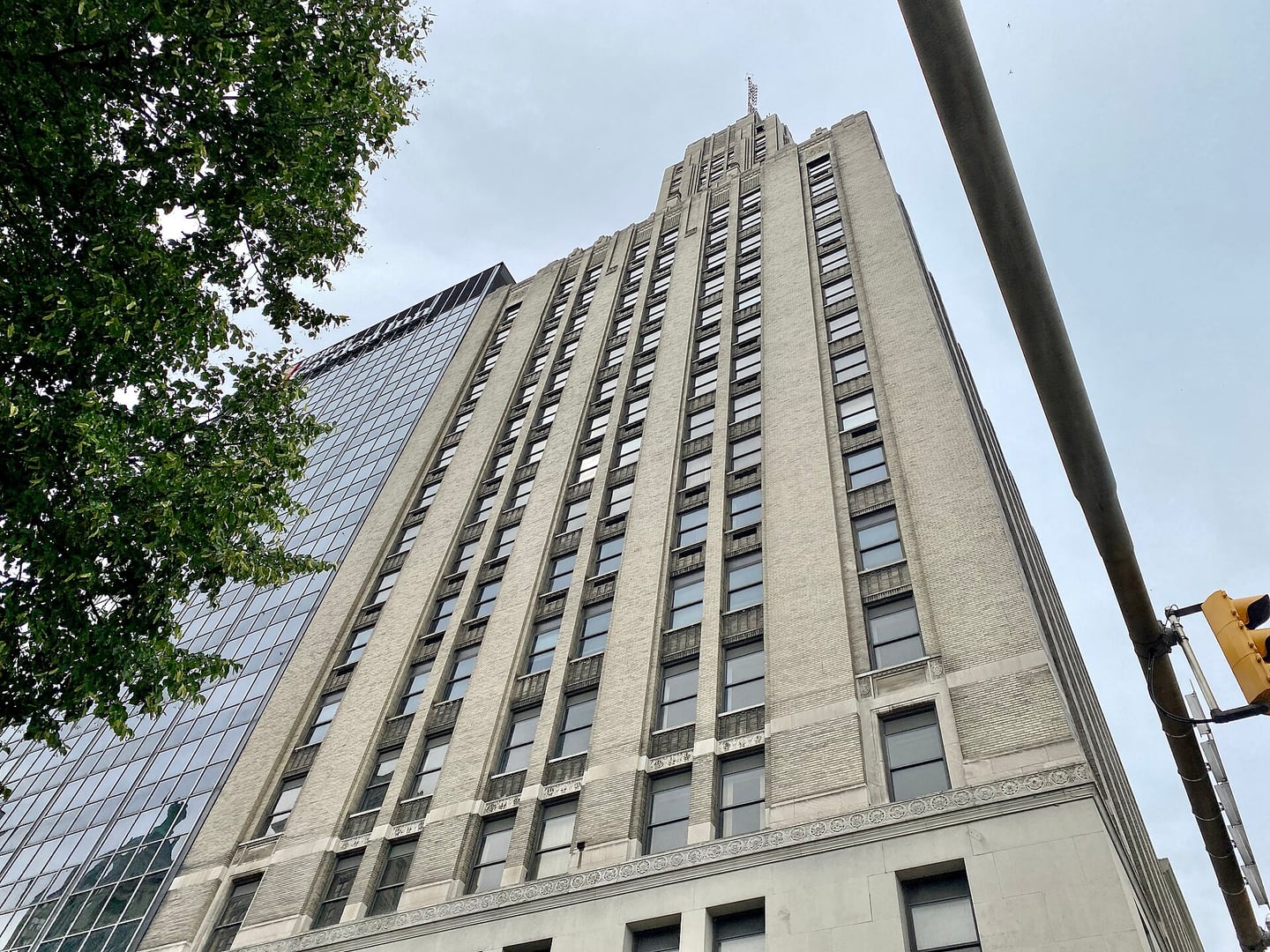
Buffalo, NY
Built 1929 on the site of an earlier fire, the 391-foot Art Deco Rand Building (also known as 14 Lafayette Square) was at completion Buffalo's tallest building. It served as headquarters for Marine Trust Company and later George F. Rand interests, and has long housed several local radio stations on its upper floors.
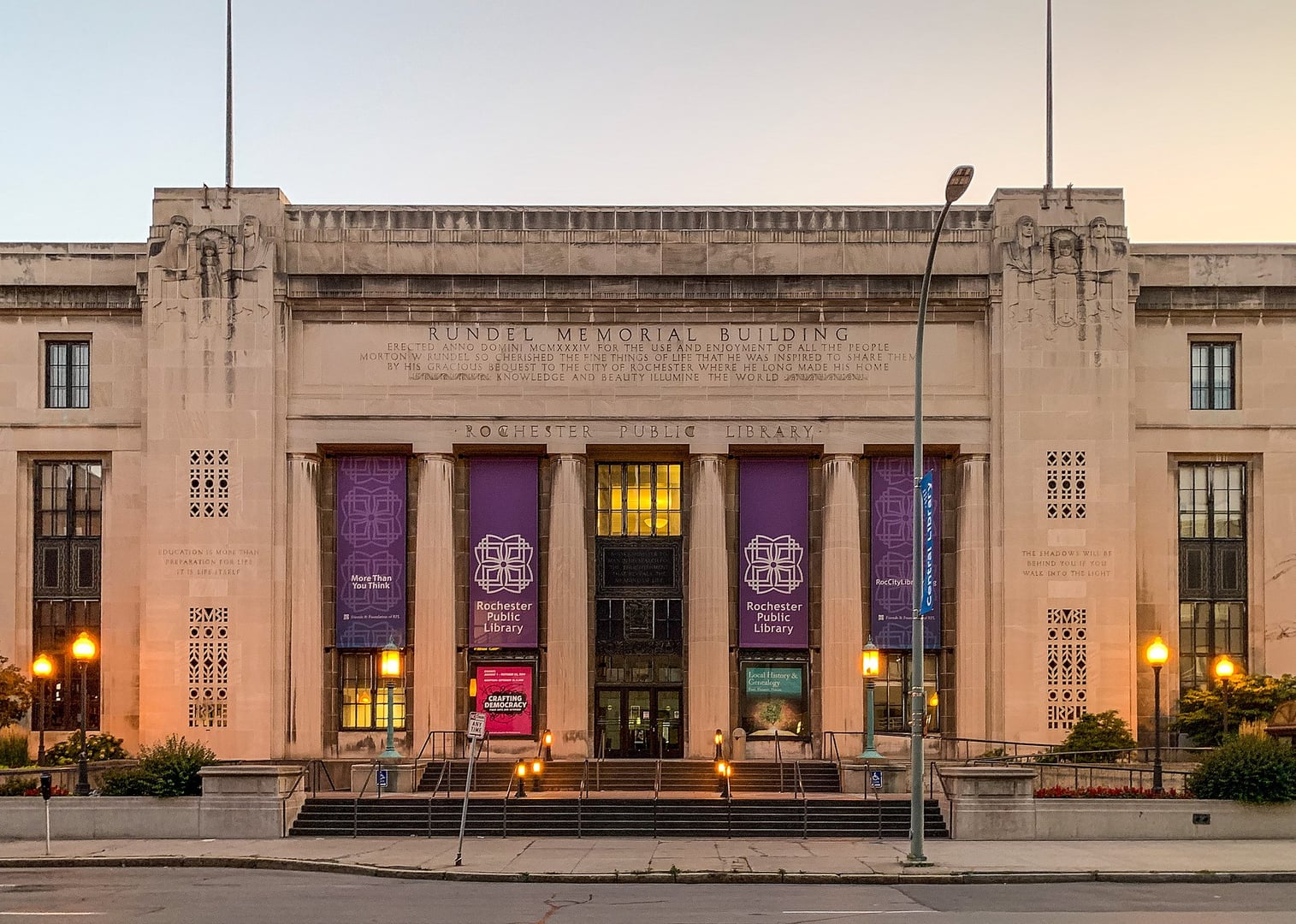
Rochester, NY
The Rundel Memorial Building, designed by Gordon & Kaelber and constructed between 1933 and 1936, is the Central Library of Rochester and Monroe County. The Beaux-Arts/Art Deco building was constructed atop the Johnson & Seymour Mill Race on the Genesee River and was added to the National Register of Historic Places in 1985.
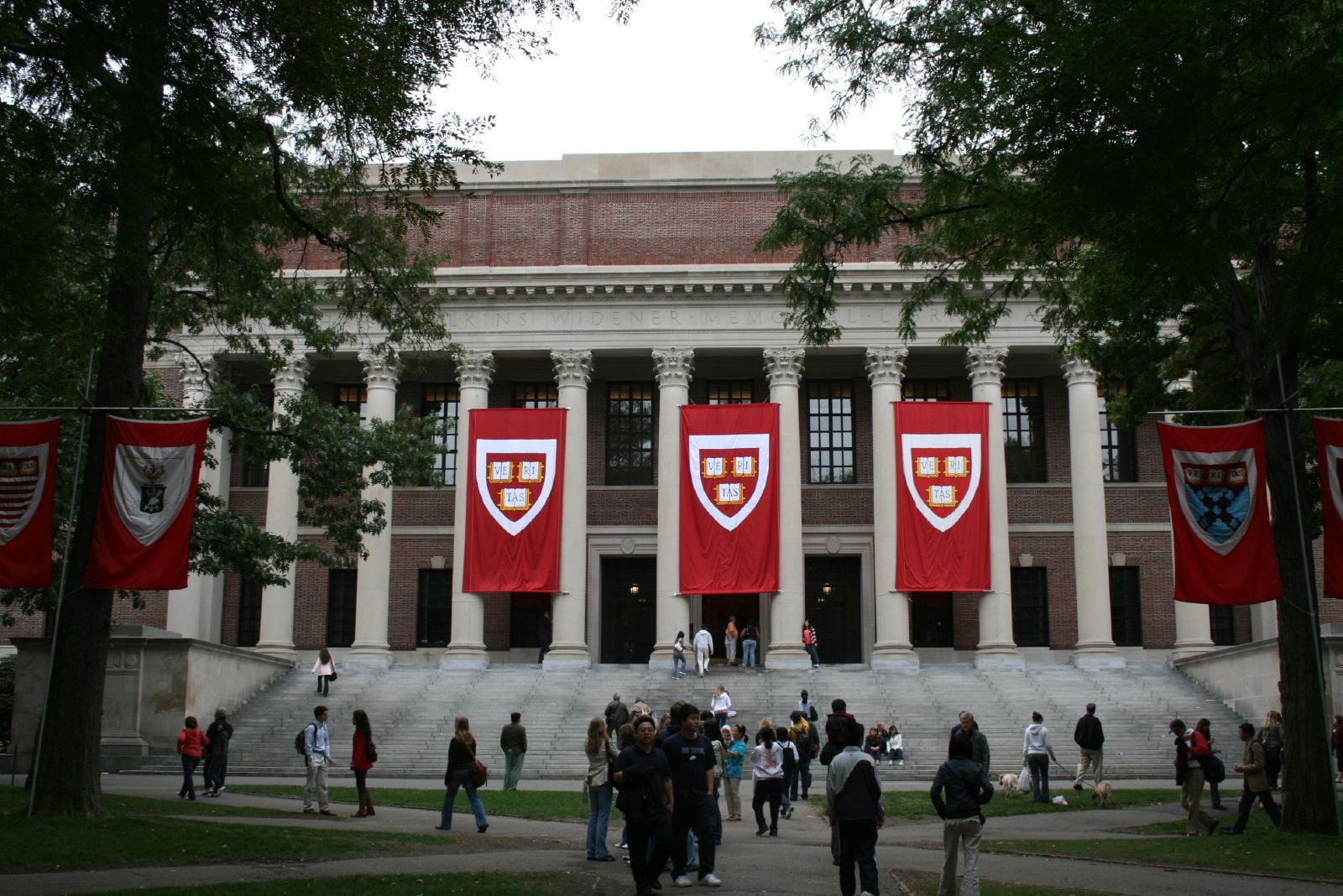
Cambridge, MA
The Harry Elkins Widener Memorial Library was built 1913–1915 as a memorial to Harvard alumnus Harry Elkins Widener (Class of 1907), who died aboard the RMS Titanic in 1912. The library was funded by his mother, Eleanor Elkins Widener, and houses the Widener Memorial Rooms — a preserved private library and reading rooms commemorating Harry's book collection.