Est. 1932 · World's Largest Indoor Theater at Opening, 1932 · Home of the Rockettes Dance Company · Rockefeller Center Landmark · Site of Roxy Rothafel's Preserved Art Deco Apartment
Samuel Lionel Rothafel, known universally as Roxy, was the most celebrated theater impresario in 1920s New York. He had managed the Regent, Strand, Rialto, Rivoli, and Capitol theaters before opening the Roxy Theatre at Times Square on March 11, 1927—then considered the world's most elaborate movie palace. When John D. Rockefeller Jr. was assembling the Rockefeller Center complex in 1930, Rothafel joined the advisory board and proposed two theaters. The larger became Radio City Music Hall.
Rothafel provided detailed design requirements for the venue, including red seats, an oval auditorium shape, and a stage configured for easy set changes. He also insisted on a private apartment above the stage—the Roxy Suite—where he could live and entertain. The suite occupied the fifth floor and was decorated in the same Art Deco style as the theater below it.
Radio City Music Hall opened to the public on December 27, 1932. The inaugural stage show ran from 8 p.m. to 2 a.m. and was poorly received; John D. Rockefeller Jr. left early. Within two weeks, the venue pivoted to showing feature films accompanied by stage shows. Rothafel introduced the precision dance troupe later renamed the Rockettes. By January 1937—just over four years after opening—more than 25 million people had visited.
Rothafel suffered from angina pectoris in his final years. He died of a heart attack in New York City on January 13, 1936, at 53, and was buried in Linden Hill Jewish Cemetery in Queens. His fifth-floor apartment was sealed after his death and remained largely untouched for decades, preserved as a relic of Art Deco New York until it began to be used for private events in more recent years.
The theater nearly closed permanently in 1978 due to financial difficulties before a preservation campaign saved it. A $70 million renovation was completed in 1999. Radio City hosted more than 650 movie premieres over its history and continues to operate as one of New York's most recognized entertainment venues.
Sources
- https://en.wikipedia.org/wiki/Radio_City_Music_Hall
- https://en.wikipedia.org/wiki/Samuel_Roxy_Rothafel
- https://www.atlasobscura.com/places/radio-city-music-hall-s-secret-apartment
- https://secretnyc.co/hidden-inside-radio-city-music-hall-secret-art-deco-apartment-1930s/
Rothafel's seat found in down position after shows with all others raisedApparition of Rothafel and female companion walking the aisle on opening nightsVanishing before reaching the seats
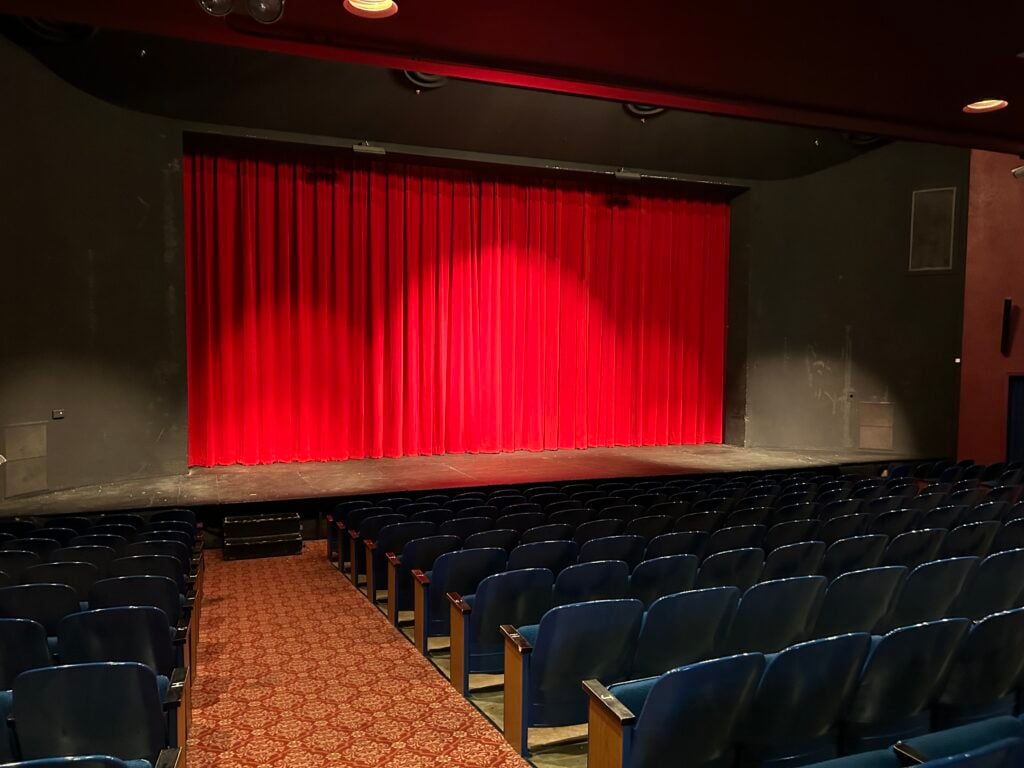
The ghost lore at Radio City Music Hall is precise and theater-specific in a way that distinguishes it from generalized venue hauntings. The central account concerns a particular seat—Rothafel's former seat in the orchestra—that ushers describe finding in the down position at the end of performances, after all other seats have been raised during post-show cleanup. The phenomenon is reported to recur specifically on opening nights.
The second major account involves an apparition of Rothafel himself. Ghost tour operators in New York—most specifically Dr. Philip Schoenberg of Ghosts of New York Walking Tours, as reported by Untapped Cities—describe Roxy as seen on opening nights walking down the aisle accompanied by a glamorous female companion, vanishing before reaching the seats. The detail of the female companion is consistent across multiple sources that relay the account.
Rothafel's connection to the building has an unusual physical anchor: the Roxy Suite, his private fifth-floor apartment, remained sealed and largely undisturbed after his death in 1936. Atlas Obscura documented the apartment's preservation and its recent reopening for private events. The apartment's Art Deco interior—original to the 1932 construction—provides the building with a tangible relic of its founder that is rare among large commercial venues.
America's Haunted Roadtrip investigated the claims on-site and found no corroboration from the theater's archivist or from Rockette veterans interviewed. The seat account and opening-night apparition remain confined to ghost tour documentation rather than first-person staff accounts in official records.
Notable Entities
Samuel 'Roxy' Rothafel (1882–1936; theater impresario who designed Radio City and built a private apartment in the building)
Where this legend is told