Drive-By
Site Drive-By
Little remains of the above-ground Morton Salt infrastructure. The site can be viewed from roadside. The mine shafts themselves descended more than 2,000 feet and are completely inaccessible.
- Duration:
- 15 min
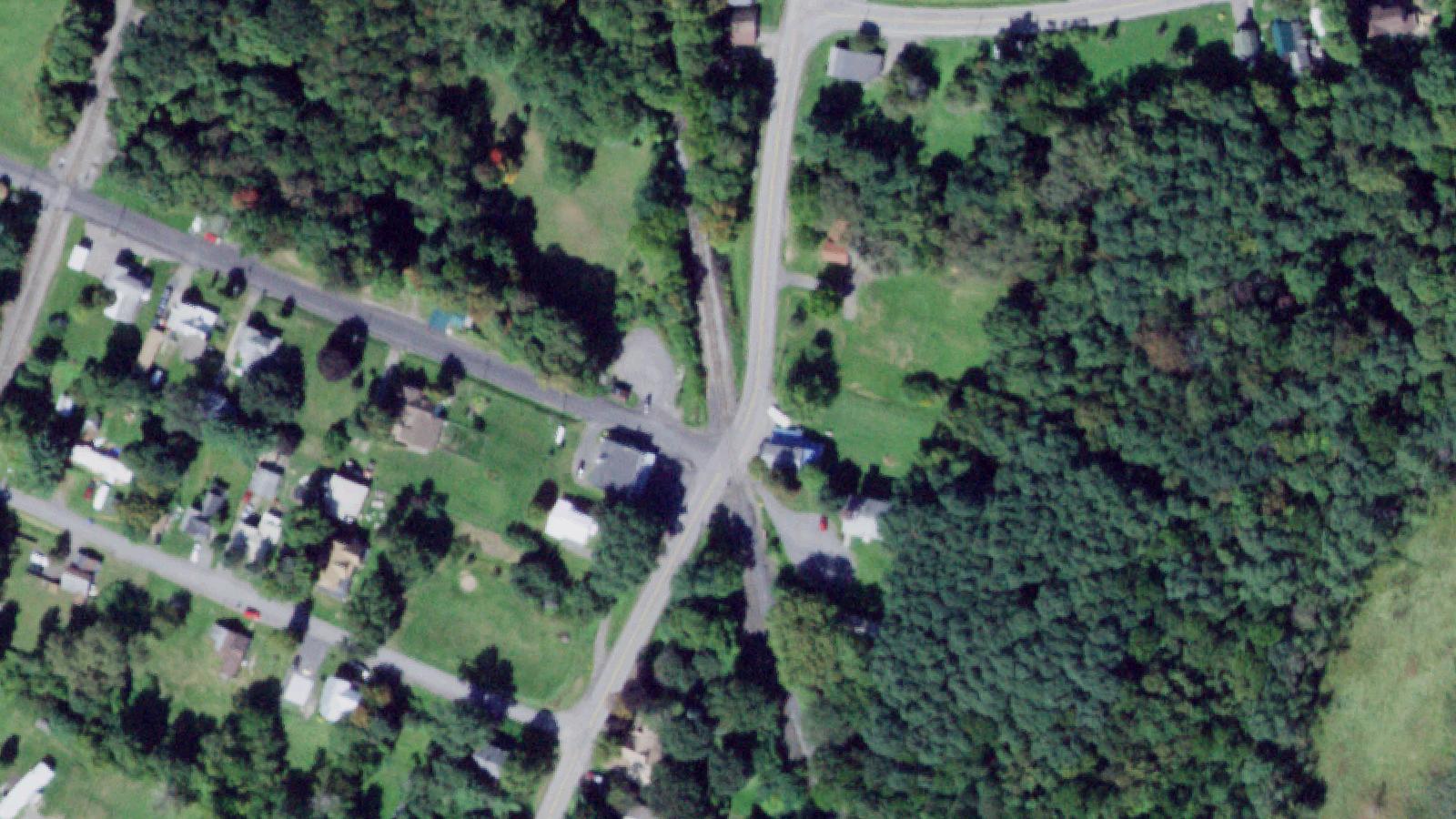 Aerial survey · USDA NAIP · public domain
The abandoned surface infrastructure of Morton Salt's short-lived Seneca Lake mine in Himrod, NY — operating only from 1968 to 1976 before flooding forced an abrupt shutdown — with local stories of phantom mine cars and lingering workers in the ruins.
County Road 28 (Himrod area, exact street address unconfirmed), Himrod, NY 14842
Research updated May 2026
Age
All Ages
Cost
Free
No admission; private property, observe posted signage
Access
Limited Access
Abandoned industrial site; uneven terrain, debris possible
Equipment
Photos OK
Est. 1968 · One of the deepest salt mines ever attempted in New York State — shafts exceeded 2,100 feet · Abrupt 1976 closure stunned the rural Yates County community · Documented in multiple local newspaper retrospectives and railroad history forums
The Morton Salt mine at Himrod, near the western shore of Seneca Lake in Yates County, represents one of the more dramatic industrial episodes in Finger Lakes history. In the 1960s, Morton Salt identified a deep salt bed beneath the lake and its surrounding terrain, accessible by sinking shafts through challenging geological strata. Construction of two shafts began, descending more than 2,100 feet — well below the lakebed itself — requiring far more casing and grouting than originally estimated because of persistent pressurized water flows throughout the boring process.
Edward Monaghan served as underground mine superintendent; Marvin Winkle arrived as mine manager in 1968 when active operations began. A railroad trackmobile was used to move salt cars between the yard and the processing plant above ground. The mine employed dozens of local workers and was seen as an economic boon for the rural community.
Two worker fatalities are documented from the mine's operating years: one Cementation Corporation employee died during construction of one of the shafts, and one Morton Salt miner was fatally killed by a salt ceiling collapse during operations. These deaths are documented in contemporaneous local newspaper accounts. The Shadowlands seed claim that the mine 'continuously was caving in crushing and killing workers' is a gross exaggeration of these two documented fatalities and has been corrected.
In May 1976, Morton Salt executives arrived without warning and announced immediate shutdown. The combination of declining market demand for rock salt, high operating costs, water management expenses, shale contamination, and ongoing geological instability had made the operation economically unviable. 'The news stunned the community,' according to contemporary local newspaper accounts. The mine was sealed; the above-ground plant and processing structures were subsequently demolished or left to decay. Today, very little infrastructure survives above ground near the site.
Sources
Paranormal tradition around the Morton Salt plant at Himrod describes two main phenomena: the apparitions of workers seen moving through the abandoned plant after dark, and the sound of mine cars rolling along tracks where no equipment remains. The imagery maps onto the abrupt shutdown — workers who never got to say goodbye to a job they loved, equipment that went silent mid-shift.
Two worker deaths are documented from the mine's operating years (one during construction, one from a salt ceiling collapse), providing a factual anchor for the lore of restless presences at the site. However, the broader paranormal accounts derive entirely from regional haunted-location aggregator sites echoing the original Shadowlands entry. No independent journalism, no paranormal investigation reports, and no local historical society documentation corroborate the apparition claims themselves.
Little remains of the above-ground Morton Salt infrastructure. The site can be viewed from roadside. The mine shafts themselves descended more than 2,000 feet and are completely inaccessible.
Some links on this page may earn HauntBound a small commission when you book, at no extra cost to you. Our editorial picks are independent. Full disclosure
Every HauntBound history is researched from documented sources. We clearly separate verified historical fact from paranormal folklore.
Free Guide
10 verified stops, rated for families, mapped in order. Free.
One email to confirm, then the guide link. Unsubscribe anytime.
 Aerial survey · USDA NAIP
Clinton Corners, NY
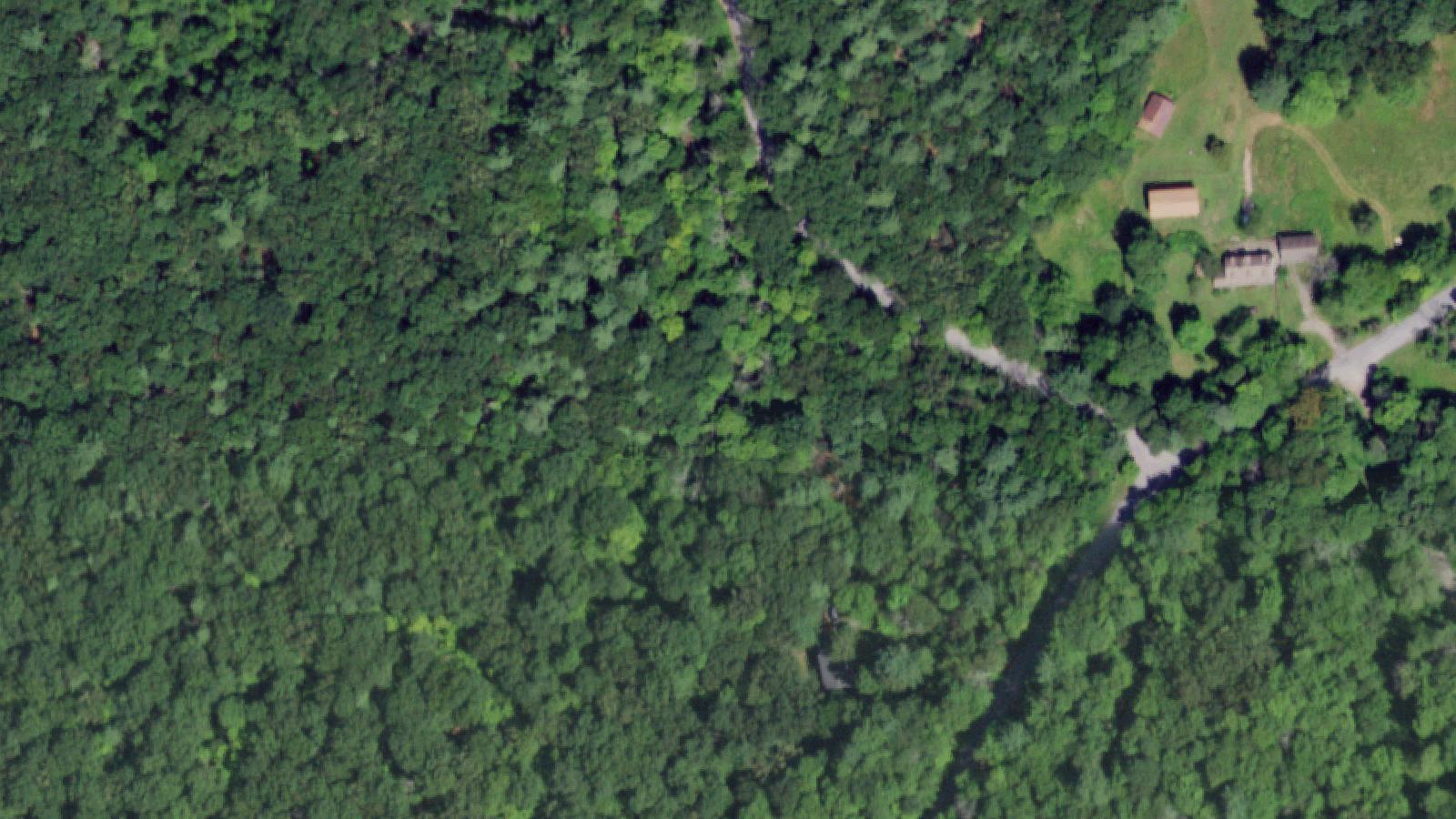
Fiddlers Bridge Road in the Town of Clinton, Dutchess County, takes its name from an early-19th-century legend. According to local tradition recorded by the Town of Clinton Historical Society, an old fiddler returning home from a dance on September 7, 1808 was robbed and murdered, his body left on a small bridge along the then-unnamed road connecting Pleasant Plains and Schultzville. The bridge no longer stands, but the road preserves his memory.
 Aerial survey · USDA NAIP
Brewster, NY
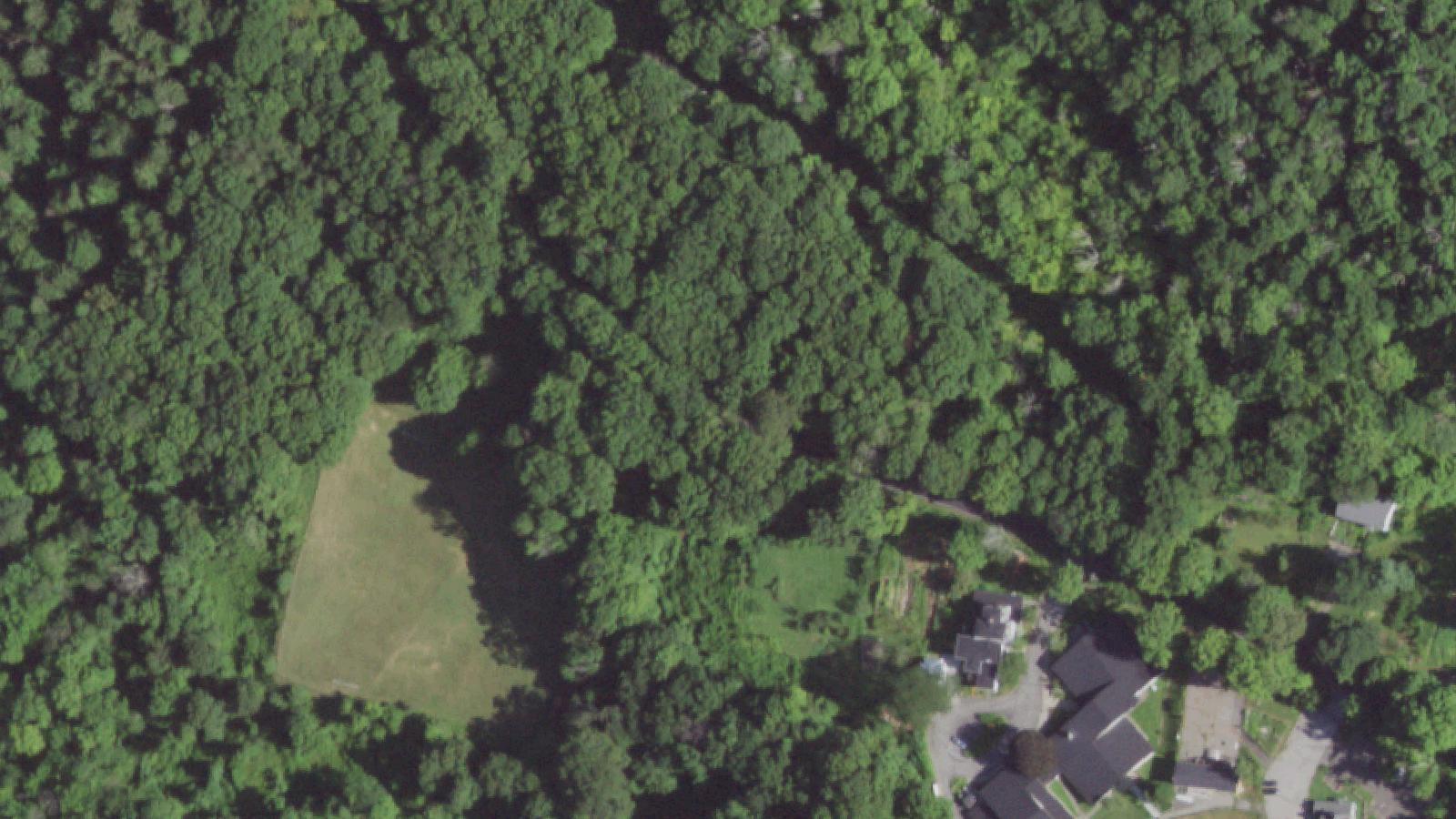
Federal Hill Road runs through the rural border between Brewster, New York, in Putnam County and Danbury, Connecticut, where it continues as Joe's Hill Road. The route's most notable landmark is Morefar Back O'Beyond, a private golf course associated with the American International Group corporate empire, designed by Edward Ryder and Val Carlson and opened in 1962.
 Aerial survey · USDA NAIP
Saint James, NY
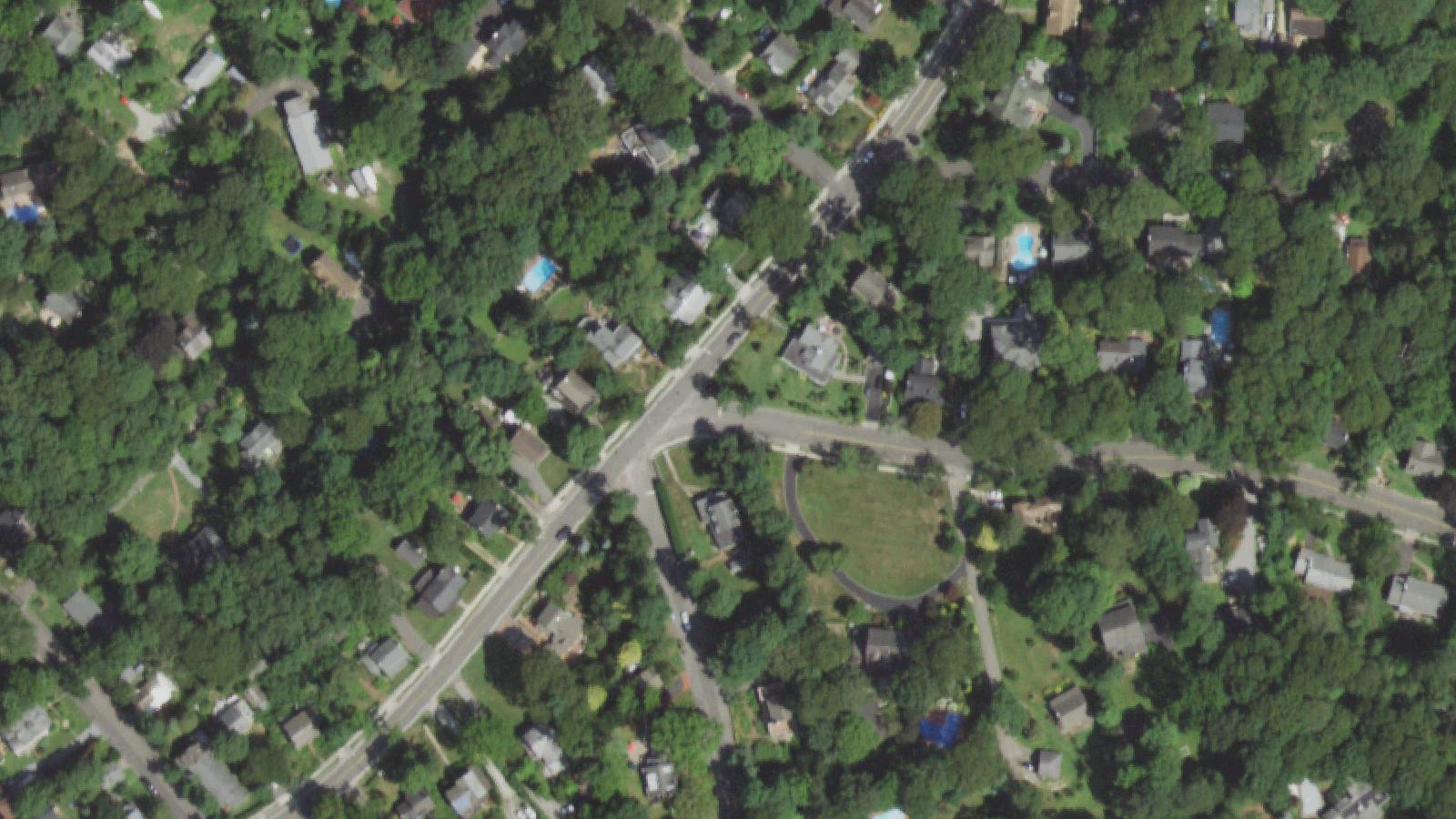
Mary's Grave is one of Long Island's longest-running urban legends, claimed across at least seven towns. The most concrete location cited in tradition is along Shep Jones Lane in Saint James in Smithtown's Head of the Harbor area, though no documented grave matches the lore.