Est. 1885 · 111 years of continuous state psychiatric hospital operation · WPA-era Building 93 (1939-1941) · York Hall listed on the National Register of Historic Places, 2023 · Site of Nissequogue River State Park
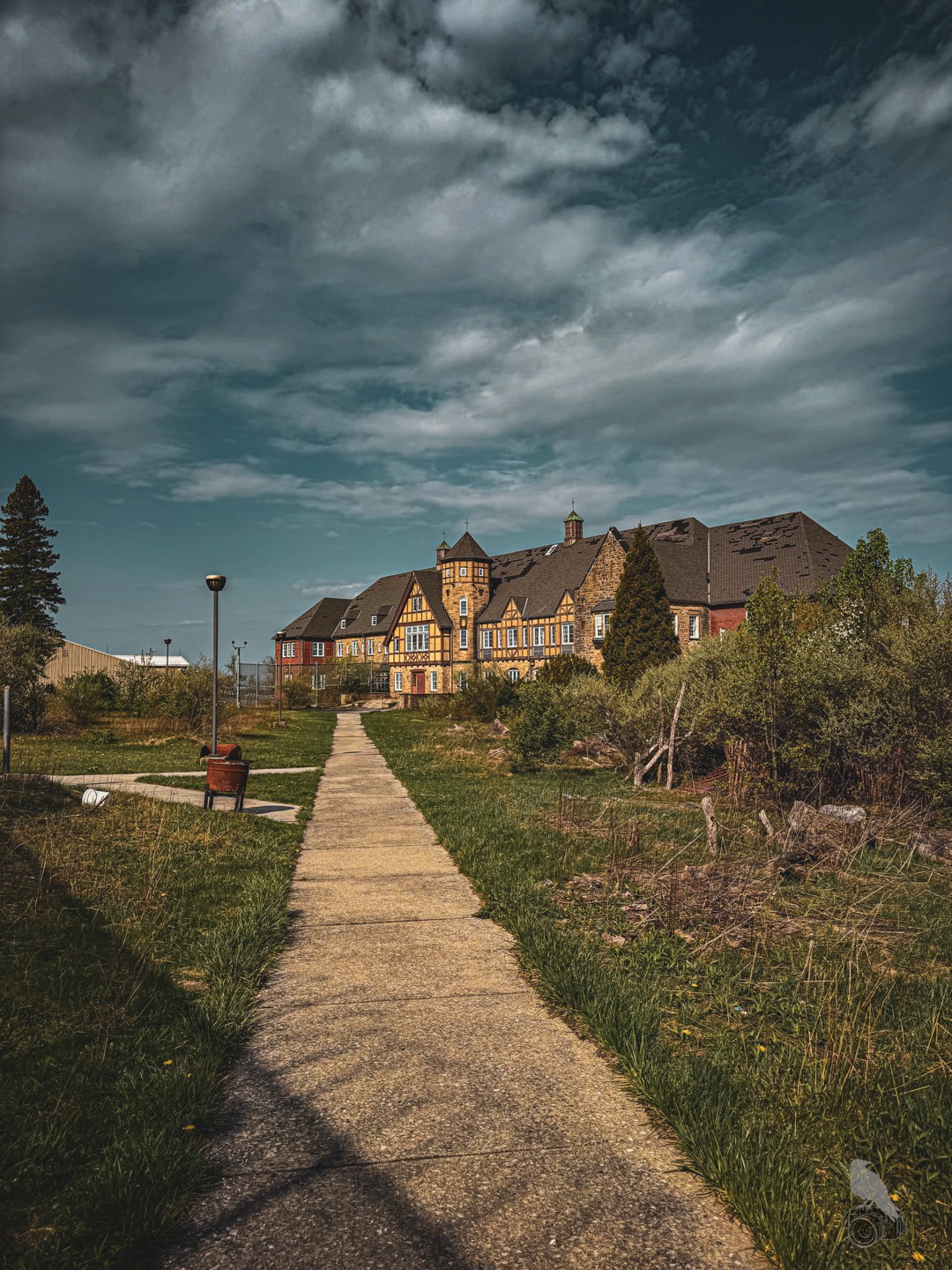
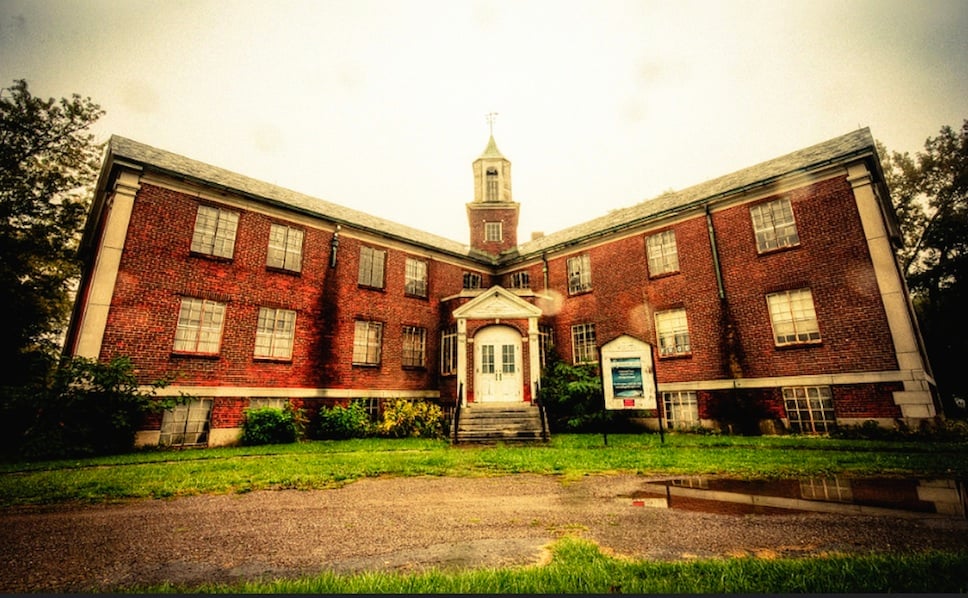
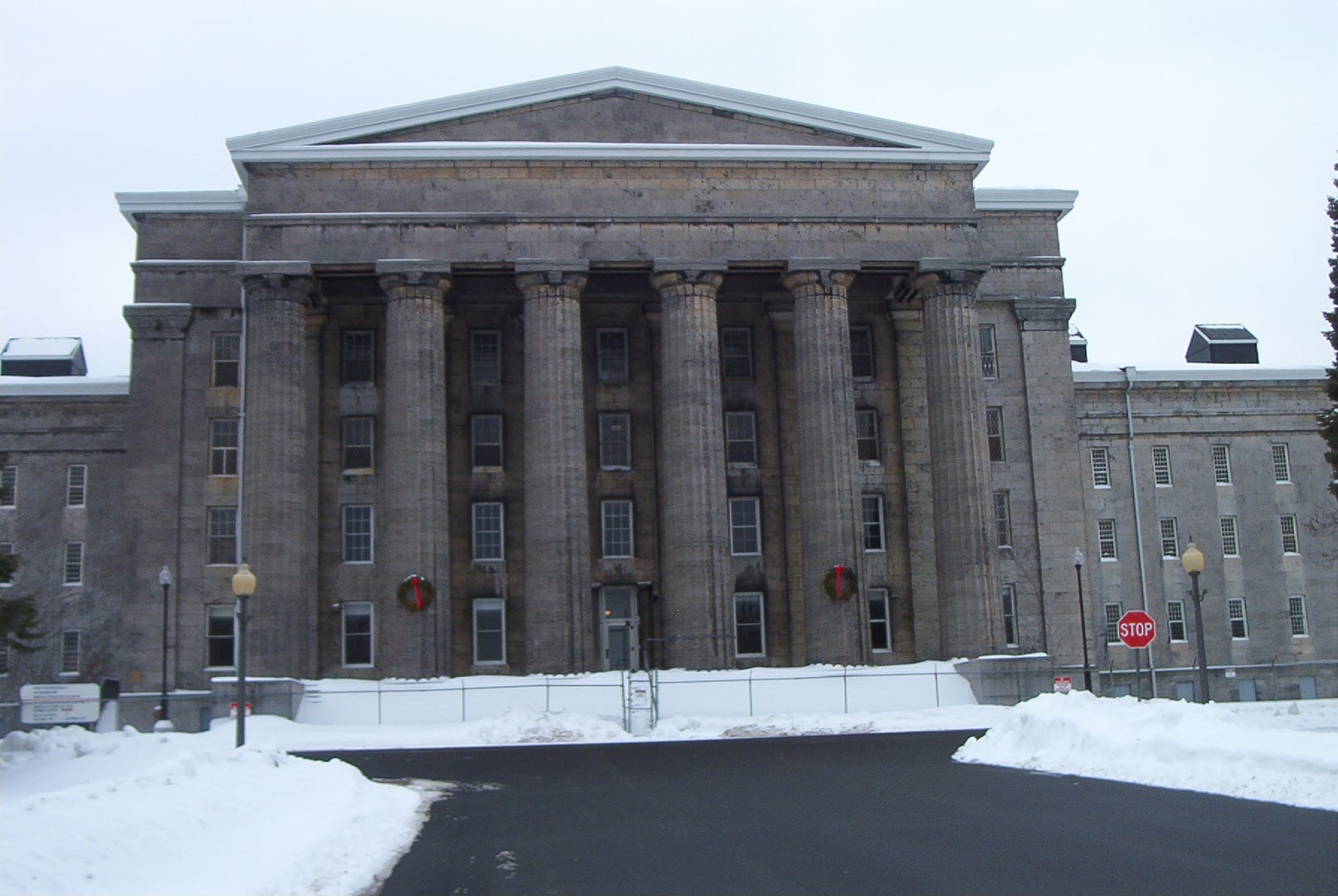
Kings County established the facility in 1885 as an asylum farm colony, with patients housed in three cottages and put to agricultural work as part of contemporary psychiatric treatment theory. New York State assumed control in 1895, and the surrounding hamlet took the name Kings Park from the institution. The hospital expanded steadily through the first half of the twentieth century, adding dozens of buildings across a campus that eventually covered roughly 500 acres and more than 100 structures.
The hospital's population peaked in 1954 at 9,303 patients, making it one of the largest psychiatric institutions in the United States. Its most recognizable structure, Building 93, was designed by state architect William E. Haugaard and built between 1939 and 1941 with Works Progress Administration funding. The 13-story tower served as an infirmary, with bedridden patients on the upper floors and ambulatory patients on the lower ones — a vertical arrangement that reversed as the building was progressively vacated from the top down through the early 1990s.
The introduction of Thorazine and other antipsychotic medications in 1955 began reducing the need for long-term institutional housing, and New York's broader deinstitutionalization policy accelerated the decline. Kings Park closed for good in the fall of 1996, ending 111 years of continuous operation; the hospital's remaining patients were transferred to Pilgrim Psychiatric Center in West Brentwood.
About 90 percent of the former campus, including the waterfront and most of the historic core, became Nissequogue River State Park, established in 2000 and formally transferred to the state parks system by 2006. York Hall, one of the campus's amusement buildings, was added to the National Register of Historic Places in 2023. Building 93 and dozens of other former hospital structures remain standing but sealed, and a 2013 Long Island Press investigation and Preservation Long Island's 2023 endangered-places listing both documented ongoing deterioration from weather, asbestos contamination, and unsecured entry points.
Sources
- https://en.wikipedia.org/wiki/Kings_Park_Psychiatric_Center
- https://www.untappedcities.com/abandoned-kings-park-psychiatric-center-long-island/
- https://preservationlongisland.org/endangered-places-2023-kings-park-psychiatric-center/
- https://parks.ny.gov/parks/nissequogueriver
- https://www.atlasobscura.com/places/abandoned-kings-park-psychiatric-center
General haunted reputationPersistent trespassing by ghost huntersRumors of unethical experimentation
Kings Park's haunted reputation grew directly out of its scale and its visible decay. At its 1954 peak the hospital held more than 9,000 patients in conditions that later oversight and reporting described as severely overcrowded, and the abrupt 1996 closure left dozens of buildings standing empty rather than demolished — a rarity for an institution of its size. Building 93, the 13-story former infirmary, became the focal point of the site's reputation once it was fully vacated.
A Nissequogue River State Park official told ABC7 News in 2019 that the building's draw is partly rooted in rumor rather than record: "The rumors are that the doctors did experiments on the patients in this building specifically, so I think maybe that's the draw to it ... I've heard people think there's ghosts in there." CBS News has separately reported on the state's tightened Halloween-weekend security around the property, describing it as a magnet for thrill-seekers and amateur ghost hunters despite the real hazards inside — asbestos, collapsed flooring, and open elevator shafts among them.
No verified paranormal investigation team or television series has documented a formal on-site investigation at Kings Park; its reputation circulates mainly through visitor accounts, urban-exploration photography, and the persistent rumor of unethical treatment rather than a single named haunting. Lucy Winer's 2013 documentary "Kings Park: Stories from an American Mental Institution" — made by a former patient who returned to the hospital's ruins — is the most substantial media treatment of the site, though it is framed as an oral history of institutional psychiatry rather than a ghost story.
Media Appearances
- Kings Park: Stories from an American Mental Institution (Documentary, 2013)