Est. 1898 · Built for Jonas M. Kilmer of the Swamp Root patent-medicine family · Family racehorse Exterminator won 1918 Kentucky Derby · Sole surviving mansion of four original Riverside Drive estates · National Register of Historic Places (2006)
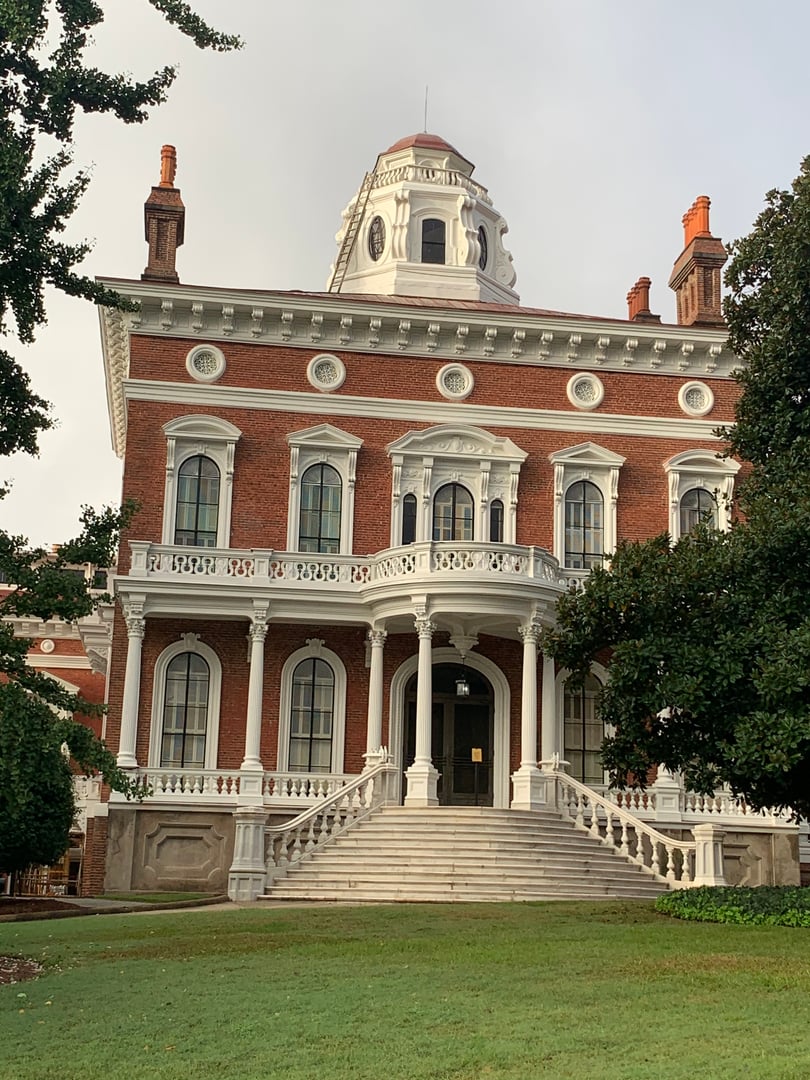
Dr. S. Andral Kilmer developed the remedy known as Swamp Root—marketed as a treatment for kidney, liver, and bladder ailments—in Binghamton in the 1880s. His brother Jonas M. Kilmer, born in 1843, came to Binghamton in 1878 to help run the business and eventually took over management. Jonas commissioned architect Charles Edward Vosbury in 1898 to design the Riverside Drive mansion, which Vosbury executed in an eclectic Victorian mode: 3.5 stories, stone construction, turrets, towers, ballrooms, balconies, lions on the exterior, and a dragon at the entrance.
Jonas's son Willis Sharpe Kilmer, a Cornell University graduate born in 1869, proved to be the family's most aggressive businessman. He expanded the Swamp Root advertising operation into a global campaign, built the Kilmer Building and the Printing House in downtown Binghamton in 1904, and acquired the Binghamton Press newspaper after the paper questioned Swamp Root's medical claims. Willis also bred racehorses; his horse Exterminator won the 1918 Kentucky Derby as a surprise entry. Willis even sold the family's private yacht to the Navy during World War I.
Jonas M. Kilmer died in 1912. Willis Sharpe Kilmer died in 1940. Three of the four grand mansions that had stood on Riverside Drive were eventually demolished; the last, a companion mansion, came down in 1980. The Jonas M. Kilmer Mansion, now physically connected to Temple Concord synagogue that has served as its steward since 1950, is the sole survivor. The mansion was listed on the National Register of Historic Places on September 29, 2006. Friends of Kilmer Mansion, a nonprofit, now leads preservation and public programming efforts.
Sources
- https://kilmermansion.org/kilmer-mansion/history/
- https://en.wikipedia.org/wiki/Jonas_M._Kilmer_House
- https://hauntedhistorytrail.com/explore/kilmer-mansion
Disembodied voicesChildren singingUnexplained footstepsSensation of being touchedLights activating without causeDoll's head observed to move
The Kilmer Mansion's paranormal reputation is built on cumulative investigation reports rather than a single foundational incident or named entity. The Friends of Kilmer Mansion and outside paranormal groups have conducted formal investigations of the building over recent years, and the documented evidence from those sessions forms the basis for the haunting claims.
Reported phenomena include disembodied voices heard in multiple rooms, the sound of children singing that has no identifiable source, unexplained footsteps when the area of the sound is empty, the physical sensation of being touched, lights activating without an apparent cause, and the movement of a porcelain doll's head observed during an investigation session. These reports come from multiple independent investigators across separate events.
No historical incident of violence or unusual death at the mansion has been identified in published sources. The phenomena, particularly the children's voices, have been noted as puzzling given the family history, which centered on commerce rather than tragedy. The mansion's long period of limited use and partial dereliction before restoration efforts began may contribute to the conditions investigators describe.
Where this legend is told