Two colonial-era cemeteries representing the stark division between slaveholders and the enslaved · GPR-confirmed buried remains of enslaved people with no surviving above-ground markers · NYC landmark designation, December 12, 2023 — one of few enslaved burial grounds protected by landmark status in New York City · Rediscovery driven by a 1910 photograph and student-led community archaeology · Site of the grave of poet Joseph Rodman Drake (1795–1820)
Prior to European colonization, the Siwanoy people inhabited the Hunts Point peninsula until their displacement in 1663. By the early 18th century, three colonial families — the Hunts, the Willetts, and the Leggetts — had established estates in the area. These families held enslaved African and Indigenous people in numbers documented in colonial records: Cornelius and Elizabeth Willett held twelve enslaved people by 1781; Thomas Hunt held ten in 1790. The poet Joseph Rodman Drake, born in 1795 and a close friend of the Hunt family, is among those buried in the settler cemetery, which accounts for the park's original name.
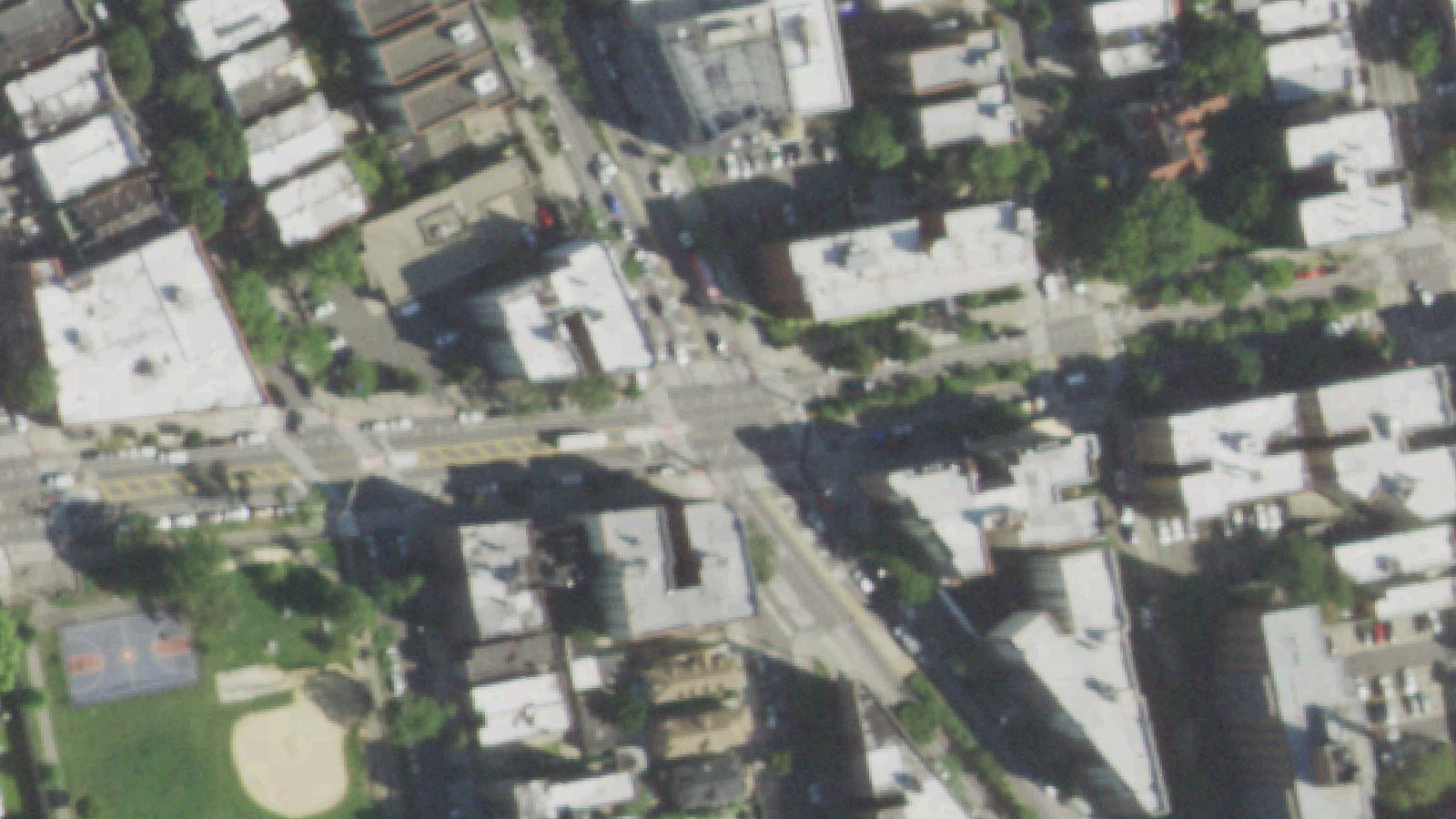
By the 1720s, the settler families had established a family cemetery, still enclosed by an iron fence with visible grave markers. The people they enslaved were buried in a separate cemetery across what was then Hunts Point Road. No above-ground evidence of the enslaved burial ground survived the early 20th century — road construction and the 1910 park development that closed Hunts Point Road effectively erased the physical markers.
The site's rediscovery began in 2013 when Philip Panaritis, a New York City Department of Education official, located a 1910 photograph in the Museum of the City of New York's database that showed visible headstones in the enslaved burial ground before the road work. Panaritis secured a state grant, engaged students from P.S. 48 in the research, and commissioned a professional archaeological study. A ground-penetrating radar survey conducted in partnership with the U.S. Department of Agriculture confirmed four subsurface features consistent with human burials at approximately 1.15 to 1.42 meters below the present ground surface — associated with what surveyors identified as the original 18th- to 19th-century ground surface, beneath infill from the early 20th century.
On December 12, 2023, the Landmarks Preservation Commission voted unanimously to designate Joseph Rodman Drake Park and Enslaved People's Burial Ground as a New York City landmark. The park was renamed in 2021 to acknowledge both histories. The designation protects visible grave markers and the burial ground footprint while permitting continued archaeological research.
Sources
- https://www.citylandnyc.org/landmarks-designates-joseph-rodman-drake-park-and-enslaved-peoples-burial-ground/
- https://www.6sqft.com/forgotten-bronx-enslaved-people-burial-site-nyc-landmark/
- https://core.tdar.org/document/441754/marking-the-unmarked-the-confluence-of-community-archaeology-and-ground-penetrating-radar-at-the-hunts-point-slave-burial-ground-bronx-ny
- https://www.nyc.gov/site/lpc/about/pr2023/LPC-Designates-Joseph-Rodman-Drake-Park-and-Enslaved-People-Burial-Ground.page
No paranormal accounts are documented for this site in primary or secondary sources. The location's power derives entirely from its historical and archaeological record: people were buried here with no markers, then the ground was infilled and paved over, erasing the physical evidence of their existence for roughly a century. The 2013 rediscovery and 2023 landmark designation represent a community-driven effort to restore that record.
The two cemeteries — a maintained, fenced plot for the slaveholding families, and an unmarked buried ground for the people they enslaved — stand 50 feet apart across a former road, a spatial arrangement that documents the social order of colonial-era Hunts Point with unusual directness. The site draws visitors interested in African American burial history, colonial archaeology, and the history of slavery in the northern states.
Where this legend is told