Est. 1880 · Built 1880, replacing an Odd Fellows hall that burned in 1879 · Operated as the Eureka Theater movie house, 1915-1958 · Restored 1993 by the Commission for Cultural Affairs · Anchor of Eureka's historic Main Street district
The Eureka Opera House opened in 1880 in the central-Nevada silver-mining town of Eureka, then a busy district at the height of its boom. It replaced an Odd Fellows hall that had burned in 1879, and from the start it served as the town's principal venue for performances, dances, and public gatherings.
For several decades the opera house was the cultural heart of Eureka. When motion pictures arrived, the building was converted and renamed the Eureka Theater, operating as a movie house from 1915 until 1958. After it closed, the structure sat largely unused and deteriorated through years of neglect.
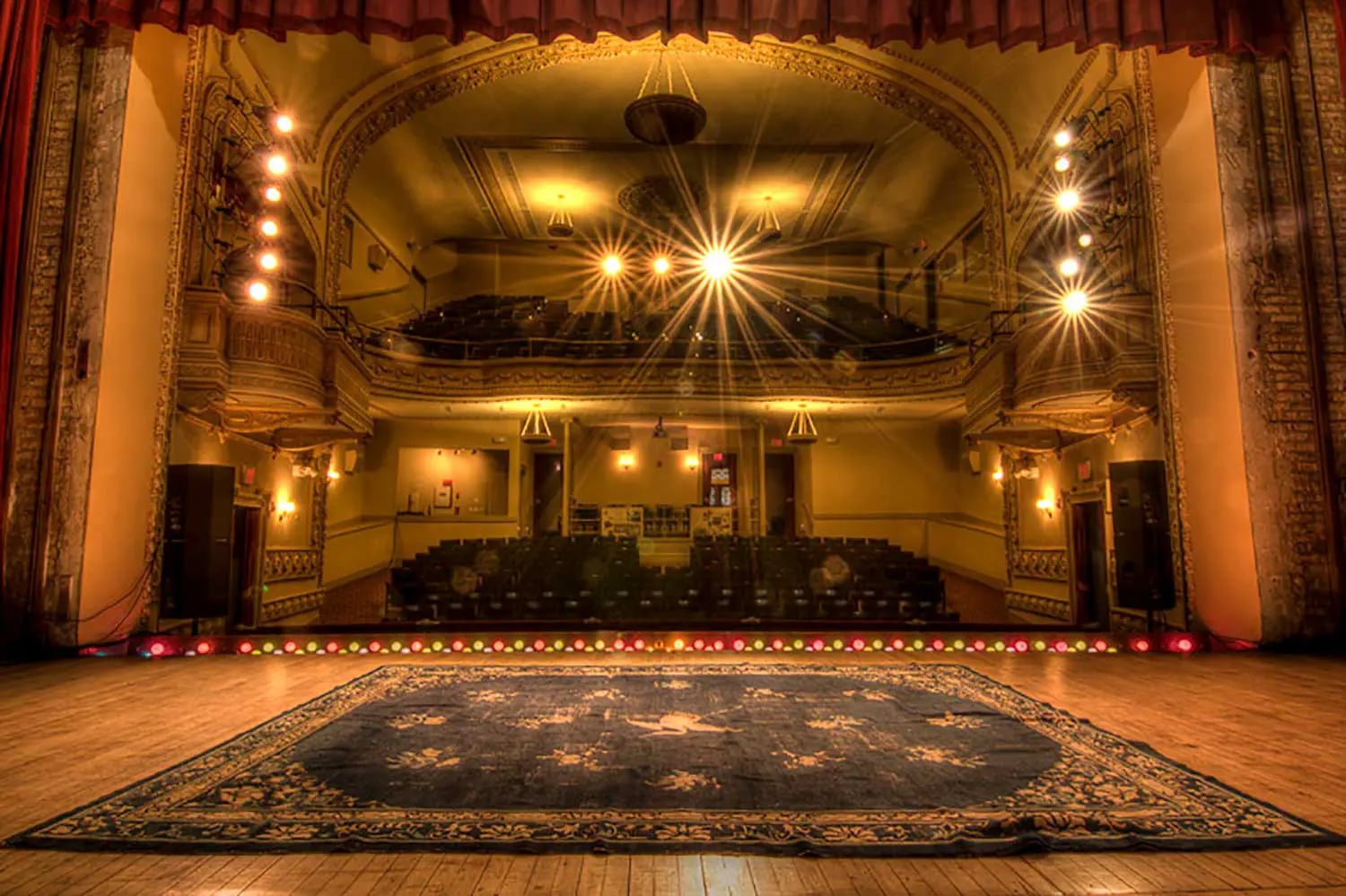
In 1993 the building was restored under a project sponsored by the state's Commission for Cultural Affairs, returning it to service as a community and event venue. The restoration preserved historic features including an early hand-painted stage curtain. Today the Eureka Opera House functions as a convention center and auditorium under Eureka County, with a Grand Hall that seats roughly 300 people theater-style or 150 at banquet tables.
The opera house anchors Eureka's well-preserved historic Main Street, alongside the county courthouse and the Eureka Sentinel building, and is a regular stop on the town's heritage and ghost-tourism itineraries.
Sources
- https://en.wikipedia.org/wiki/Eureka_Opera_House
- https://www.eurekacountynv.gov/recreation-culture-in-eureka-county/opera-house/history/
- https://www.abc4.com/news/eureka-friendly-town-with-a-haunted-history/
Woman in white in the upper balconyFigures of children on the stageMale presence reported in the basement
The Eureka Opera House features prominently in the town's haunted-history tours, which trade on Eureka's deep mining-era past. The most repeated account is of a woman in white seen in the upper balcony when the house is quiet. Tour and ghost-hunting accounts also describe the figures of children on the stage and a male presence in the basement.
Local lore links the basement figure to a man remembered as 'Mormon Joe' Barker, who in those tellings is said to have died on the property. That identification and the cause of death appear in ghost-tour and paranormal-listing sources rather than in primary records, and are presented here as folklore rather than established fact. Investigators who have visited the basement report shadows and a sense of activity, but no documented case file attaches to the building.
Eureka markets itself, with some humor, as a friendly town with a haunted history, and the opera house sits at the center of that reputation alongside the Jackson House Hotel and other Main Street landmarks. The building's age, its dim balcony, and its long run as the town's gathering place give the stories their setting. For research purposes the lore is tour-driven and atmospheric; the named-individual details are unverified and treated as legend.
Notable Entities
'Mormon Joe' Barker (basement figure; folklore, unverified)